XUV 3XO CNG Price, Mileage and Boot Space: The Trade-Off
Mahindra's XUV 3XO CNG is priced Rs 9.99–12.27 lakh with a claimed 24.7km/kg. It keeps the petrol's full 111hp but boot space falls from 364 to 270 litres, and it is manual only.

- Published
- Reading time
- 5 minutes
Mahindra has launched the XUV 3XO CNG, badged ZNG, at Rs 9.99 lakh to Rs 12.27 lakh ex-showroom, with bookings and deliveries both opening on 20 October. It keeps the petrol's full 111hp and 200Nm, which most CNG cars cannot, and claims 24.7km/kg. Boot space falls from 364 litres to 270.
Those last two sentences are the whole decision, and they pull in opposite directions.
The hard part, which Mahindra has got right
The usual complaint about a CNG car is that it feels slower. Running on gas typically costs an engine some output, which is why so many factory CNG variants are quoted at lower power figures than their petrol equivalents and why the conversion is often described as a compromise you accept for the running cost.
The XUV 3XO CNG is quoted at the same 111hp and 200Nm as the petrol. ZigWheels attributes this to higher-capacity injectors operating at 10 bar, which allow the engine to deliver effectively the same output in either mode. It also switches back to petrol automatically when the gas runs low, so the dual-fuel arrangement is not something the driver has to manage.
If the figures hold up in the real world — and first drives were still pending at launch, so the claimed 24.7km/kg remains a claim — that addresses the single biggest objection to buying a CNG car in this segment.
The easy part, which it gives up
Boot space goes from 364 litres to 270. That is 94 litres, or roughly a quarter of the luggage capacity, and it is the number a buyer should check before anything else.
The engineering is thoughtful about it. Twin cylinders sit beneath the boot floor rather than filling the boot, raised to the level of the boot lip so the floor stays flat and loading is easier than in a cylinder-in-the-boot conversion. The spare wheel moves underneath the vehicle and an NGV fast-filling valve is fitted.
But the number is the number. And for context, the Tata Nexon CNG drops from 382 litres to 321 — a loss of 61 litres. Mahindra gives up half again as much space as its closest rival to achieve the power parity its rival does not have. Whether that is the right trade depends entirely on whether you more often carry four people's luggage or care more about how the car pulls away from a light.
The second concession is simpler: the CNG comes only with a six-speed manual. The petrol version offers a six-speed automatic. If you were buying this car for city traffic which is exactly the use case CNG economics suit best the transmission you probably wanted is not on the menu.
The Rs 9.99 lakh is not the premium you will pay
This is the part most likely to catch a buyer out, so it is worth laying out plainly.
The four CNG variants, ex-showroom:
- MX Edge — Rs 9.99 lakh
- RevX Edge (O) — Rs 10.79 lakh
- AX5 — Rs 11.19 lakh
- RevX A — Rs 12.27 lakh
MX Edge is a new, CNG-only entry variant. There is no petrol MX Edge to compare it against, and its job is to bring the range's starting price down to a headline number. It is not evidence that CNG is cheap on this car.
On the trims that exist in both fuels, the CNG premium is:
- RevX Edge (O) — Rs 80,000 more than the Rs 9.99 lakh petrol
- AX5 — Rs 1.19 lakh more than the Rs 10 lakh petrol
- RevX A — Rs 1 lakh more than the Rs 11.27 lakh petrol
So a buyer who reads "from Rs 9.99 lakh" and assumes an 80,000-rupee step up from their chosen petrol trim will be wrong on two of the three comparable variants. Whether the premium pays back depends on your annual running, your local CNG and petrol prices, and how long you keep the car — and those vary enough by city that any single figure quoted nationally is close to meaningless.
What you get for the money
The equipment list is not a stripped-out CNG special. Depending on variant, the car carries a 10.25-inch touchscreen and a 10.25-inch digital instrument display, wireless Android Auto and Apple CarPlay, a seven-speaker Harman Kardon system, a panoramic sunroof, dual-zone climate control, a wireless charger, USB-C fast charging and cruise control. Higher trims add Dolby Atmos audio, black leatherette upholstery and connected-car features.
On safety: six airbags, ABS with EBD, electronic stability control, ISOFIX mounts, tyre-pressure monitoring, a 360-degree camera, rear parking sensors, an electronic parking brake with auto-hold, three-point seatbelts for all occupants, and Level-2 ADAS.
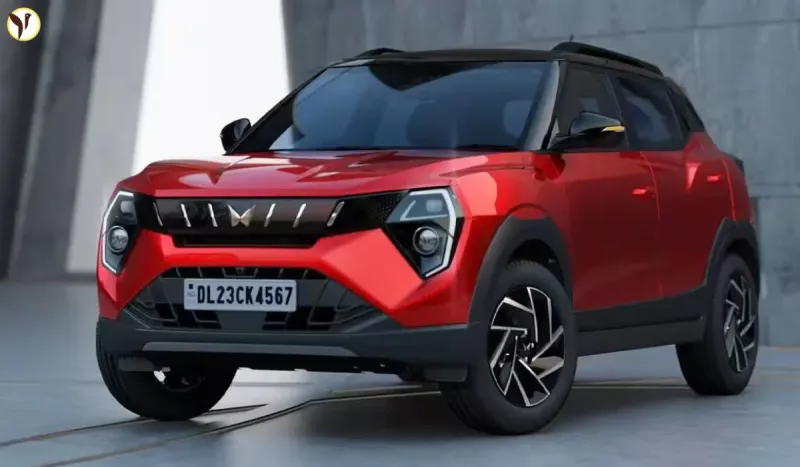
Externally it is near-identical to the petrol and diesel cars, distinguished by a ZNG badge on the tailgate and, depending on trim, 16-inch alloys and LED projector headlamps.
Why Mahindra is adding CNG now
The commercial logic shows up in the model's own sales record.
The XUV 3XO family has just crossed five lakh domestic wholesales 505,590 units between February 2019 and September 2026, plus around 37,000 exports, counting the XUV300, the rebranded 3XO and the 3XO EV. Autocar India notes the milestone was reached just before the CNG arrived.
The trajectory matters more than the total. The fourth lakh came in October 2025, and the fifth took about eleven months. FY2026 was the model's best year at 103,341 units, and the first half of FY2027 ran 19% ahead of the same period a year earlier, at 52,851. The model accounts for 17% of the three million-plus SUVs Mahindra has dispatched since February 2024.
A nameplate selling at that rate is exactly the one you add a fuel option to. Billed as Mahindra's first factory-fitted CNG SUV, the ZNG puts the company into a segment where the Tata Nexon CNG and Maruti Suzuki Brezza CNG already compete, with the Fronx, Kylaq, Magnite, Kiger, Venue and Sonet in the broader frame.
What is still unknown
Three things, and they are the ones worth waiting for if you are not in a hurry.
Real-world efficiency against the claimed 24.7km/kg, which first drives will establish within days. Whether the power parity holds under load, with a full car and the air-conditioning on. And whether an automatic CNG variant follows, because its absence is the clearest gap in the line-up.
Prices quoted are ex-showroom and vary by state with taxes and on-road costs. Fuel prices and running-cost savings differ by city. This article describes a product launch and is not a recommendation to buy.
Questions readers ask
What is the price of the Mahindra XUV 3XO CNG?
Rs 9.99 lakh to Rs 12.27 lakh ex-showroom across four variants: MX Edge at Rs 9.99 lakh, RevX Edge (O) at Rs 10.79 lakh, AX5 at Rs 11.19 lakh and RevX A at Rs 12.27 lakh. Bookings and deliveries both begin on 20 October. On-road prices vary by state.
How much more does the CNG cost than the petrol version?
It depends on the variant, and the Rs 9.99 lakh starting price is misleading on this point because MX Edge is a new CNG-only trim with no petrol equivalent. On the comparable trims the premium is Rs 80,000 for RevX Edge (O), Rs 1.19 lakh for AX5 and Rs 1 lakh for RevX A.
Does the XUV 3XO CNG lose power compared with the petrol?
No. It is quoted at the same 111hp and 200Nm from the 1.2-litre turbo-petrol engine in both modes, which is unusual in this segment — ZigWheels credits higher-capacity injectors running at 10 bar. The car also switches back to petrol automatically when the CNG runs low. Claimed efficiency is 24.7km/kg, which first drives had not yet verified at launch.
How much boot space does the CNG version lose?
94 litres. Boot capacity falls from 364 litres on the petrol to 270 litres on the CNG. Twin cylinders sit under the boot floor raised to the boot lip, so the floor stays flat and loading is easier than a cylinder-in-boot conversion, with the spare wheel relocated beneath the vehicle. For comparison, the Tata Nexon CNG drops from 382 litres to 321 — a loss of 61 litres.
Is the XUV 3XO CNG available with an automatic gearbox?
No. The CNG is offered only with a six-speed manual. The petrol version is also available with a six-speed automatic, so buyers wanting a two-pedal car in city traffic cannot currently have it with CNG.