Rwanda F1 Deal: 10-Year Pact Brings African Grand Prix Back in Early 2030s
Rwanda has signed a 10-year deal to host Formula 1 from the early 2030s. Here’s where the new track is planned, what the agreement means for Africa and what still needs to happen.

- Published
- Reading time
- 4 minutes
Formula 1 is set to return to Africa for the first time since 1993, with Rwanda signing a 10-year agreement to host a Grand Prix from the early 2030s. The race is planned for a new circuit near Bugesera, about 40 kilometres south of Kigali. It is a major step for Rwanda’s sporting ambitions, but the announcement is a long-term plan rather than a race date: the track and supporting facilities still have to be built and prepared.
Rwanda’s F1 deal: what has been announced?
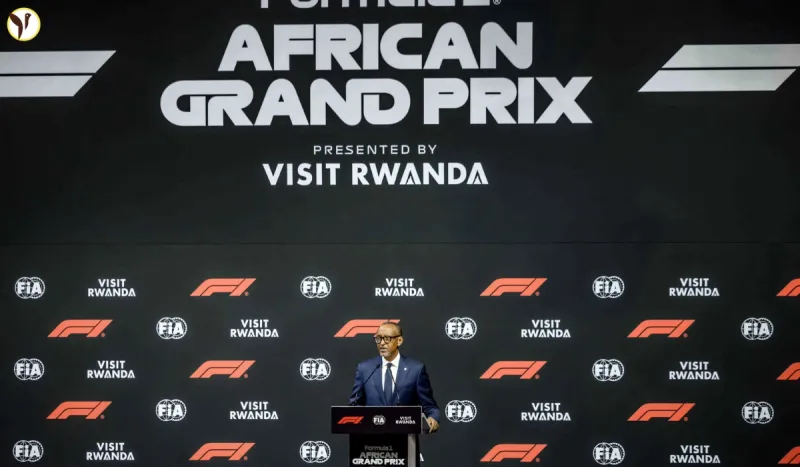
Formula 1 and Rwanda have agreed to a 10-year hosting deal, with the African Grand Prix expected to join the calendar in the early 2030s. The announcement was made in Kigali by F1 chief executive Stefano Domenicali alongside Rwandan President Paul Kagame and FIA president Mohammed Ben Sulayem. The first race date has not been confirmed.
The deal marks F1’s return to the continent after the 1993 South African Grand Prix at Kyalami. Rwanda will become the latest African country to host a championship race, following South Africa and Morocco. F1 has described the agreement as part of its ambition to race on every inhabited continent.
Where will the Rwanda F1 track be built?
The proposed venue is a purpose-built circuit in Bugesera, near the new international airport under construction and roughly 40 kilometres from Kigali. The location is intended to connect the race with Rwanda’s wider plans for transport, tourism and international events.
The project has been associated with former F1 driver Alexander Wurz and circuit-design firm Tilke Engineers. Plans describe a permanent track shaped around the area’s natural elevation. But a design concept is only one part of the job: the circuit and its facilities will need to meet Formula 1 and FIA requirements before a race can take place.
That means the early-2030s timeline depends on construction and preparation. The announcement does not give a specific opening year, detailed construction schedule or final race date. Those details will matter as the project moves from agreement to delivery.
What the Grand Prix could mean for Rwanda and Africa
Rwanda has spent years building its profile as a host for international sporting events. A Formula 1 race would bring global attention, visitors and business activity, while giving African fans a Grand Prix on the continent. F1 has long faced calls to return to Africa, including from seven-time world champion Lewis Hamilton.
The potential gains are not guaranteed. Hosting a Grand Prix requires substantial infrastructure, logistics and long-term investment. The value of the deal will depend on whether the event attracts visitors and business, creates lasting local opportunities and makes sense beyond race weekend. The announcement does not yet provide detailed figures for the project’s total cost or projected returns.
Rwanda moves ahead as South Africa remains in the picture
South Africa has also been seeking a place back on the F1 calendar, with interest in a return to Kyalami. Rwanda’s agreement gives it the confirmed hosting deal for the early 2030s, while Reuters reports that South Africa remains a possible future host. The calendar decision therefore brings F1 back to Africa, but does not necessarily close the door on other African venues.
The debate beyond the track
The announcement has also revived scrutiny of Rwanda’s use of high-profile sport to promote tourism and its international image. Supporters see the race as a chance to expand African representation in global motorsport and attract investment. Critics have raised human-rights concerns and questioned whether sporting partnerships can distract from those issues. Those criticisms form part of the debate around the project, alongside the practical questions of cost, construction and local benefit.
🚨 | 𝗢𝗙𝗙𝗜𝗖𝗜𝗔𝗟: 𝗙𝗢𝗥𝗠𝗨𝗟𝗔 𝟭 𝗪𝗜𝗟𝗟 𝗥𝗘𝗧𝗨𝗥𝗡 𝗧𝗢 𝗔𝗙𝗥𝗜𝗖𝗔 — 𝟭𝟬-𝗬𝗘𝗔𝗥 𝗥𝗪𝗔𝗡𝗗𝗔 𝗗𝗘𝗔𝗟 𝗖𝗢𝗡𝗙𝗜𝗥𝗠𝗘𝗗! 🌍🇷🇼 After more than three decades away, Formula 1 has officially secured its return to Africa. The Formula 1 African Grand Prix, presented by Visit Rwanda, will join the calendar in the early 2030s under a 10-year agreement. 🔹 New purpose-built circuit in Bugesera 🔹 Around 40km south of Kigali 🔹 Adjacent to the new Kigali International Airport 🔹 Built to FIA Grade 1 standards 🔹 Natural elevation changes will form part of the circuit design 🔹 Exact inaugural race date to be confirmed 🎙️ “Today belongs to Africa. For more than three decades, the world’s premier motorsport championship has raced without this continent, and that changes with this agreement.” — Paul Kagame 🎙️ “Africa has always been part of Formula 1’s future.” — Stefano Domenicali F1 last raced on the continent at Kyalami in 1993. Now the return is no longer a proposal or negotiation. Africa is officially coming back to Formula 1. 🌍🏁 [@F1] #F1 #AfricanGP #Rwanda
— THE F1 HOOK (@TheF1Hook) October 13, 2026
What happens next?
The next milestones are the development of the Bugesera circuit and related infrastructure, followed by the approvals and preparations needed to host a Formula 1 event. Until F1 confirms a specific date and the venue is ready, the Grand Prix remains a planned addition for the early 2030s.
For Rwanda, the agreement is a high-profile commitment. For African fans, it offers a clear prospect of seeing Formula 1 return to the continent. The test now is whether the track and event can be delivered on schedule and whether the promised economic and sporting benefits reach beyond the race itself.
Questions readers ask
When will Formula 1 race in Rwanda?
Formula 1 is expected to return to Africa with a Rwanda Grand Prix in the early 2030s. An exact first-race date has not been announced.
Where will the Rwanda F1 track be located?
The planned circuit will be in Bugesera, around 40 kilometres south of Kigali and near the new international airport under construction.
How long is Rwanda’s F1 deal?
Rwanda and Formula 1 have agreed to a 10-year hosting deal.
When was the last Formula 1 race held in Africa?
The last African Formula 1 Grand Prix was held in South Africa in 1993.
Has the Rwanda F1 circuit been built?
No. The race is planned for a purpose-built circuit in Bugesera. Construction and preparations must be completed before the venue can host a Grand Prix.