Who Took The Hit From Rising Fertiliser Costs? PM Modi Gives His Answer
PM Modi says the government absorbed rising global fertiliser costs through subsidies, spending around ₹16 lakh crore to protect Indian farmers.

- Published
- Reading time
- 6 minutes
Rising fertiliser prices have become a major concern for farmers across the world. Higher international prices, geopolitical tensions and supply disruptions have increased the cost of important agricultural inputs. However, Prime Minister Narendra Modi has said that Indian farmers have not been made to bear the full burden of these rising costs.
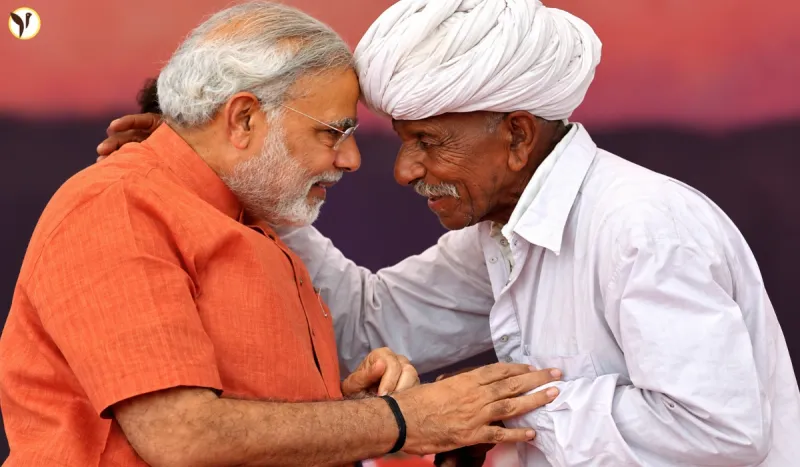
Speaking at a farmers' gathering in Bhildi, Banaskantha, Gujarat, on October 30, 2026, PM Modi said the Central Government had spent around ₹16 lakh crore on fertiliser subsidies over the past several years to protect farmers from international price increases.
According to the Prime Minister, the government absorbed the additional financial burden instead of allowing higher global fertiliser prices to directly affect farmers.
His statement has again brought attention to India's fertiliser subsidy policy and the financial support provided to the agricultural sector.
But what exactly did PM Modi say? How much money has the government spent, and how does this subsidy help farmers? Here is everything you need to know.
PM Modi Says Government Took The Fertiliser Cost Burden
During his address in Gujarat, Prime Minister Narendra Modi said international fertiliser prices had increased sharply because of global uncertainty and other international developments.
However, he said the government did not allow this increase to become an additional burden on Indian farmers.
PM Modi stated that the government had spent approximately ₹16 lakh crore on fertiliser subsidies over the past several years.
The main purpose of this spending was to ensure that farmers could continue purchasing essential fertilisers at affordable prices, even when their international costs increased.
The Prime Minister also explained that the government had taken responsibility for the difference between the actual cost of fertilisers and the prices paid by farmers.
This means that farmers were protected from the full impact of rising international prices through government financial support.
Why Are Fertiliser Prices Increasing Across The World?
Fertiliser prices are closely connected to international markets because several important raw materials and finished fertiliser products are imported by countries, including India.
There are multiple reasons behind the increase in global fertiliser costs.
Geopolitical Tensions: Conflicts and international tensions can affect the supply and transportation of fertilisers and their raw materials.
Higher Energy Costs: Natural gas is an important input for producing nitrogen-based fertilisers such as urea. Higher gas prices can increase production expenses.
Import Dependence: India imports a significant portion of its fertiliser requirements and raw materials. Changes in international prices can therefore affect domestic costs.
Supply Chain Problems: Disruptions in shipping, production and international trade can make fertiliser supplies more expensive.
These factors can increase the cost of agricultural production. Without government support, higher fertiliser prices could put additional financial pressure on farmers.
Recent reports have also highlighted the growing pressure on India's fertiliser subsidy budget because of elevated global prices.
How Much Does Urea Cost In The International Market?
During his Independence Day address on August 15, 2026, PM Modi explained how the government was managing the difference between international fertiliser prices and the prices paid by Indian farmers.
He gave the following examples:
|
|
|
|
|
|
|
|
|
|
|
|
These were the rounded figures cited by the Prime Minister in his speech to explain the subsidy support.
The government absorbs a large part of the cost difference so that farmers do not have to pay the full international market price.
However, these figures should not be confused with the exact notified retail price of every fertiliser bag. For example, the notified maximum retail price of a 45-kg urea bag is ₹242, excluding neem-coating charges and applicable taxes.
How Does The Fertiliser Subsidy System Work In India?
The government uses different subsidy arrangements to keep fertilisers affordable for farmers.
Under the Urea Subsidy Scheme, the government reimburses fertiliser manufacturers and importers for the difference between the delivered cost and the amount received from sales.
This helps ensure that farmers can purchase urea at a controlled price even when production and import costs increase.
For other important fertilisers, including DAP and NPK products, the government uses the Nutrient Based Subsidy (NBS) scheme.
Under this system:
- The government announces subsidy rates for different nutrients.
- Fertiliser companies receive subsidies according to approved rates.
- Farmers can purchase eligible fertilisers at subsidised prices.
- Subsidy support is adjusted according to international prices and input costs.
In April 2026, the Union Cabinet approved a budget requirement of approximately ₹41,533.81 crore for the Kharif 2026 NBS scheme.
The objective was to maintain the availability of important fertilisers at affordable prices.
Is The Fertiliser Subsidy Increasing The Government's Financial Burden?
Yes, higher international fertiliser prices also increase the government's subsidy expenses.
When global prices rise, the government may need to spend more money to maintain affordable prices for farmers.
According to a Financial Express report published on October 27, 2026, fertiliser subsidy spending had crossed ₹1.32 lakh crore during the financial year so far, representing around 77% of the budgeted ₹1.71 lakh crore.
The report also highlighted the possibility of higher spending because of elevated international prices of fertilisers and raw materials.
This shows that protecting farmers from global price increases also creates significant pressure on government finances.
The ₹16 lakh crore figure mentioned by PM Modi is cumulative spending over several years, not the subsidy expenditure for a single financial year.
What Does This Mean For Indian Farmers?
Fertilisers are essential for agricultural production. Farmers use products such as urea and DAP to support crop growth and maintain soil nutrients.
If fertiliser prices increase sharply, farmers may face higher cultivation expenses.
Government subsidies help reduce this pressure by keeping the prices of essential fertilisers below their full market cost.
This support is particularly important for small and marginal farmers, who may have limited financial resources to manage sudden increases in farming expenses.
However, affordable fertilisers are only one part of agricultural support. Farmers also face challenges related to seeds, electricity, irrigation, diesel, labour costs and crop prices.
Therefore, fertiliser subsidies can provide important relief, but they do not remove every financial challenge faced by farmers.
What Else Did PM Modi Say About Farmers?
During his Gujarat programme, PM Modi also highlighted other government initiatives related to agriculture and farmer welfare.
He mentioned several measures, including:
- PM-KISAN: Direct income support for eligible farmers.
- Minimum Support Price (MSP): Government procurement support for selected agricultural crops.
- Crop Insurance: Financial protection against eligible crop losses.
- PM-KUSUM: Promotion of solar-powered irrigation and agricultural energy solutions.
- Fertiliser Subsidy: Support to keep important agricultural inputs affordable.
He also said that farmers had received or saved more than ₹50 lakh crore through various government schemes and decisions.
These figures were part of the Prime Minister's account of the government's agricultural support measures.
Conclusion
The main message from PM Modi's October 30 address is that the Central Government, rather than Indian farmers, has absorbed the additional financial burden created by rising international fertiliser prices.
By spending around ₹16 lakh crore on fertiliser subsidies over several years, the government says it has helped maintain affordable prices for essential agricultural inputs.
However, rising international costs continue to put pressure on the country's subsidy budget.
The key question going forward is how India will maintain affordable fertiliser supplies while managing increasing government expenditure and reducing its dependence on international markets.
Questions readers ask
Who is bearing the burden of rising fertiliser prices in India?
According to PM Modi, the Central Government is absorbing the additional cost through fertiliser subsidies instead of passing the full burden to farmers.
How much has the government spent on fertiliser subsidies?
PM Modi said on October 30, 2026, that the government had spent around ₹16 lakh crore on fertiliser subsidies over the past several years.
What did PM Modi say about fertiliser prices?
He said international fertiliser prices had increased sharply, but the government had protected Indian farmers from the additional financial burden.
What is the price of urea for Indian farmers?
The notified maximum retail price of a 45-kg urea bag is ₹242, excluding neem-coating charges and applicable taxes.
What is the price of DAP fertiliser in India?
PM Modi cited ₹1,350 per bag as the farmer price in his August 15, 2026, Independence Day speech.