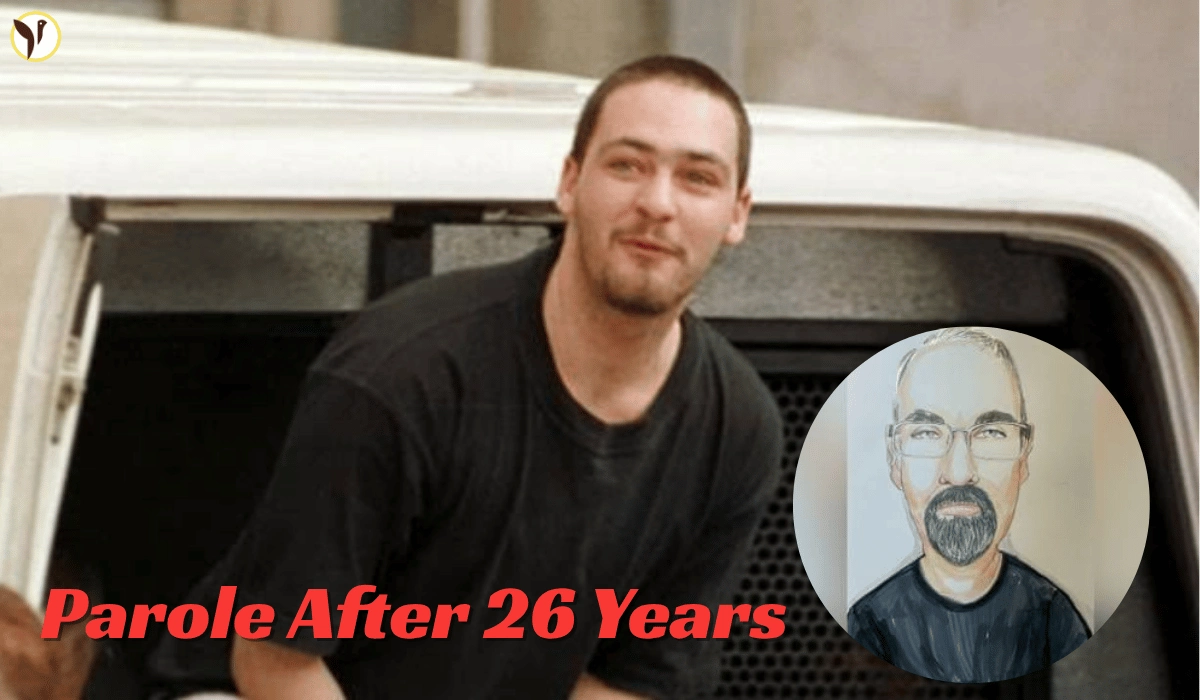


More than 26 years after one of Australia’s most disturbing criminal cases was uncovered, James Vlassakis is set to leave prison on parole. A final administrative review has upheld the South Australian Parole Board’s decision to release him, rejecting the state government’s attempt to keep him behind bars.
Vlassakis, now 46, was the youngest of the four men involved in the notorious Snowtown murders, widely known as the “bodies-in-the-barrels” case. He pleaded guilty to four murders and later became the prosecution’s key witness against ringleader John Bunting and fellow murderer Robert Wagner.
His release does not mean he will immediately return to unrestricted life in the community. Vlassakis is expected to enter an Adelaide pre-release centre for up to 12 months, where he will undergo a closely supervised resocialisation process after spending almost his entire adult life in custody.
Attempt to Block James Vlassakis’s Parole Fails
South Australia’s Parole Board originally approved Vlassakis for release in August 2025 after concluding that he had completed his minimum prison term and did not represent an unacceptable risk to the community.
That decision was challenged by South Australian Attorney-General Kyam Maher, who requested an administrative review. The challenge kept Vlassakis in prison while authorities reconsidered whether the seriousness of his crimes and concerns about community safety justified overturning the board’s decision.
A previous review commissioner blocked his release, but the South Australian Court of Appeal later ruled that the commissioner had fallen into jurisdictional error. The court found that the commissioner had improperly substituted his own assessment of the gravity of Vlassakis’s crimes for the assessment made by the sentencing court.
The matter was then sent back for another review under newly appointed Parole Administrative Review Commissioner David Lovell.
Lovell has now determined that the Attorney-General did not establish sufficient grounds to overturn the Parole Board’s original decision. As a result, Vlassakis will be released under strict parole conditions.
Vlassakis Will Not Immediately Walk Free
Although the parole decision has been upheld, Vlassakis is not expected to move directly from prison into ordinary community life.
The Parole Board previously said he would be transferred to the Adelaide Pre-Release Centre for up to 12 months. The facility is intended to help long-term prisoners gradually adjust to daily life outside a high-security prison environment.
Vlassakis has been incarcerated since June 1999, meaning he has spent more than half his life in custody. During the transition period, authorities are expected to closely monitor his behaviour, movements and ability to comply with parole requirements.
His conditions are expected to include restrictions on where he can travel and whom he can contact. He will be prohibited from approaching victims’ relatives and from visiting locations where an accidental encounter with affected families could occur.
Vlassakis will reportedly remain on parole for the rest of his life. He will also be unable to change his name without permission from the chief executive of South Australia’s Department for Correctional Services.
Any serious breach of his conditions could result in his return to prison.
Who Is James Vlassakis?
James Spyridon Vlassakis was the youngest person convicted in connection with the Snowtown murders. He became involved with the group after John Bunting entered his family’s life and began living with Vlassakis and his mother in Adelaide’s northern suburbs.
Vlassakis was 18 when he participated in his first murder in 1998. He later pleaded guilty to four killings, including those of his half-brother Troy Youde and stepbrother David Johnson.
He was also involved in the murders of Fred Brooks and Gary O’Dwyer. The remains of all four victims were among those discovered in connection with the Snowtown investigation.
Vlassakis was arrested in 1999 and sentenced to life imprisonment in 2002. The court set a non-parole period of 26 years, backdated to June 2, 1999, when he was taken into custody.
The sentencing judge said Vlassakis would have received a non-parole period of 42 years if he had not pleaded guilty, provided extensive assistance to police and agreed to testify against his co-accused.
His evidence became central to the prosecution of Bunting and Wagner. Both men were ultimately convicted of multiple murders and remain imprisoned without the possibility of parole.
What Were the Snowtown Murders?
The Snowtown murders were a series of killings committed in South Australia between 1992 and 1999. Twelve deaths were linked to the case, with 11 eventually classified as murders.
Most of the crimes were committed in Adelaide’s northern suburbs rather than in Snowtown itself. The regional town became permanently associated with the case after police discovered human remains hidden inside barrels stored in a disused bank vault there in May 1999.
Bunting was identified as the group’s leader, with Robert Wagner playing a central role in the killings. Vlassakis participated in four murders, while Mark Haydon was convicted of helping conceal evidence and dispose of bodies.
The perpetrators targeted people within their own social circles, including relatives, friends and acquaintances. Bunting attempted to justify some of the killings by making accusations against the victims, but investigators and courts found that hatred, manipulation, financial exploitation and control were central to the crimes.
The discovery of the remains and the details revealed during the trials deeply shocked Australia. The case later inspired books, documentaries and the 2011 film Snowtown.
Why Was Vlassakis Granted Parole?
Vlassakis was not given a fixed 26-year sentence. He received life imprisonment with a minimum non-parole period of 26 years. Once that minimum period expired in August 2025, he became eligible to be considered for conditional release.
Eligibility did not guarantee parole. The Parole Board was required to assess factors including his prison behaviour, rehabilitation, remorse, release plan and potential risk to the community.
Parole Board presiding member Frances Nelson KC previously said Vlassakis had demonstrated genuine remorse and maintained excellent institutional behaviour. The board concluded that he did not present an unacceptable community risk.
It also considered the unusual conditions of his imprisonment. Because Vlassakis testified against Bunting and Wagner, he faced safety risks in custody and reportedly spent much of his sentence under restrictive conditions.
The seriousness of his crimes remained central to the government’s challenge. However, the review process was required to consider whether there were valid legal reasons to overturn the Parole Board’s assessment, rather than simply punishing Vlassakis again for offences already considered during sentencing.
Victims’ Families Confront Another Painful Chapter
The parole decision has caused renewed pain and anger among relatives of the Snowtown victims. Some family members have argued that 26 years in prison does not represent sufficient punishment for involvement in four murders.
Others had anticipated that Vlassakis would eventually become eligible for release because a non-parole period was set when he was sentenced.
South Australia’s Commissioner for Victims’ Rights previously said families had expressed a range of reactions. Some viewed the parole decision as a profound injustice, while others felt reassured that Vlassakis would remain under restrictions and supervision for the rest of his life.
The resocialisation process and geographical restrictions are intended partly to reduce the possibility of contact between Vlassakis and victims’ relatives. However, no parole condition can remove the emotional impact of seeing someone involved in the murders return to life outside prison.
Where Are the Other Snowtown Killers Now?
John Bunting and Robert Wagner remain in prison with no possibility of parole. Bunting was convicted of 11 murders, while Wagner was convicted of 10.
Vlassakis’s testimony played a significant role in securing their convictions. His cooperation was also one of the reasons the court imposed a lower non-parole period than it otherwise would have considered appropriate.
Mark Haydon was not convicted of murder. He was convicted of seven counts of assisting an offender for helping store and move victims’ remains. Haydon was released under supervision in 2024 after serving approximately 25 years in prison.
Vlassakis will now become the only person convicted of murder in the Snowtown case to be released on parole. Bunting and Wagner continue to serve life sentences without any scheduled opportunity for release.
What Happens Next?
Vlassakis is expected to begin a controlled transition through the Adelaide Pre-Release Centre. Authorities have not publicly disclosed when he will enter the facility or when he could move into the wider community.
His progression will depend on his compliance with the resocialisation program and the conditions imposed by correctional authorities. Even after leaving the centre, he will remain subject to lifetime parole supervision.
The decision closes the latest stage of a lengthy legal and administrative battle, but public debate around the release is unlikely to end. The case raises difficult questions about how the justice system should balance punishment, rehabilitation, public safety and the rights of victims’ families.
For the families who have lived with the consequences of the Snowtown murders for more than a quarter of a century, Vlassakis’s release represents another painful moment in a case that has never truly left them.