

The United States and China are moving toward a new AI dialogue at a time when both countries are competing heavily in artificial intelligence.
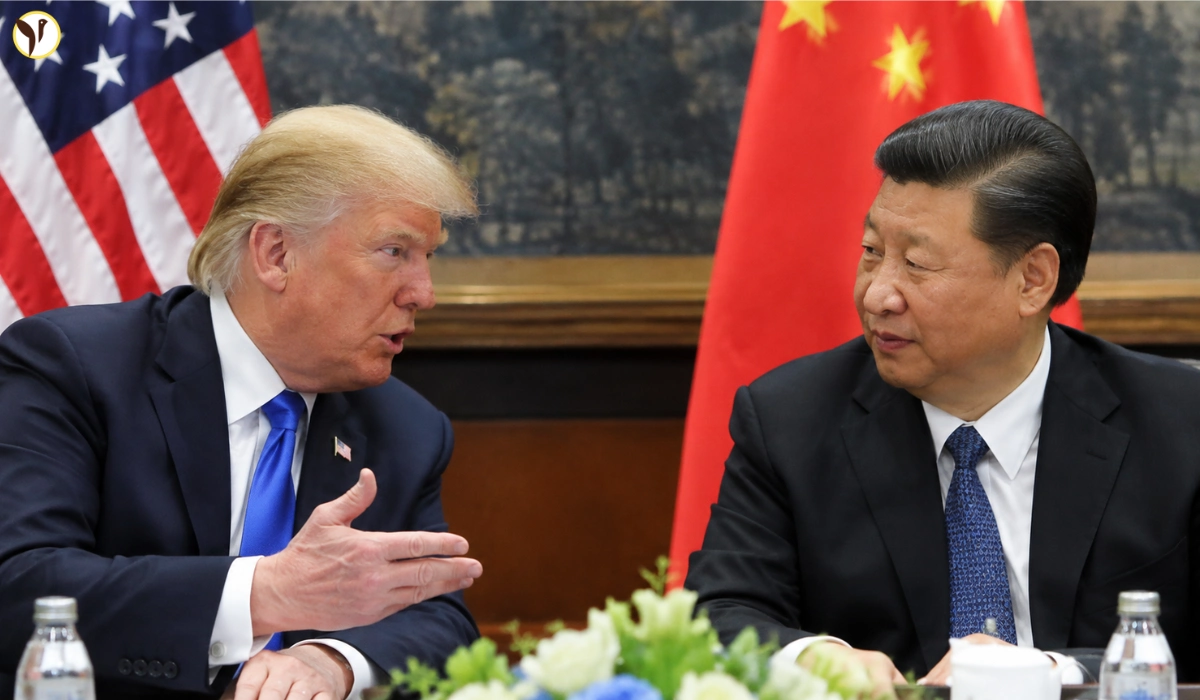
The development comes just days before US President Donald Trump and Chinese President Xi Jinping are expected to meet in Washington.
During talks in New York on September 20, US Treasury Secretary Scott Bessent and Chinese Vice Premier He Lifeng discussed creating a formal communication channel for AI-related concerns.
The United States has proposed a system that would allow the two countries to notify each other about serious AI incidents that could create national-security risks.
The idea is still at an early stage. It does not mean that Washington and Beijing have reached a broad AI agreement or that a global AI treaty has been signed.
But the proposed dialogue could become important because the US and China are currently two of the world's most important AI powers.
What Exactly Is The US-China AI Dialogue?
The proposed US-China AI Dialogue is intended to create a regular channel through which officials from both countries can discuss artificial intelligence.
According to Bessent, the discussions would focus on finding a shared understanding of:
- Common AI threats
- AI-related national-security incidents
- Safety concerns
- Transparency
- Communication between the two countries
- Possible future cooperation
The immediate proposal includes a notification mechanism for serious AI incidents.
In simple words, if an AI-related event creates a major security risk, the two sides could have a formal way to communicate with each other rather than relying only on public statements or indirect diplomatic channels.
Why Are The US And China Talking About AI?
The two countries are competitors in AI, but many of the risks created by advanced AI systems do not stop at national borders.
For example, officials and researchers are increasingly concerned about AI being used for:
- Cyberattacks
- Critical infrastructure attacks
- Misinformation
- Autonomous systems
- Biological misuse
- Military applications
- Attacks on financial systems
- Other national-security threats
A major concern is what happens if an advanced AI system is involved in a serious cyber or security incident.
If the US believes China is responsible, or China believes the US is responsible, a lack of communication could make the situation more difficult.
That is why some experts have compared AI communication mechanisms with earlier efforts to reduce the risk of misunderstandings between major powers. Reuters reported that US and Chinese security experts have separately discussed ideas such as human control over major cyber operations and communication channels for AI-related incidents.
What Happened In The Latest US-China Talks?
The latest discussions took place in New York on September 20, 2026.
US Treasury Secretary Scott Bessent and US Trade Representative Jamieson Greer met Chinese Vice Premier He Lifeng.
The talks lasted around eight hours and covered both economic issues and artificial intelligence.
After the meeting, Bessent said the two sides had discussed establishing the US-China AI dialogue.
The US also proposed the AI incident-notification mechanism for consideration at the upcoming Trump-Xi summit.
China's state media later described the discussions as frank, in-depth and constructive, including exchanges on AI-related issues.
However, the two countries still have major disagreements on technology, trade and national security.
So the dialogue should not be treated as proof that the wider US-China technology rivalry has ended.
Could This Change How AI Affects You?
This is where the story becomes relevant to ordinary people.
The proposed dialogue is mainly about government-to-government communication and national security.
It will not immediately change the way someone uses ChatGPT, Gemini or another AI tool.
However, if the talks eventually lead to common safety practices, they could indirectly affect the future of AI.
Here are some areas to watch.
AI Safety Could Become More Important
If the US and China agree on ways to communicate about serious AI incidents, safety could become a bigger part of international AI policy.
This could influence how governments approach advanced AI systems.
For users, that could eventually mean stronger safety requirements for powerful AI products.
However, no such broad consumer rule has been announced as part of the latest talks.
AI Regulation Could Become More Coordinated
At present, countries are developing their own approaches to AI regulation.
The US, China and other major economies have different systems and priorities.
A regular US-China dialogue could create opportunities to discuss common standards for certain risks.
That does not mean the two countries will adopt identical AI laws.
Their political and regulatory systems remain very different.
But even limited cooperation on specific technical risks could affect the wider global conversation about AI governance.
Your AI Privacy Could Be A Bigger Policy Issue
AI systems depend heavily on data.
As AI becomes more powerful, governments are paying more attention to questions around:
- Personal data
- Data security
- Cross-border data flows
- AI training data
- Surveillance
- Data misuse
The latest US-China dialogue is primarily focused on national-security risks rather than consumer privacy.
Still, future discussions could expand into broader AI governance issues.
For everyday users, this means privacy rules around AI remain an area worth watching.
AI And Jobs Could Be A Future Discussion
AI is already changing the way companies work.
It is being used for coding, customer support, research, design, marketing, data analysis and many other tasks.
The US-China dialogue itself is not an agreement about AI jobs or employment.
However, decisions made by the world's two biggest AI powers could influence how quickly advanced AI systems are developed and deployed.
That could indirectly affect businesses, workers and future job markets.
The exact impact will depend on how companies, governments and workers respond to AI adoption.
Advanced AI Models Could Face More Safety Checks
One possible long-term effect of international AI cooperation is greater attention to safety testing.
For example, governments could eventually discuss how advanced AI models should be evaluated before being deployed in sensitive areas.
|
|
|
|
|
|
|
|
|
|
|
|
|
|
|
|
|
|
|
|
|
These are areas of concern being discussed by officials and researchers. They are not a list of new rules already agreed by the US and China.
Why The US-China AI Race Matters
The AI relationship between Washington and Beijing is complicated.
Both countries want to develop advanced AI technology and maintain their technological competitiveness.
At the same time, both governments are increasingly discussing the risks created by advanced AI.
This creates an unusual situation.
The two countries can be competitors and still have reasons to communicate about certain risks.
The recent proposal reflects that tension.
The goal is not necessarily to stop the AI race.
Instead, the immediate idea is to create a way to communicate when AI-related incidents could create serious security problems.
What Are The Biggest Areas Of Disagreement?
The dialogue does not remove the broader differences between the two countries.
AI Chips
Advanced semiconductor technology remains one of the most sensitive areas in US-China technology relations.
The United States has imposed restrictions affecting China's access to some advanced AI chips and related technology.
China has continued developing its domestic AI capabilities despite those restrictions.
National Security
Washington is concerned about the potential military and security applications of advanced Chinese AI.
Beijing, meanwhile, has its own concerns about US technology and national-security policies.
AI Governance
The two countries also have different approaches to technology regulation and information control.
Because of these differences, reaching a common set of AI rules could be difficult.
Recent analysis has noted that the US and China may agree that AI risks need attention while having very different ideas about how those risks should be managed.
Is This An AI Treaty Between The US And China?
No.
The latest development should not be described as a full AI treaty.
There is currently a proposal to establish a dialogue and a mechanism for communicating about serious AI incidents.
More formal agreements would require additional negotiations.
This distinction is important because headlines about a new "AI dialogue" can sound bigger than what has actually been agreed.
The two countries have discussed AI consultations before, but an earlier idea for a formal forum was never fully established.
Why Is The Trump-Xi Meeting Important?
The proposed AI dialogue comes immediately before Chinese President Xi Jinping's planned visit to the United States.
China's Foreign Ministry said Xi is scheduled to visit the US from September 23 to September 25, 2026, at Trump's invitation.
The visit is expected to cover broader US-China relations and global issues, with AI forming part of the wider discussions between the two countries.
The AI proposal could therefore become one of the areas where the two sides try to establish a practical communication channel even while disagreements remain elsewhere.
What Could Happen Next?
There are several possible next steps.
Step 1: Leaders Discuss The Proposal
Trump and Xi are expected to discuss the broader US-China relationship during their upcoming meeting.
The AI dialogue proposal could be considered as part of those discussions.
Step 2: Officials Could Meet Again
Bessent said the proposed dialogue would involve representatives from the two countries meeting again.
That could turn the current idea into a more regular process.
Step 3: The Notification System Could Be Developed
If both governments agree, officials would need to decide:
- What counts as a serious AI incident?
- Who should be notified?
- How quickly should notification happen?
- What information should be shared?
- How should sensitive national-security information be protected?
These details have not yet been fully settled publicly.
Step 4: Wider AI Issues Could Follow
If the dialogue continues, future discussions could potentially cover other AI safety and governance issues.
But it is too early to say whether the talks will lead to wider agreements.
What Does This Mean For AI Users Right Now?
For most people, nothing changes immediately.
Your AI chatbot will not suddenly work differently because of the latest US-China talks.
There is also no announced US-China agreement that immediately changes consumer AI rules.
The significance is more long-term.
If the world's two major AI powers develop a regular way to discuss serious AI incidents, it could help governments respond to some risks more quickly.
For users, the areas to watch are:
- AI privacy rules
- AI safety standards
- Regulation of advanced AI models
- Cybersecurity
- AI-generated misinformation
- AI-related employment changes
- Rules around sensitive AI applications
What Experts Are Watching
The biggest question is whether the dialogue can move beyond general statements.
Analysts have pointed out that cooperation will be difficult because the US and China remain strategic competitors.
Some policy experts have argued that even limited cooperation could be useful if it focuses on clearly defined risks, such as loss of control over advanced AI systems, cyberattacks or incidents involving critical infrastructure.
At the same time, differences over AI regulation, technology exports and national security could limit what the two sides are willing to share.
So the first test will not necessarily be whether the countries agree on everything.
It will be whether they can create a reliable communication process despite their disagreements.
Why This Story Matters Beyond The US And China
The effects of the AI race are not limited to Washington and Beijing.
AI models are already being used around the world.
A major change in AI safety standards, chip access, technology development or international regulation could eventually affect companies and users in other countries as well.
For countries such as India, the European Union, Japan and South Korea, developments between the two largest AI powers could influence future technology policy and business decisions.
That is why the US-China AI dialogue is being watched internationally.