Why Did Ohio Voters Reject Vivek Ramaswamy as Amy Acton Takes the Win?
Amy Acton defeats Vivek Ramaswamy in Ohio's 2026 governor election. Discover why voters backed her campaign and what led to his defeat.

- Published
- Reading time
- 6 minutes
The 2026 Ohio governor election has delivered a major political surprise in the United States. Democratic candidate Dr. Amy Acton defeated Republican businessman Vivek Ramaswamy, despite his strong support from President Donald Trump and other prominent Republican leaders.
Acton's victory is important for Ohio politics because she will become the state's first elected female governor. She is also the first Democrat to win the governor's office since 2006, ending a long period of Republican control.
The result has raised an important question: Why did voters choose Acton over Ramaswamy in a state that has supported Republicans in recent presidential elections?
The answer appears to involve several factors, including the rising cost of living, healthcare concerns, campaign messaging, political controversies and voter reactions to negative advertisements.
Amy Acton Defeats Vivek Ramaswamy in Ohio
Democrat Amy Acton won the Ohio governor's race on November 3, 2026, defeating Republican candidate Vivek Ramaswamy.
Acton is a physician and former director of the Ohio Department of Health. She became widely known during the COVID-19 pandemic when she worked alongside Republican Governor Mike DeWine.
Ramaswamy, meanwhile, is a billionaire biotech entrepreneur who previously competed in the 2024 US presidential election. He received strong backing from Donald Trump and entered the governor's race with significant national attention.
However, Trump's support and Ramaswamy's financial resources were not enough to secure victory.
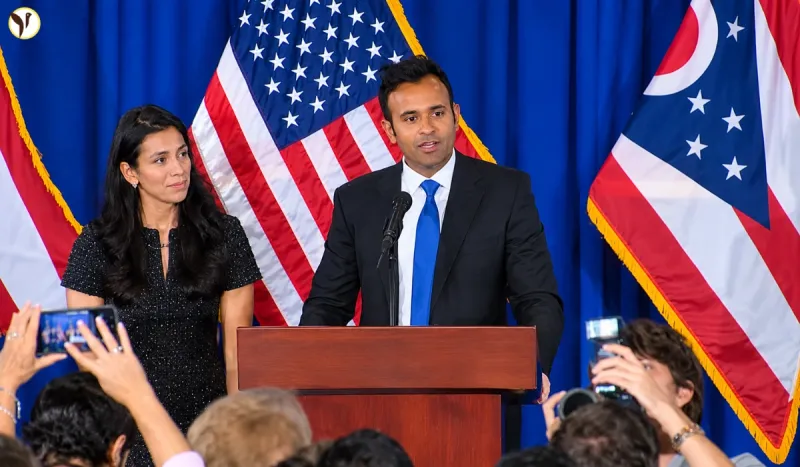
Acton said during her victory speech that she wanted to represent every Ohio resident, including those who did not vote for her. She also promised to reduce political tensions and focus on the concerns of ordinary people.
Rising Cost of Living Became a Major Election Issue
One of the biggest reasons behind Acton's victory was her focus on affordability.
Many American families are dealing with higher living expenses, including housing costs, healthcare bills, energy prices and everyday household spending.
Acton made these concerns an important part of her election campaign. She presented herself as a candidate who understood the financial challenges faced by working-class and middle-class families.
Her campaign discussed measures such as:
- Tax credits for eligible working families.
- Child tax credits of up to $1,000.
- Property tax relief for certain homeowners and senior citizens.
- Better access to affordable prescription medicines.
Ramaswamy also presented economic promises. He talked about reducing energy bills and eliminating Ohio's state income tax over a period of ten years.
However, Acton's message about immediate household expenses appeared to connect with voters during the campaign.
Controversial Advertisement Created Problems for Ramaswamy
Another major issue was a controversial advertisement released by Ramaswamy's campaign.
The advertisement featured Acton's estranged mother, Donna Arthur, who accused her daughter of dishonesty and urged voters not to support her.
The advertisement became a national political controversy because it involved deeply personal details about Acton's childhood.
Acton had previously spoken about childhood sexual abuse by her stepfather. Historical events surrounding the family, including the loss of her mother's custody of the children after her stepfather was indicted, became central to the criticism of the advertisement.
Several political figures from both parties criticised the campaign's decision to use the advertisement.
The controversy was especially damaging because the criticism did not come only from Democrats. Some prominent Republicans and other public figures also objected to the advertisement.
Ramaswamy defended the advertisement, while Donald Trump and Vice President JD Vance supported his position. The campaign eventually stopped airing it approximately one week before Election Day.
The controversy added another difficult issue to Ramaswamy's campaign during its final weeks.
Trump's Support Could Not Guarantee Ramaswamy's Victory
Vivek Ramaswamy received strong support from President Donald Trump, making the Ohio governor election a closely watched political contest.
Trump and Vice President JD Vance visited Ohio during the final weeks of the campaign to support Republican candidates.
Their involvement showed how important the election had become for the Republican Party.
However, the result demonstrated that support from national political leaders does not automatically translate into votes at the state level.
Acton managed to build a campaign around local concerns, including healthcare, family expenses and the cost of living.
She also used her experience as Ohio's former health director to connect with voters who already recognised her from the COVID-19 period.
Her victory suggests that local issues and the candidates' public image can play an important role, even when a national political figure strongly supports the opposing candidate.
Ohio's Political History Makes This Victory Important
Ohio has traditionally been considered an important battleground state in American politics. However, it has moved towards the Republican Party in several recent elections.
Donald Trump won Ohio by 11 percentage points in the 2024 presidential election.
This made Acton's victory particularly significant.
She became the first Democrat to win the state's governorship since 2006 and the first woman elected to the position.
The result also ended 16 years of Republican control of the governor's office.
For Democrats, the victory offers a major opportunity to rebuild political support in a state where the party has struggled in recent years.
For Republicans, the defeat raises questions about campaign strategy, candidate selection and how the party should respond to voters' economic concerns.
What Happens Next for Ohio?
Amy Acton will succeed outgoing Republican Governor Mike DeWine, who cannot run again because of term limits.
Her victory brings new expectations from Ohio residents, particularly those who supported her promises on affordability and healthcare.
However, winning an election and implementing policies are two different challenges.
Acton will need to work with Ohio's political institutions to turn her campaign promises into practical decisions.
Her administration will face questions about:
- Reducing the financial pressure on families.
- Improving access to healthcare.
- Supporting public education.
- Addressing property taxes and energy costs.
- Building cooperation across political parties.
Her ability to deliver on these promises will shape how voters judge her leadership in the coming years.
What Does Ramaswamy's Defeat Mean for US Politics?
Ramaswamy's defeat is also an important moment for the Republican Party.
He entered the race with national recognition, significant financial resources and support from Donald Trump. Yet he could not turn these advantages into an election victory.
The result may encourage political parties to pay closer attention to local voter concerns instead of depending only on national popularity and campaign spending.
It also shows that negative campaign advertisements can create political risks, particularly when they become controversial beyond party lines.
However, one state election cannot explain the political mood of the entire United States. The Ohio result should be viewed as an important state-level development rather than proof that every American voter has changed political preferences.
Conclusion
Amy Acton's victory over Vivek Ramaswamy has created a major political shift in Ohio. Her campaign focused on affordability, healthcare and support for ordinary families, while Ramaswamy faced criticism over a controversial advertisement and questions about his campaign strategy.
Despite receiving support from Donald Trump and other Republican leaders, Ramaswamy could not win enough voter support.
Acton will now have the responsibility of turning her election promises into action. Her performance as governor will determine whether this victory becomes the beginning of a longer Democratic comeback in Ohio.
Questions readers ask
Who won the 2026 Ohio governor election?
Democratic candidate Amy Acton defeated Republican candidate Vivek Ramaswamy in the November 3, 2026 election.
Why did Vivek Ramaswamy lose the Ohio election?
Several factors may have contributed, including Acton's affordability-focused campaign, healthcare concerns, the controversial advertisement involving Acton's mother and the challenges Ramaswamy faced in connecting with some voters.
Who is Amy Acton?
Amy Acton is a physician and former director of the Ohio Department of Health. She became widely known for her role during Ohio's COVID-19 response.
Is Amy Acton Ohio's first female governor?
She will become the first woman elected governor of Ohio. Former Lieutenant Governor Nancy Hollister served as governor for 11 days in 1999, but she was not elected to the office.
Did Donald Trump support Vivek Ramaswamy?
Yes. Donald Trump endorsed Ramaswamy and campaigned for him during the Ohio governor election.
What was the controversy surrounding Ramaswamy's advertisement?
His campaign aired an advertisement featuring Acton's estranged mother, who criticised her daughter. The advertisement triggered criticism from politicians and public figures across party lines.