
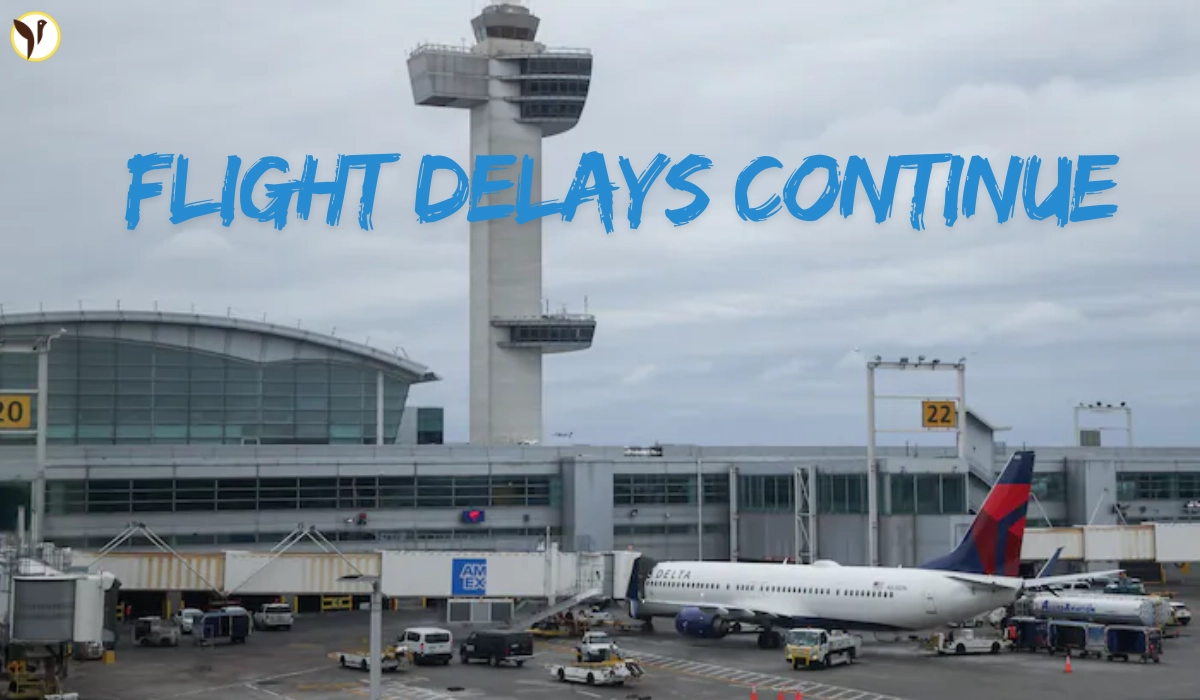


Thousands of passengers faced cancellations, missed connections and hours of uncertainty after an air traffic control communications failure disrupted flights at Newark Liberty International Airport and rippled across the northeastern United States. Although the FAA ground stop has been lifted and operations have resumed, travelers may continue to encounter delays as airlines work to reposition aircraft and flight crews.
The disruption began at around 9:45 a.m. ET on Monday, September 21, after the Federal Aviation Administration experienced a communications failure affecting its Philadelphia air traffic control facility. The facility manages aircraft approaching and departing Newark and several other airports in the region.
Newark was hit particularly hard. Commercial arrivals were largely halted for several hours, while hundreds of scheduled flights were cancelled or delayed. Restrictions were also introduced at New York’s John F. Kennedy International Airport, LaGuardia Airport and Philadelphia International Airport.
Boston Logan International Airport was also placed under a temporary ground stop as additional aircraft and air traffic began placing pressure on surrounding airspace. The Boston restriction was linked to the wider regional disruption rather than a separate outage at the airport.
What caused the FAA communications outage?
The disruption involved the failure of a primary communications connection used by the FAA’s Philadelphia Terminal Radar Approach Control facility. A backup fibre-optic line in New Jersey had also been accidentally damaged during construction work, leaving controllers without the usual level of communications redundancy.
Questions initially emerged over which organisation or contractor was responsible for damaging the backup cable. Transportation Secretary Sean Duffy initially pointed to work connected with Amtrak, but Amtrak denied responsibility. New Jersey Transit later confirmed that construction activity had been taking place near utility markings and said the circumstances were being investigated.
Because responsibility remained disputed, the confirmed fact for passengers is that construction activity damaged a critical backup telecommunications line at the same time the primary connection failed. That combination forced the FAA to restrict traffic for safety reasons.
The telecommunications lines were repaired later in the day, allowing the FAA to begin restoring normal operations at airports across the Northeast.
Newark Airport faced hours without normal arrivals
Newark Liberty International Airport experienced the most severe impact from the outage. Commercial flights were unable to land normally between approximately 9:40 a.m. and shortly after 5:20 p.m., creating a large backlog of aircraft and passengers.
More than 600 flights arriving at or departing from Newark were reportedly cancelled during the disruption. Numerous other services were delayed, diverted to alternative airports or held at their departure points until controllers could safely accept additional traffic.
A ground stop does not necessarily mean that an airport building has closed. Instead, the FAA instructs flights heading to the affected airport to remain at their airports of origin. Some departures from the affected airport may continue, depending on airspace capacity and safety conditions.
For travelers inside the terminal, however, the effect can feel like a shutdown. Aircraft may be present at the gates but unable to depart, incoming planes may be diverted and connecting passengers can find that the aircraft intended to operate their next flight has not arrived.
Flights halted at Newark, JFK and 4 other major East Coast airports https://t.co/rmK352xRcR
— NorthJersey.com (@northjersey) September 22, 2026
Why could flights remain delayed after the ground stop ends?
The lifting of a ground stop does not immediately return an airport to its normal schedule. Airlines must first deal with aircraft that are in the wrong cities, crews that have exceeded their permitted working hours and passengers who need to be rebooked.
Air traffic controllers may also limit the rate at which flights arrive while the system returns to normal. This prevents too many aircraft from approaching the airport at once and reduces pressure on runways, gates and air traffic control facilities.
Newark is one of the busiest airports serving the New York metropolitan region and is a major hub for United Airlines. A prolonged interruption there can affect flights far beyond New Jersey, including services connecting Newark with destinations across the United States and overseas.
The disruption also occurred during a busy period in New York, as international delegations were arriving for the United Nations General Assembly. The additional traffic made the regional aviation system more vulnerable to widespread delays.
How were JFK, LaGuardia and Boston affected?
The communications failure was centred on the air traffic system serving Newark, but restrictions spread to other airports as controllers managed the resulting pressure on northeastern airspace.
Ground stops or traffic-management restrictions were introduced at JFK, LaGuardia, Philadelphia and several smaller airports in the New York area. More than 100 flights were reportedly diverted as airlines and controllers searched for airports capable of receiving them.
Boston Logan was temporarily included in the restrictions because of the additional volume created by the disruption. Flights that could not reach New York-area airports needed new routes, later departure times or alternative landing locations.
The Boston ground stop was subsequently lifted, along with the other major restrictions, after communications were restored. Nevertheless, passengers travelling between Boston, Newark and New York could continue to experience knock-on delays.
What should Newark Airport passengers do now?
Travelers should check their flight directly with their airline before leaving for Newark Airport. An older scheduled departure time displayed on a ticket may no longer reflect the latest operational plan.
Passengers can also use Newark Airport’s official flight tracker and the FAA’s airport status map for updated information. Because conditions can change quickly, airline notifications should be checked again while travelling to the airport.
United Airlines issued a travel waiver for customers affected by the disruption. Eligible passengers should review the dates, airports and ticket conditions covered by the waiver before changing their booking.
Anyone whose flight has been cancelled should contact the operating airline about rebooking or a refund. Travelers should not assume that meals, hotel accommodation or cash compensation will automatically be provided because benefits can depend on the airline’s policy and whether the disruption is considered within its control.
Passengers facing an overnight delay should keep receipts for essential expenses and check whether their ticket, credit card or travel insurance includes disruption coverage.
The outage renews concerns about ageing FAA systems
The communications failure has again placed attention on the resilience of the United States’ air traffic control infrastructure. A properly functioning backup connection is intended to prevent a single failure from creating such a significant operational interruption.
In this case, the combination of a primary-line failure and damage to the backup connection exposed how quickly one technical problem can spread through tightly connected airports.
The federal government has already allocated billions of dollars toward modernising air traffic control technology, while transportation officials have called for additional funding. However, replacing communications networks, radar equipment and other critical infrastructure is a long-term project.
For passengers, the immediate concern is whether their flight will operate. For aviation authorities, the larger question is how to prevent another communications failure from producing hours of disruption at one of the country’s busiest airport systems.
Is Newark Airport operating normally now?
The FAA ground stop has ended, and Newark Airport is accepting arriving and departing flights. However, that does not guarantee that every scheduled service will operate on time.
Residual cancellations and delays may continue as airlines rebuild their schedules. Weather, aircraft availability, gate congestion and crew-positioning problems can also affect how quickly operations recover.
Passengers travelling through Newark, Boston or the New York-area airports should therefore rely on their airline’s live flight status rather than assuming the end of the ground stop means all delays have disappeared.
Reports of more than 600 Newark cancellations and approximately 7,000 delayed or cancelled flights nationwide illustrate the scale of the disruption. Operations resumed after the damaged telecommunications connection was repaired, but clearing the accumulated backlog was expected to take additional time.