Melania Trump Used This US Visa: Why Are Approvals Now Falling So Fast?
The EB-1A visa once used by Melania Trump is facing a sharp drop in US approvals. Explore the 2026 approval rates, reasons behind rejections and impact on skilled immigrants.

- Published
- Reading time
- 9 minutes
The United States is witnessing a sharp decline in approvals for one of its most sought-after immigration programmes, the EB-1A extraordinary ability visa. The visa, popularly known as the "Einstein Visa", is designed for people who have achieved exceptional success in fields such as science, technology, business, education, sports and the arts.
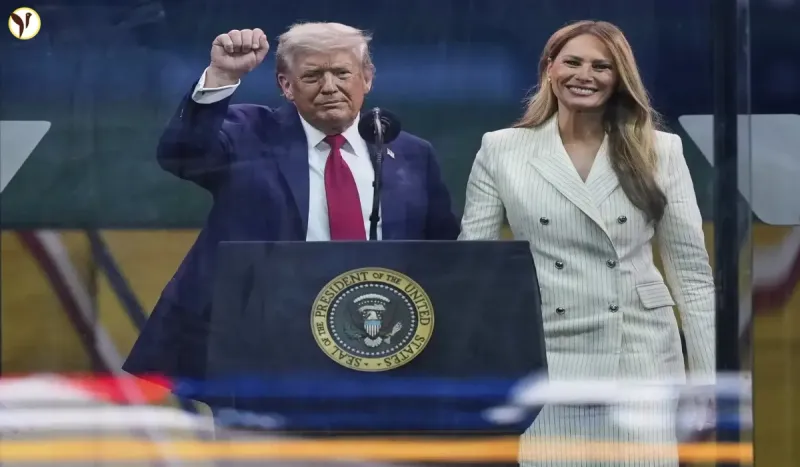
The programme has recently attracted attention because US First Lady Melania Trump also used this immigration category to obtain permanent residency in 2001 while working as a model.
However, approval rates have dropped significantly in 2026, raising concerns among international professionals who want to build their careers in the United States.
According to reported US immigration data, the EB-1A approval rate fell from around 75% during the final months of former President Joe Biden's administration to approximately 32% by the middle of 2026.
The decline has created uncertainty among skilled immigrants, particularly technology professionals, researchers, entrepreneurs and individuals with international achievements.
What Is the EB-1A Visa That Melania Trump Used?
The EB-1A visa is an employment-based immigration category offered by the United States to individuals with extraordinary ability.
It is designed for people who have demonstrated outstanding achievements and received national or international recognition in their professional fields.
Unlike many other employment-based immigration categories, EB-1A applicants can apply without having a permanent job offer from a US employer. They can also file their own immigration petition.
The programme covers several professional fields, including:
- Science and scientific research
- Technology and artificial intelligence
- Business and entrepreneurship
- Education and academic research
- Arts and entertainment
- Sports and athletics
Successful applicants can use this category as a route to permanent residency, commonly known as a US Green Card.
The visa is particularly attractive because it allows highly accomplished individuals to pursue opportunities in the United States without depending on a specific employer for sponsorship.
How Did Melania Trump Get Permanent Residency Through the EB-1 Visa?
Melania Trump received permanent residency in the United States in 2001 through the EB-1 immigration category.
At that time, she was working as a model and applied under the extraordinary ability programme.
Her immigration history became widely discussed after she became First Lady of the United States during Donald Trump's presidency.
The programme later received public attention because it was associated with a prominent political figure who is now part of an administration overseeing US immigration policy.
The current decline in approvals has renewed discussions about how the programme works and whether immigration officers are applying stricter standards to applicants.
However, Melania Trump's individual immigration case and the current approval trend are separate matters.
Why Are EB-1A Visa Approvals Falling So Fast in 2026?
The biggest concern is the sharp fall in the approval rate.
According to reported federal immigration figures, approximately 75% of EB-1A applications were approved during the final months of the Biden administration. By the middle of 2026, that figure had fallen to around 32%.
The decline has raised questions about how applications are being reviewed under the Trump administration.
Immigration lawyers and industry experts have identified several possible reasons behind the trend.
Increased Scrutiny During the Application Process
One major reason cited by immigration attorneys is increased scrutiny of EB-1A applications.
Applicants must provide strong evidence to prove that they have achieved extraordinary success in their professional fields.
Even when applicants meet the formal eligibility requirements, immigration officers conduct a final review to determine whether the complete evidence demonstrates extraordinary ability.
Attorneys say this final review has become more subjective, making it harder for some applicants to receive approval.
As a result, professionals who previously believed they had strong applications are now facing rejections.
More Applications Are Facing Rejection
Another concern is the growing number of unsuccessful applications.
According to reported figures, approximately 5,200 applicants received EB-1A approvals during the first three quarters of fiscal year 2026.
During the same period in fiscal year 2024, the number was nearly 8,900.
This difference highlights how significantly the number of approvals has declined.
However, the figures represent approved petitions and should not be confused with the total number of people receiving Green Cards.
Weak Applications and AI-Generated Documents
Immigration experts have also raised concerns about the quality of applications being submitted.
Some applicants reportedly depend on generic templates, expensive immigration services and artificial intelligence tools to prepare their documents.
However, submitting an application with impressive-looking documents does not automatically prove extraordinary ability.
Applicants must provide genuine evidence of their professional achievements, recognition and contributions.
Experts believe that an increase in weak or poorly supported petitions may also be contributing to the higher rejection numbers.
Concerns About Immigration Officer Experience
Some immigration experts have also raised concerns about staffing changes and the experience of officers reviewing applications.
They argue that reductions in experienced staff and increased workloads could affect the quality and consistency of application reviews.
However, there is no conclusive public evidence establishing that staffing changes alone caused the fall in approvals.
The decline appears to involve several factors rather than one confirmed explanation.
EB-1A Visa Approval Rate: Biden vs Trump Administration
The difference between earlier and recent approval rates has become one of the biggest talking points in the US immigration debate.
Here is a comparison of the reported figures:
|
|
|
|
|
|
|
|
|
|
|
|
The figures reflect different reporting periods, so they should not be treated as directly identical measurements.
The 40.7% figure represents the calculated approval rate across the first three quarters of fiscal year 2026, while approximately 32% refers to the rate reported for the middle of the year.
The decline has raised concerns among immigration attorneys and professionals who depend on the EB-1A category to obtain US permanent residency.
Who Can Apply for the EB-1A Extraordinary Ability Visa?
The EB-1A programme is intended for individuals who have achieved a high level of success in their professional fields.
Applicants generally need to demonstrate extraordinary ability through sustained national or international recognition.
There are two main ways to qualify.
Option 1: A Major International Achievement
Applicants may qualify through evidence of a major internationally recognised award, such as a Nobel Prize or another award that demonstrates exceptional achievement.
Option 2: Meeting at Least Three of Ten Criteria
Applicants who do not have a single major international award generally need to meet at least three of the ten regulatory criteria.
These include:
-
Receiving nationally or internationally recognised awards.
-
Membership in associations that require outstanding achievements.
-
Published material about the applicant and their work.
-
Serving as a judge of the work of others.
-
Making original contributions of major significance.
-
Publishing scholarly articles in professional or major publications.
-
Having work displayed at artistic exhibitions or showcases.
-
Performing a leading or critical role for distinguished organisations.
-
Receiving a high salary compared with others in the field.
-
Achieving commercial success in the performing arts.
Meeting three criteria does not guarantee approval. USCIS also evaluates the overall evidence to determine whether the applicant genuinely qualifies as an individual with extraordinary ability.
Why Is the EB-1A Visa Important for Indian Professionals?
The falling approval rate is particularly important for Indian professionals who want to work and settle in the United States.
India has a large pool of technology experts, researchers, business founders, scientists and entrepreneurs.
Many highly skilled Indians consider the EB-1A category because it offers a self-petition route and does not require a permanent job offer.
However, the latest approval trend could make the process more uncertain.
Indian applicants may need stronger documentation of their achievements, professional recognition, research contributions and industry impact.
The decline also comes at a time when international competition for skilled workers is increasing.
Countries such as Canada, the United Kingdom and Australia are also trying to attract experienced professionals and highly qualified workers.
If US immigration approvals continue to become more difficult, some applicants may consider other countries for their professional opportunities.
Is the Trump Administration Making the EB-1A Visa Harder to Get?
The sharp fall in approvals has raised questions about the Trump administration's immigration approach.
President Donald Trump has repeatedly spoken about strengthening immigration checks and controlling immigration into the United States.
At the same time, the administration has also highlighted the importance of attracting talented individuals who can contribute to the American economy.
The decline in EB-1A approvals has therefore created a debate about how the country can balance strict immigration screening with its need for global talent.
Immigration attorneys say that even applicants with strong professional backgrounds are facing more challenges during the application process.
However, the approval statistics alone do not prove that every rejection is the result of a new government policy.
The US Citizenship and Immigration Services (USCIS) is responsible for reviewing these petitions, and each application is evaluated based on its evidence and eligibility.
What Should EB-1A Applicants Do Before Applying?
With approval rates falling, applicants should focus on preparing a strong and genuine immigration petition.
Some important steps include:
- Collect evidence of professional awards and recognition.
- Maintain records of research papers and publications.
- Document important contributions to the industry.
- Provide proof of leadership roles and professional achievements.
- Collect independent evidence of recognition from experts.
- Avoid relying on generic application templates.
- Consult a qualified US immigration attorney before filing.
Applicants should also understand that meeting the minimum eligibility criteria does not guarantee a Green Card.
A strong application must demonstrate that the applicant has genuinely achieved extraordinary recognition in their field.
What Happens Next for the US EB-1A Visa Programme?
The future of the EB-1A programme will depend on how US immigration authorities continue reviewing applications and whether approval rates improve in the coming quarters.
The sharp decline has already attracted attention from immigration lawyers, business leaders and skilled professionals.
For the United States, the challenge is to maintain strong immigration checks while continuing to attract talented people from around the world.
For international applicants, the message is clear: professional achievements alone may not be enough unless they are supported by strong and verifiable evidence.
The EB-1A visa remains an important route to US permanent residency, but applicants may now face a more difficult and uncertain approval process.
Conclusion
The decline in EB-1A visa approvals has become an important development in US immigration news, especially because the programme was previously used by Melania Trump to obtain permanent residency.
Approval rates have fallen from around 75% during the final months of the Biden administration to approximately 32% by the middle of 2026.
Increased scrutiny, subjective final reviews, weaker applications and concerns about immigration officer capacity have all been cited as possible reasons.
The development is important for Indian professionals, technology entrepreneurs, researchers and other highly skilled applicants who want to build their future in the United States.
Whether the approval rate improves or falls further will remain an important question for the global skilled immigration community.
Questions readers ask
Which US visa did Melania Trump use to get permanent residency?
Melania Trump received US permanent residency through the EB-1 immigration category in 2001 while working as a model.
What is the EB-1A visa?
The EB-1A is a US employment-based immigration category for individuals with extraordinary ability in fields such as science, business, education, sports and the arts.
Why are EB-1A visa approvals falling in 2026?
Immigration experts point to increased scrutiny, subjective final reviews, weaker applications and concerns about staffing and officer experience as possible reasons.
What is the EB-1A visa approval rate in 2026?
The reported approval rate fell to approximately 32% by the middle of 2026. The calculated rate across the first three quarters of fiscal year 2026 was around 40.7%.
Can Indians apply for an EB-1A visa?
Yes. Indian citizens can apply if they meet the eligibility requirements and provide sufficient evidence of extraordinary ability.