Donald Trump Plans New Tariffs on 16 Countries: Is China Tension the Reason?
Donald Trump is preparing new tariffs on 16 major US trading partners, including India and China. Find out why Washington is targeting excess industrial capacity and what it means for global trade.

- Published
- Reading time
- 7 minutes
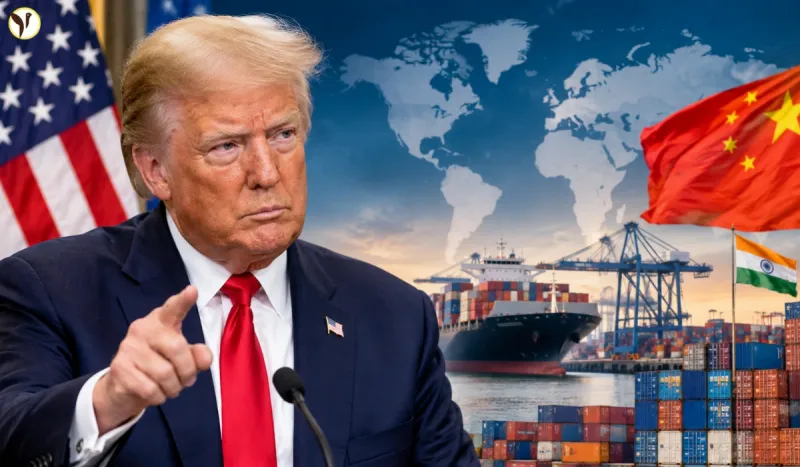
US President Donald Trump is preparing another round of tariffs targeting 16 major trading partners, including China, India, Japan, South Korea and the European Union. The proposed move could increase pressure on global trade and create fresh uncertainty for exporters and businesses.
According to reports published on November 24 and 25, 2026, the Trump administration is expected to announce the findings of an investigation into what Washington describes as excessive industrial capacity and government-supported manufacturing in these economies.
The investigation is being conducted under Section 301 of the US Trade Act of 1974. The US administration argues that government subsidies and excessive production allow foreign manufacturers to sell goods at lower prices, putting American companies at a disadvantage.
China is an important part of this dispute, but the proposed action is not limited to Beijing. India and 14 other trading partners are also included in the investigation.
Which 16 Countries Could Face New US Tariffs?
The investigation covers 16 major US trading partners. These include:
-
China
-
India
-
European Union
-
Japan
-
South Korea
-
Mexico
-
Vietnam
-
Taiwan
-
Thailand
-
Malaysia
-
Indonesia
-
Switzerland
-
Norway
-
Singapore
-
Bangladesh
-
Cambodia
The countries have been included because the US is examining their manufacturing capacity, government support and the impact of their exports on American industries.
However, this does not mean that every country will face the same tariff rate. Reports suggest that the US could adopt different measures for different trading partners, depending on the findings of the investigation and existing trade agreements.
Why Is Donald Trump Planning New Tariffs?
The Trump administration says that some countries are producing more goods than their domestic and international markets can absorb.
According to Washington, government subsidies and other forms of support have helped manufacturers increase production and sell products at competitive prices in international markets.
The US believes this situation creates an unfair advantage for foreign companies and puts American manufacturers under pressure.
The investigation is examining sectors such as:
- Steel and aluminium
- Electric vehicles
- Solar products
- Household appliances
- Other manufactured goods
The administration wants to use tariffs to protect American industries and respond to what it describes as unfair trade practices.
The investigation was launched under Section 301 of the Trade Act of 1974, which gives the US government authority to take action against certain foreign trade practices considered unfair or harmful to American commerce.
Is China the Main Reason Behind Trump's New Tariff Plan?
China is one of the biggest reasons behind the renewed trade discussion, but it is not the only country involved.
For years, Washington and Beijing have disagreed over manufacturing subsidies, trade imbalances, technology competition and access to international markets.
The Trump administration has repeatedly accused China of supporting large-scale industrial production that creates excess supply in global markets. The US is particularly concerned about products such as steel, electric vehicles, solar panels and other manufactured goods.
Another concern involves Chinese companies investing in other Asian economies and using regional manufacturing networks to export products to the US. Washington is examining whether production in some countries could be connected to Chinese investment and supply chains.
China has rejected the accusations and argues that its manufacturing strength comes from competition and industrial development.
US-China Trade Tensions Continue Despite Trump-Xi Meeting
The latest tariff plan comes shortly after Trump and Chinese President Xi Jinping met on the sidelines of the APEC summit in Shenzhen on November 19, 2026.
The meeting raised hopes of improving economic relations between the world's two largest economies. However, major disagreements over trade, industrial production and strategic competition remain unresolved.
The two countries are also operating under a temporary trade understanding that is due to expire on January 10, 2027.
Reports indicate that the US may maintain existing negotiated tariff limits for China if the trade arrangement is extended. If the understanding expires, the situation could become more complicated.
This means that the proposed tariffs could test the progress made during recent diplomatic discussions between Trump and Xi.
Will India Also Face Higher US Tariffs?
India is among the 16 economies covered by the US investigation. This is particularly important because New Delhi and Washington have been working to improve their trade relationship.
India exports several products to the American market, including engineering goods, textiles, chemicals, pharmaceuticals and manufactured products.
Additional tariffs could increase costs for Indian exporters and make some products less competitive in the US market.
The final impact will depend on the tariff rates, products covered and exemptions announced by Washington.
India is also seeking favourable terms in its trade negotiations with the US. A fresh round of duties could therefore make those discussions more complicated.
However, it is too early to estimate the exact financial impact on Indian businesses because the final rates and product-level details have not yet been confirmed.
How Much Could the New US Tariffs Increase?
The final tariff rates have not been officially confirmed in the reports available on November 25.
Trade experts cited in media reports have discussed possible additional duties of around 15% to 25% on certain imports from economies found to have excess industrial capacity.
These figures are estimates and possible scenarios, not confirmed tariff rates announced by the US government.
The proposed duties could also come on top of existing tariffs. Reports say the administration is considering different rates for different countries, while taking previously negotiated trade agreements into account.
For example, existing trade arrangements have included tariff ceilings for some partners, such as the European Union, Japan and South Korea.
The final decision will depend on the investigation's findings and the administration's next announcement.
Why Is Trump Bringing Back Tariffs After the Supreme Court Ruling?
Another important reason behind the latest move is the legal situation surrounding Trump's earlier tariff programme.
In February 2026, the US Supreme Court struck down broad tariffs imposed under the administration's earlier emergency-powers approach.
The Trump administration has since been exploring other legal routes to continue its trade policy.
The latest investigation under Section 301 is part of that effort. It gives the US government a separate legal framework to investigate alleged unfair trade practices and consider additional duties.
Therefore, the proposed tariffs are not simply a continuation of the earlier policy. They are being developed through a different trade investigation and legal process.
What Could New Tariffs Mean for the Global Economy?
If the US introduces additional tariffs, the impact could reach beyond the 16 economies under investigation.
Higher import duties can increase the cost of goods entering the US. Businesses may have to reconsider suppliers, production locations and export strategies.
The possible effects include:
-
Higher costs for companies importing affected products.
-
Pressure on exporters that depend heavily on the US market.
-
Changes in global manufacturing and supply chains.
-
Fresh trade negotiations between Washington and affected governments.
-
Greater uncertainty for international businesses and investors.
There is also a possibility that affected countries could respond with diplomatic or trade measures of their own.
However, the final impact will depend on the products covered, tariff rates and whether exemptions or negotiated arrangements are introduced.
What Happens Next?
The next major development will be the release of the US Trade Representative's investigation findings and details of any proposed tariff measures.
Governments and exporters in the affected economies will be watching closely for information about product categories, tariff rates and implementation dates.
For India, the announcement will be particularly important because of its ongoing trade discussions with Washington.
For China, the move could create another challenge in its already complicated economic relationship with the US.
Conclusion: Donald Trump's proposed tariffs on 16 trading partners are part of a wider effort to protect American manufacturing and respond to alleged excess industrial capacity. China remains a central part of the trade dispute, but India, the European Union and several other economies are also under scrutiny. The final tariff rates and implementation details will determine whether this move leads to another major escalation in global trade tensions.
Questions readers ask
Is Donald Trump planning new tariffs on 16 countries?
Yes. The Trump administration is preparing new tariff measures following an investigation into alleged excess industrial capacity among 16 major trading partners.
Which countries could face Trump's new tariffs?
The list includes China, India, Japan, South Korea, the European Union, Mexico, Vietnam, Taiwan, Thailand, Malaysia, Indonesia, Switzerland, Norway, Singapore, Bangladesh and Cambodia.
Why is Trump planning new tariffs?
The US administration says government subsidies and excessive manufacturing production in these economies are creating unfair competition for American companies.
Is China the main target of Trump's new tariff plan?
China is a major focus because of the ongoing US-China trade dispute. However, the investigation covers 16 economies, not just China.
Will India face new US tariffs?
India is included in the investigation. Whether Indian exports will face additional duties, and at what rates, depends on the final US decision.