China May Hold the Key to Trump's Nuclear Plan: Here's What You Should Know
China could play a decisive role in Donald Trump's nuclear arms-control plan. Here is what happened during the Trump-Xi-Putin meeting and why a deal remains difficult.

- Published
- Reading time
- 7 minutes
US President Donald Trump is looking towards China as he pushes for a new nuclear arms-control agreement involving the world's three major nuclear powers: the United States, China and Russia. However, getting Beijing to accept limits on its nuclear weapons programme could prove to be one of the biggest challenges for the American president.
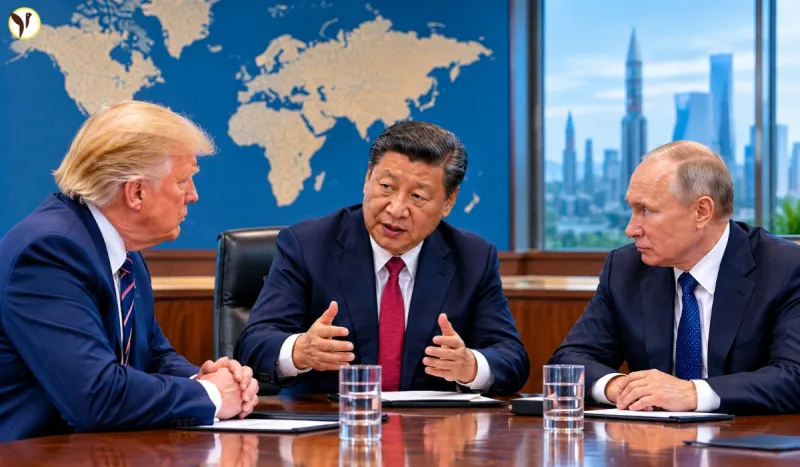
The issue gained fresh attention after Trump met Chinese President Xi Jinping and Russian President Vladimir Putin in Shenzhen, China, on November 19, 2026. Nuclear weapons were among the key topics discussed during the meeting.
Following the talks, Trump said that reaching an agreement to limit nuclear weapons would be difficult, but he would continue working towards the goal. The three leaders also reaffirmed that a nuclear war cannot be won and must never be fought.
Although the meeting created an opportunity for further discussions, it did not produce a formal nuclear arms-control agreement. The future of Trump's plan will largely depend on whether China is willing to participate in meaningful negotiations.
Why Does Trump Want China in a Nuclear Deal?
For several decades, nuclear arms-control agreements mainly focused on the United States and Russia because both countries possessed the world's largest nuclear arsenals.
However, China's nuclear programme has expanded significantly in recent years. Washington believes that any future agreement designed to reduce global nuclear risks should also include Beijing.
Trump has repeatedly indicated that a deal involving only the United States and Russia would not be enough to address the changing global security situation.
His administration wants all three major nuclear powers to discuss their weapons programmes, reduce risks and explore possible limits on nuclear expansion.
The challenge is that China has a much smaller nuclear arsenal than the United States and Russia. Beijing has argued that its nuclear capabilities are not at the same level as those of the other two countries.
This difference in nuclear strength is one of the main reasons China has been reluctant to join traditional three-way arms-control negotiations.
What Happened During the Trump, Xi and Putin Meeting?
Trump, Xi Jinping and Vladimir Putin met in Shenzhen on November 19, 2026, for discussions involving international security and other major global issues.
Trump wanted to use the meeting to begin discussions about controlling nuclear weapons and reducing the risk of a nuclear conflict.
After the meeting, Trump told Reuters that he supported the idea of limiting nuclear weapons but acknowledged that negotiations would be extremely difficult.
He also indicated that Xi supported the general concept of reducing nuclear weapons, although reaching a practical agreement would require difficult discussions.
The leaders issued a joint statement reaffirming that nuclear war cannot be won and must never be fought. They also committed to dialogue on reducing nuclear risks and preventing the spread of nuclear weapons.
However, the statement did not establish specific limits on the number of nuclear warheads or introduce a binding agreement.
For now, the outcome represents an opening for further diplomatic engagement rather than a completed arms-control deal.
China's Growing Nuclear Arsenal Raises Concerns
China's expanding nuclear capabilities are a major reason Washington wants Beijing involved in future negotiations.
According to estimates cited in recent reporting, China's nuclear arsenal has grown considerably over the past decade. The US Department of Defense assessed that China's stockpile remained in the low 600s through 2024 and projected that the country could have more than 1,000 operational nuclear warheads by 2030.
The United States and Russia still possess much larger nuclear arsenals.
This difference creates a difficult negotiating situation. China may not want to accept the same limits as countries that have maintained thousands of nuclear weapons for decades.
At the same time, Washington believes that China's rapid expansion makes it increasingly important to include Beijing in global nuclear security discussions.
The central question is whether the three countries can agree on a framework that recognises their different security concerns and nuclear capabilities.
Why Is China Reluctant to Join Nuclear Arms-Control Talks?
China's position is based largely on the difference between its nuclear arsenal and those of the United States and Russia.
Beijing has argued that its nuclear strength is not comparable to the much larger stockpiles maintained by the other two countries. It has also said that its nuclear capabilities are intended to protect national security.
From China's perspective, accepting equal restrictions with Washington and Moscow could limit its strategic options while the other two countries retain much larger arsenals.
There are also wider political and security disagreements between China and the United States.
Issues involving Taiwan, military activity in the Indo-Pacific region, technology restrictions and trade tensions could affect the atmosphere of any nuclear negotiations.
As a result, even if both governments support discussions on reducing nuclear risks, reaching a detailed and enforceable agreement may take considerable time.
Why Does the Expiration of New START Matter?
Another major factor behind Trump's nuclear plan is the end of the New START treaty between the United States and Russia.
New START was the last major remaining agreement placing numerical limits on the two countries' deployed strategic nuclear weapons. Its expiration in February 2026 left the world's two largest nuclear powers without those treaty-based numerical limits.
The end of the agreement has increased concerns about a possible new nuclear arms race.
Trump's administration has argued that a future arms-control framework should reflect the current international security environment rather than focus only on Washington and Moscow.
Including China would therefore represent a major change in the structure of global nuclear negotiations.
However, creating a three-country agreement would be more complicated than renewing a two-country treaty. The governments would need to agree on limits, verification arrangements, transparency and enforcement.
Could Trump Convince Xi Jinping to Accept Nuclear Limits?
Convincing Xi Jinping to accept restrictions on China's nuclear programme will not be easy.
China may prefer discussions focused on reducing nuclear risks rather than immediately agreeing to limits on the total number of warheads.
For example, the three countries could explore communication channels during military emergencies, transparency measures or safeguards against accidental nuclear escalation.
Such steps may be easier to negotiate than an agreement requiring China to reduce its nuclear arsenal.
The November 19 meeting has created an opportunity for further discussions, but there is no confirmed timetable for a final agreement.
The outcome will depend on whether Washington, Beijing and Moscow can find common ground despite their wider political and military differences.
What Does Trump's Nuclear Plan Mean for Global Security?
The involvement of China in nuclear arms-control discussions could have major consequences for international security.
The United States, Russia and China possess the world's most significant nuclear capabilities. Their decisions can influence global stability, military planning and the risk of nuclear escalation.
A successful agreement could improve communication, increase transparency and reduce the possibility of misunderstandings between the three countries.
However, failure to reach an agreement could leave major questions about nuclear competition unresolved.
Other countries, including those in Europe and the Indo-Pacific region, will also be watching the discussions closely because changes in the nuclear balance could affect their security.
For now, the most important development is that the three leaders have expressed support for continued dialogue. Whether that political commitment turns into a practical agreement remains uncertain.
What Happens Next?
Trump has indicated that he will continue raising the issue of nuclear weapons with China and Russia, even though he recognises the difficulty of negotiations.
The next stage will likely involve diplomatic discussions about what a possible agreement could cover.
The three countries would need to address several important questions:
- Should the agreement limit the total number of nuclear warheads?
- Should it include restrictions on the development and deployment of new weapons?
- How would the countries verify that the agreed limits are being followed?
- What role should China play while its nuclear arsenal remains smaller than those of the United States and Russia?
These questions will determine whether Trump's proposal can move beyond political statements and become a practical arms-control initiative.
Conclusion
China may hold a decisive role in Donald Trump's plan to create a new nuclear arms-control framework. The November 19 meeting between Trump, Xi Jinping and Vladimir Putin showed that the three major powers are willing to continue discussing nuclear risks.
However, the differences between their nuclear arsenals and wider geopolitical interests make negotiations difficult.
China's willingness to participate, Russia's position and Washington's ability to offer acceptable terms will shape the future of the proposal.
For now, there is no confirmed three-country nuclear reduction agreement. The diplomatic discussions have begun, but turning them into meaningful limits on nuclear weapons will be a much bigger challenge.
Questions readers ask
Why does Trump want China in a nuclear deal?
Trump wants China included because its nuclear arsenal is growing. He believes a future agreement involving only the United States and Russia would not fully address global nuclear security.
Did Trump, Xi and Putin discuss nuclear weapons in November 2026?
Yes. The three leaders discussed nuclear issues during their meeting in Shenzhen, China, on November 19, 2026.
Did the three leaders sign a nuclear weapons agreement?
No. They issued a joint statement supporting dialogue on reducing nuclear risks, but no formal agreement setting limits on nuclear weapons was announced.
Why is China reluctant to join nuclear arms-control negotiations?
China argues that its nuclear arsenal is much smaller than those of the United States and Russia. Beijing has questioned the fairness of accepting similar restrictions while the difference in nuclear stockpiles remains significant.
How many nuclear warheads could China have by 2030?
The US Department of Defense has projected that China could have more than 1,000 operational nuclear warheads by 2030.