India-Brazil Ties After Lula’s Win: Will Trade and Rare Earths Get a Boost?
Lula’s re-election in Brazil could strengthen India-Brazil ties. Explore the $30 billion trade target, rare earths cooperation and what comes next.

- Published
- Reading time
- 10 minutes
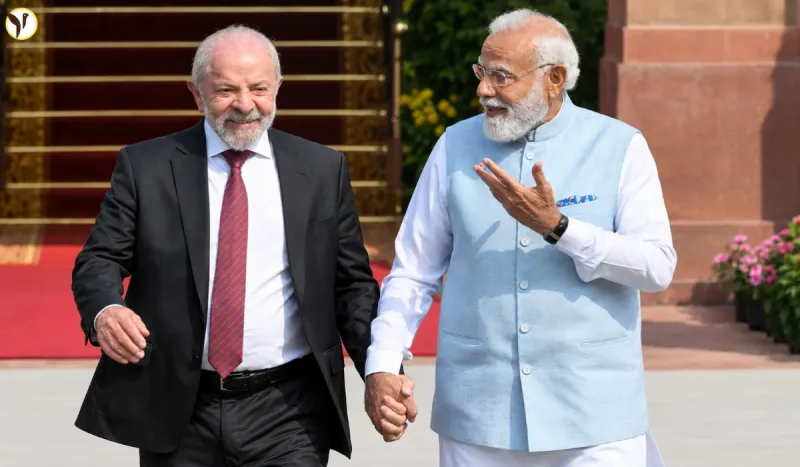
Brazilian President Luiz Inácio Lula da Silva’s re-election could give fresh momentum to India-Brazil relations, particularly in trade, rare earths, critical minerals and cooperation among developing countries.
Lula defeated conservative challenger Flávio Bolsonaro in Brazil’s presidential runoff election on October 25. His victory means continuity in Brazil’s leadership and foreign policy, including its efforts to build stronger partnerships with countries such as India.
For New Delhi, the result comes at an important time. India and Brazil have already taken steps to expand economic cooperation, including agreements on critical minerals and rare earths. Both countries are also working towards a larger bilateral trade target.
But an important question remains: Will Lula’s victory lead to more trade and better access to rare earths for India, or will progress depend on difficult negotiations and long-term investment?
Here is what the election result could mean for the relationship between the two countries.
Why Is Lula’s Victory Important for India?
Lula’s re-election offers continuity in India’s relationship with Brazil.
India and Brazil have developed a strategic partnership covering trade, energy, agriculture, defence, technology, health and cooperation in international forums.
Both countries also support a stronger voice for developing economies in global decision-making. They work together through platforms such as BRICS and the G20 on issues including economic development, international trade and reform of global institutions.
After Lula’s victory, Prime Minister Narendra Modi congratulated the Brazilian leader and expressed his intention to deepen the two countries’ strategic partnership.
This political continuity could help both governments carry forward agreements already discussed or signed.
However, an election result alone cannot guarantee faster economic growth. The real test will be whether both sides turn political commitments into new investments, business opportunities and practical cooperation.
India-Brazil Trade: Can It Reach $30 Billion by 2030?
Trade is one of the biggest areas to watch after Lula’s victory.
India and Brazil have set a goal of increasing bilateral trade to $30 billion by 2030. Reported trade for the 2025–26 financial year reached approximately $15.07 billion.
Reaching the target would require both countries to expand trade beyond existing products and industries.
India and Brazil already exchange a range of goods, including agricultural products, energy-related commodities, chemicals, medicines, engineering goods and industrial materials.
India could find additional opportunities in pharmaceuticals, machinery, technology and manufactured products. Brazil, meanwhile, is an important source of agricultural commodities, minerals and other raw materials.
A stronger trade relationship could benefit businesses in both countries by opening new markets and creating opportunities for investment.
What Could Help Increase Trade?
Several steps could support the $30 billion target:
- Expanding market access for goods and services.
- Reducing unnecessary trade barriers.
- Improving cooperation between companies and investors.
- Increasing trade in pharmaceuticals, chemicals and engineering products.
- Supporting investment in mining, processing and industrial infrastructure.
- Reviewing existing trade arrangements to identify areas for improvement.
India and the South American trade bloc MERCOSUR also have a framework for preferential trade. Discussions about improving market access could help businesses explore additional opportunities.
However, reaching the $30 billion target will depend on actual trade growth, commercial demand and progress in negotiations—not simply on political goodwill.
Why Are Rare Earths So Important in India-Brazil Relations?
Rare earths and critical minerals are becoming increasingly important in global economic and strategic competition.
These materials are used in a range of modern technologies, including electric vehicles, wind turbines, electronics and certain advanced manufacturing and defence applications.
Countries want reliable access to these resources because supply disruptions can affect industries that depend on them.
China plays a dominant role in the global rare-earth supply chain, particularly in processing. This has encouraged other countries, including India, to look for additional sources and develop more resilient supply chains.
Brazil is an important potential partner because of its mineral resources.
Closer cooperation with Brazil could help India diversify its sources of critical minerals and reduce its reliance on a limited number of suppliers.
But having mineral resources does not automatically mean a country can immediately supply large quantities of processed materials. Exploration, extraction, refining, transport and commercial agreements all take time.
That is why the implementation of India-Brazil mineral cooperation will be just as important as the agreement itself.
What Did India and Brazil Agree on Rare Earths?
During Lula’s visit to India in February 2026, the two countries signed an agreement to strengthen cooperation on critical minerals and rare earths.
The agreement was presented as an important step towards building more resilient supply chains.
The wider cooperation also covers mining and mineral development, including opportunities related to industrial raw materials.
For India, the potential benefits include better access to mineral resources, opportunities for investment and possible cooperation in exploration and processing technology.
For Brazil, cooperation with India could help attract investment and expand its partnerships with major economies.
The agreement does not mean that India will immediately receive large quantities of rare earths from Brazil. Its impact will depend on the projects developed, the minerals involved, investment decisions and the ability to establish commercially viable supply chains.
Lula’s re-election could help maintain political support for this cooperation, but the next stage will require work by government agencies, mining companies and investors.
How Could Rare Earths Cooperation Benefit India?
India is seeking reliable supplies of critical minerals for its industrial and energy transition goals.
These materials can be important for industries such as:
Electric Vehicles
Some electric vehicle motors use permanent magnets made with rare-earth elements. Reliable mineral supplies can help support the wider electric mobility supply chain.
Renewable Energy
Certain wind turbines use rare-earth magnets. Access to the required materials can help support the manufacturing of renewable-energy equipment.
Electronics
Rare earths and other critical minerals are used in various electronic components and advanced technologies.
Advanced Manufacturing
Critical minerals can support manufacturing industries that depend on specialised materials and components.
Strategic Supply Chains
Access to more sources of minerals could help India reduce the risks associated with overdependence on a small number of suppliers.
However, minerals are only one part of these industries. India will also need investment, processing capacity, technology, skilled workers and reliable transport networks to turn raw materials into finished products.
Will Lula’s Win Reduce India’s Dependence on China?
Lula’s re-election could support India’s efforts to diversify its critical-mineral supply chains, but it will not automatically reduce dependence on China.
China has a major role in several stages of the rare-earth supply chain, including processing and refining. Building alternatives requires more than identifying new sources of raw materials.
India would need to develop or secure access to the facilities and technology required to process minerals and manufacture products using them.
Cooperation with Brazil could form one part of this strategy.
Working with multiple countries can help India spread supply risks and improve access to important resources. But establishing new mining and processing projects can take years, and not every mineral deposit becomes commercially viable.
Therefore, India-Brazil cooperation should be seen as a long-term opportunity rather than an immediate solution to supply-chain dependence.
Could Lula’s Re-election Strengthen BRICS Cooperation?
India and Brazil are both members of BRICS, a grouping that brings together major emerging economies.
The two countries have often supported greater representation for developing countries in global institutions and stronger cooperation on development and international economic issues.
Lula has consistently supported a more independent Brazilian foreign policy and stronger engagement with countries across the Global South.
His re-election could allow India and Brazil to continue coordinating on issues such as:
- Reform of international institutions.
- Trade and investment among developing countries.
- Climate action and sustainable development.
- Development finance.
- Technology and industrial cooperation.
- Greater representation for emerging economies.
For India, working closely with Brazil can help strengthen its engagement with Latin America and other developing economies.
However, BRICS members do not agree on every issue. Each country has its own economic priorities, foreign policy interests and relationships with major powers.
The relationship will therefore depend on where their interests overlap and what practical steps they are willing to take together.
Will India-Brazil Relations Affect Their Ties With the United States and China?
India and Brazil both have to manage relationships with several major economies.
China is a significant trading partner for Brazil, while the United States is also an important economic and diplomatic partner. India, meanwhile, has its own major trade and strategic relationships with both countries.
The global competition over technology, trade and critical minerals makes these relationships more complicated.
Brazil’s approach under Lula has emphasised national sovereignty, diversified partnerships and cooperation with the Global South. India also seeks to protect its strategic independence while expanding its economic opportunities.
Closer India-Brazil cooperation could help both countries diversify their partnerships. But it does not mean that either country will abandon its existing relationships with the United States or China.
Instead, both may seek to work with different partners depending on their economic and strategic interests.
What Challenges Could Slow Down Trade and Rare Earths Cooperation?
Although the opportunities are significant, several challenges could affect progress.
Trade Barriers
Differences in regulations, tariffs and market-access rules can make it harder for companies to sell products in another country.
Mining and Processing Costs
Mining projects require substantial investment. Processing minerals into usable materials may require additional infrastructure and technology.
Long Project Timelines
Mineral exploration and development can take years. Some projects may not prove commercially viable.
Global Competition
Several countries are trying to secure critical minerals. India and Brazil will have to compete with other buyers and investors for resources and projects.
Changing Global Conditions
Trade disputes, economic uncertainty and changes in commodity prices can affect investment decisions.
Implementation of Existing Agreements
Signing an agreement is only the first step. Progress will depend on project approvals, investment, commercial partnerships and continued government support.
These challenges mean that Lula’s victory may provide political continuity, but measurable results will take time.
What Happens Next in India-Brazil Relations?
The next phase will depend on how both governments build on the agreements and commitments already in place.
Investors and businesses will be watching for progress in several areas:
- Trade expansion: Whether the two countries can increase exports and imports and move closer to the $30 billion target by 2030.
- Mineral projects: Whether the critical-minerals agreement leads to exploration, mining, processing or supply-chain projects.
- Business investment: Whether companies from India and Brazil identify new commercial opportunities.
- Technology cooperation: Whether the countries expand collaboration in digital technology, industrial innovation and related fields.
- Global cooperation: Whether India and Brazil continue to coordinate through BRICS, the G20 and other international forums.
The immediate challenge is to turn diplomatic support into practical results that benefit companies and industries in both countries.
Can Lula’s Win Give India-Brazil Ties a Boost?
Lula’s re-election could provide fresh momentum to India-Brazil relations at a time when both countries are looking for stronger trade partnerships and more reliable access to critical minerals.
The $30 billion trade target by 2030 offers a clear goal, while the critical-minerals agreement signed in February 2026 provides a starting point for deeper cooperation on rare earths and other resources.
For India, closer ties with Brazil could create new opportunities to diversify mineral supplies and support industries linked to electric vehicles, renewable energy and advanced manufacturing. Brazil could benefit from investment, technology partnerships and expanded access to Indian markets.
But these benefits are not guaranteed. Mining projects take time, trade barriers must be addressed, and signed agreements need to lead to actual business activity.
Lula’s victory creates an opportunity for India and Brazil to build on their existing partnership. Whether that opportunity delivers higher trade and stronger rare-earths supply chains will depend on what both countries do next.
Questions readers ask
Who won Brazil’s 2026 presidential election?
Brazilian President Luiz Inácio Lula da Silva won the October 25, 2026, presidential runoff against conservative challenger Flávio Bolsonaro.
How could Lula’s victory affect India-Brazil relations?
His re-election could provide continuity for existing cooperation in trade, critical minerals, technology and international forums. However, actual progress will depend on decisions and projects carried forward by both governments and businesses.
What is the India-Brazil trade target for 2030?
India and Brazil have set a target of increasing bilateral trade to $30 billion by 2030.
How much did India and Brazil trade in 2025–26?
Reported bilateral trade for the 2025–26 financial year was approximately $15.07 billion.
Did India and Brazil sign a rare-earths agreement?
Yes. During Lula’s visit to India in February 2026, the two countries signed an agreement to strengthen cooperation on critical minerals and rare earths.