Did Trump Stop India-Pakistan Fighting With A Shocking 250% Tariff Threat?
Trump claims his 250% tariff threat stopped India-Pakistan fighting in 2025. Here's what he said and why India rejects the US mediation claim.

- Published
- Reading time
- 11 minutes
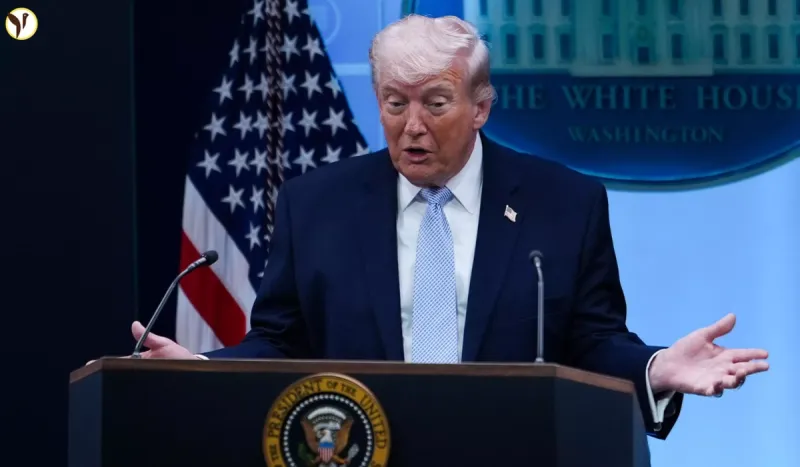
US President Donald Trump has once again claimed that he helped stop the 2025 military conflict between India and Pakistan by threatening to impose massive tariffs on both countries.
Speaking at a campaign rally in Florida on Friday, Trump said he warned the two nuclear-armed neighbours that they could lose access to American trade if they continued fighting. According to him, he threatened tariffs of up to 250% on both India and Pakistan.
Trump claimed that the warning made both sides angry but eventually forced them to stop shooting.
However, there is an important point to understand: Trump's claim that his tariff threat stopped the fighting has been disputed by India. The Indian government has repeatedly maintained that the understanding to stop military action was reached directly between the Indian and Pakistani militaries, following a request from Pakistan.
The latest remarks have brought an old diplomatic disagreement back into the spotlight. They also raise questions about the role of trade pressure in international diplomacy and the events that led to the end of the fighting in May 2025.
So, did Trump's 250% tariff threat actually stop the conflict? Here is what he said, what India has maintained and what happened during Operation Sindoor.
What Did Donald Trump Say About the 250% Tariff Threat?
During his Florida rally, Trump once again took credit for helping end the military confrontation between India and Pakistan.
He described the two countries as nuclear powers and said he warned their leaders that continuing the fighting would damage their ability to trade with the United States.
Trump claimed he told both sides that Washington could impose tariffs of 250%, making it extremely difficult for them to conduct business with America.
According to his account, the leaders of both countries initially reacted angrily to the warning. He then claimed that the fighting stopped after the threat.
Trump also referred to aircraft losses during the conflict and said that 11 planes had been shot down.
These remarks were part of his wider argument that he had helped settle several international conflicts during his presidency. He also expressed frustration that he had not received the Nobel Peace Prize for what he described as his diplomatic achievements.
However, Trump's account should be understood as his claim about the events, not proof that the tariff threat was the reason the fighting stopped.
India has consistently rejected the suggestion that a third country mediated the ceasefire understanding.
Did Trump Really Stop the India-Pakistan Fighting?
The direct answer is that Trump says he helped stop the fighting, but India disputes his account of how the ceasefire was reached.
Trump has repeatedly linked the end of the May 2025 conflict to his warnings about trade and tariffs.
The Indian government, however, has maintained that the understanding to stop military action was reached through direct communication between India and Pakistan.
Prime Minister Narendra Modi told Trump in June 2025 that there had been no discussion of an India-US trade deal or American mediation during the military confrontation. Modi said the decision to stop military action followed direct contact between the two countries through their established military channels and came at Pakistan's request.
India's position has also been stated by other senior officials.
In July 2025, Defence Minister Rajnath Singh rejected the suggestion that India stopped its military operations because of pressure from Trump. He said India had halted operations after achieving its political and military objectives.
This means the two accounts differ on the role played by Washington.
Trump says his tariff warning helped bring the conflict to an end. India says the ceasefire understanding was reached directly between the two militaries.
The available public statements do not establish Trump's claimed tariff threat as the decisive cause of the ceasefire.
What Happened Between India and Pakistan in May 2025?
To understand the latest controversy, it is important to look at the events that led to the military confrontation.
April 22, 2025: The Pahalgam Terror Attack
On April 22, 2025, a terrorist attack in Pahalgam, Jammu and Kashmir, killed 26 people, most of them tourists.
The attack triggered a major crisis between India and Pakistan. India blamed Pakistan-based terrorist infrastructure for the attack, while Pakistan rejected India's allegations of responsibility.
The incident sharply increased tensions between the two neighbouring countries.
May 7, 2025: India Launches Operation Sindoor
On May 7, India launched Operation Sindoor, targeting what it described as terrorist infrastructure in Pakistan and Pakistan-occupied Jammu and Kashmir.
The operation marked a major escalation in the confrontation.
In the days that followed, the two countries exchanged military strikes and faced a serious risk of further escalation.
May 10, 2025: Military Action Is Paused
On May 10, India and Pakistan reached an understanding to stop military action.
India's official position is that the understanding followed direct communication between the two countries' military officials. The Indian government has said that Pakistan's Director General of Military Operations contacted his Indian counterpart and requested a halt to military action.
Trump, meanwhile, has repeatedly claimed that his intervention and trade-related warnings helped bring about the halt.
The fighting stopped, but the disagreement over who played the decisive role in securing the understanding continued.
Why Is Trump Repeatedly Claiming Credit for the Ceasefire?
Trump has frequently presented the India-Pakistan episode as an example of his approach to international diplomacy.
His argument is that the United States has significant economic influence over other countries and can use access to the American market as leverage.
In his latest remarks, he suggested that threatening both countries with extremely high tariffs made the economic consequences of continuing the conflict too serious to ignore.
This fits a wider feature of Trump's approach to foreign policy: using trade negotiations, tariffs and economic pressure to pursue political objectives.
However, the existence of economic pressure does not, by itself, prove that it caused a particular diplomatic outcome.
To establish whether Trump's claimed threat played a decisive role, it would be necessary to examine the communications between the governments, the timeline of the ceasefire negotiations and the evidence supporting each account.
India's public position remains that the ceasefire understanding came through direct military communication rather than American mediation.
What Does a 250% Tariff Actually Mean?
A tariff is a tax imposed on imported goods.
When a country imposes a tariff on products coming from another country, importers generally face an additional cost. Depending on market conditions, businesses may pass some or all of that cost on to consumers.
A 250% tariff would be exceptionally high.
For example, consider an imported product with a customs value of $100.
If a 250% tariff applied to that product, the tariff would amount to $250. The combined value of the product and tariff would therefore be $350 before other applicable charges.
This is a simplified illustration, not a calculation of the actual tariff burden on Indian or Pakistani exports.
The effect of such a tariff would depend on the products covered, the rules used to calculate the tax and any exemptions or other trade measures.
A threat to impose a tariff is also different from actually imposing one. Trump's latest remarks describe a threat he says he made during the conflict; they do not establish that a 250% tariff on both countries was implemented.
Why Would the United States Use Tariffs During a Military Crisis?
The United States is an important trading partner for both India and Pakistan.
Access to the American market can matter to exporters, manufacturers and businesses that depend on international trade.
A government threatening to restrict that access may hope to create an economic incentive for another country to change its behaviour.
In theory, such pressure could be used alongside diplomatic communication to encourage de-escalation.
However, the effectiveness of a tariff threat depends on several factors:
- How much the targeted country depends on the US market
- Whether the threat is considered credible
- The potential economic cost of the proposed tariff
- Whether alternative trading partners are available
- The country's security priorities
- The diplomatic and military situation at the time
In a military crisis, governments may weigh security concerns more heavily than economic costs.
Therefore, it would be too simple to conclude that a high tariff threat automatically stops a conflict. Each situation depends on the decisions of the governments involved and the circumstances surrounding the crisis.
Did India Accept American Mediation?
India has repeatedly said that it does not accept third-party mediation to resolve its disputes with Pakistan.
In June 2025, Prime Minister Modi told Trump that the understanding to stop military action had been reached through direct communication between India and Pakistan.
India also said that trade negotiations with the United States were not linked to the decision to stop the military operations.
The Indian position is that outstanding issues with Pakistan should be addressed bilaterally.
This distinction matters because diplomatic assistance and formal mediation are not necessarily the same thing. Countries can communicate with several governments during a crisis without accepting that an outside power negotiated the final agreement.
However, India has explicitly rejected Trump's account that American mediation played the role he has claimed.
Pakistan, on the other hand, has credited Trump with helping bring about the ceasefire.
The different accounts have kept the issue alive in discussions about India-US relations and regional diplomacy.
What About Trump's Claim That 11 Planes Were Shot Down?
Trump also referred to aircraft losses during the May 2025 conflict, saying that 11 planes had been shot down.
The number has not been established as an agreed figure. India has disputed Trump's claims about aircraft losses during the confrontation.
It is important to separate three questions:
-
Did aircraft losses occur during the fighting?
-
How many aircraft were lost by each side?
-
What evidence supports the specific number cited by Trump?
These questions require different types of evidence.
Statements made by political leaders are relevant to understanding their positions, but they do not automatically settle disputed military details.
For that reason, the figure of 11 aircraft should be attributed to Trump rather than presented as a confirmed total.
What Does This Mean for India-US Relations?
The repeated disagreement over the ceasefire is significant because India and the United States have important economic, diplomatic and security ties.
Both countries have interests in trade, technology, defence cooperation and regional stability.
At the same time, India has consistently stressed that decisions involving its military operations and relations with Pakistan are matters of national sovereignty.
The disagreement over Trump's claim highlights a difference in how the two sides publicly describe the events of May 2025.
For Trump, the episode is an example of the influence he says the United States can exercise through economic pressure.
For India, the official account is that military action stopped following direct contact between the two countries' military officials.
The issue does not, by itself, mean that India-US relations have broken down. However, repeated public disagreements over sensitive diplomatic events can complicate the way both countries explain their relationship to domestic and international audiences.
Could Tariffs Be Used to Stop Another India-Pakistan Conflict?
Trump's remarks raise a broader question: could economic pressure prevent another military confrontation between India and Pakistan?
Tariffs may be one tool a government considers during a diplomatic crisis, but they cannot guarantee peace.
Military conflicts can be influenced by several factors, including security threats, political decisions, military objectives, domestic pressures and direct diplomatic communication.
Economic pressure may influence a government's calculations in some circumstances. In others, it may have limited effect or create additional tensions.
The May 2025 ceasefire should therefore not be treated as proof that tariffs alone can stop a future conflict.
Any assessment of Trump's role would need to consider the full sequence of events and the evidence behind the competing accounts.
Trump’s 250% Tariff Claim: Key Facts at a Glance
|
|
|
|
|
|
|
|
|
|
|
|
|
|
|
|
|
|
|
|
|
|
|
|
What Happens Next?
Trump's latest remarks are likely to renew discussion about the role of the United States in the 2025 India-Pakistan crisis.
The central issue remains the same: Trump says his tariff threat helped stop the fighting, while India maintains that the understanding was reached directly between the two countries' military officials.
Further documentary evidence or official statements could help clarify the sequence of communications during the crisis.
Until then, the most accurate way to report the episode is to attribute Trump's claim to him and include India's stated position rather than presenting either side's account as an independently established explanation of every step.
Questions readers ask
Did Donald Trump stop India-Pakistan fighting with a 250% tariff threat?
Trump claims that he helped stop the May 2025 fighting by threatening both countries with tariffs of up to 250%. India disputes his account and says the understanding to stop military action followed direct communication between the two countries' military officials.
When did Trump repeat his 250% tariff claim?
Trump repeated the claim at a campaign rally in Florida on October 23, 2026, local time. His remarks were reported in India on October 24.
What did Trump say to India and Pakistan?
Trump claimed he warned both countries that the United States could impose tariffs of 250% and restrict trade if they continued fighting. He said both sides eventually stopped shooting after the warning.
Why does India reject Trump's ceasefire claim?
India has maintained that the understanding to stop military action was reached directly between the Indian and Pakistani militaries. Prime Minister Narendra Modi also said that the decision was not linked to US trade negotiations or American mediation.
What was Operation Sindoor?
Operation Sindoor was launched by India on May 7, 2025, following the April 22 Pahalgam terrorist attack. India said it targeted terrorist infrastructure in Pakistan and Pakistan-occupied Jammu and Kashmir.