Can Iran Disrupt The Internet? Why Gulf Undersea Cables Are At Risk
Iran has reportedly prepared plans to target Gulf undersea internet cables if war resumes. Learn how this could affect internet access, banking and global connectivity.

- Published
- Reading time
- 10 minutes
The growing conflict between Iran, the United States and Israel has raised a new concern for the digital world: could a military confrontation disrupt internet connections across the Gulf?
Iranian officials have warned that undersea communications cables could become targets if the United States and Israel launch fresh attacks on Iran. According to a Reuters report published on October 23, two senior Iranian security officials said Tehran had prepared plans to target these cables if the conflict escalates again.
One official also warned that Iran could try to delay repairs after an attack, making disruptions last longer.
The warning has drawn attention because undersea cables carry almost all international internet traffic. These cables connect countries, businesses, financial networks and cloud services across the world.
However, there is an important distinction. A disruption to cables beneath the Strait of Hormuz would not automatically shut down the global internet. Experts say less than 1% of international bandwidth passes through that waterway, although damage to several cables could cause serious problems for Gulf countries.
So, how vulnerable are these cables, why are they important, and could the threat affect internet users in India?
What Is Iran Threatening to Target?
Iran has warned that undersea communications cables in the Gulf could be targeted if its infrastructure comes under renewed attack.
The Strait of Hormuz is at the centre of the concern. It lies between Iran and Oman and connects the Persian Gulf with the Gulf of Oman and the Arabian Sea.
Several submarine fibre-optic cable systems pass through or connect to this wider region. They carry digital information between Gulf countries and international networks.
Iran's Revolutionary Guards official Yadollah Javani has also identified seven major internet cables beneath the Strait of Hormuz as potential targets if Iranian infrastructure is attacked.
The precise operational details of any proposed attack have not been publicly established. The recent Reuters report cited officials speaking anonymously, and the threats do not prove that an attack has taken place or that one is inevitable.
The concern is that if several important cables were damaged at the same time, the remaining networks might struggle to handle all the traffic.
Why Are Undersea Internet Cables So Important?
Most people use the internet through mobile phones, computers and Wi-Fi routers. But the data behind these services often travels through physical cables running beneath the sea.
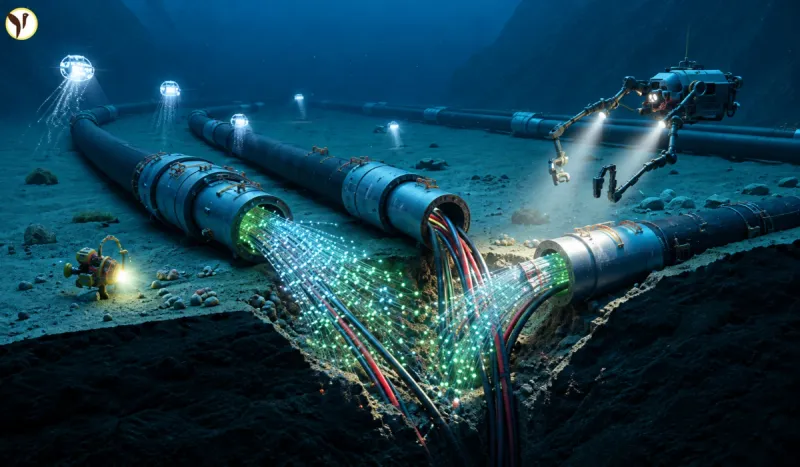
These cables contain thin optical fibres that transmit data using pulses of light. They connect countries and continents, allowing information to travel between data centres, businesses, telecom networks and online services.
Undersea cables support services such as:
- Video calls and messaging
- Online banking and digital payments
- E-commerce and online shopping
- Cloud storage and business software
- International websites and streaming platforms
- Data exchange between companies and financial institutions
According to the International Telecommunication Union, submarine cables carry around 99% of global internet traffic that crosses international borders.
This does not mean that every internet connection depends on a single cable or that all global data passes through the Gulf. The world's cable network consists of many systems, routes and landing stations.
The real risk comes when important routes are damaged and alternative connections cannot carry the displaced traffic.
Could Iran Shut Down the Global Internet?
No, an attack on Gulf cables alone would not automatically shut down the global internet.
The global network is spread across many undersea cable systems and land-based connections. If one cable breaks, network operators can often reroute data through other available routes.
However, rerouting depends on how much spare capacity is available and whether alternative cables remain operational.
A single cable fault may cause little noticeable disruption for many users. Several simultaneous cuts could create a very different situation.
If multiple cables were damaged, some networks could face slower speeds, congestion, connection failures or temporary service outages.
The potential global impact also depends on where the damage occurs. The Strait of Hormuz carries less than 1% of international bandwidth worldwide, according to TeleGeography research cited by Reuters. This suggests that damage limited to this corridor would be more likely to create a regional connectivity problem than a worldwide internet blackout.
Which Gulf Countries Could Be Affected?
The impact would depend on which cables were damaged and how network operators responded.
Countries that rely on affected cable routes could experience disruptions to international connectivity. This could include slower access to overseas websites, cloud platforms and digital services.
Potentially affected services include:
Internet and Mobile Data
Mobile networks and broadband providers rely on international connections for many online services. If their normal routes are disrupted, users could experience slower connections or temporary interruptions.
This would not necessarily mean that all domestic mobile and internet services stopped working.
Banking and Digital Payments
Banks use interconnected systems to process transactions and communicate with international financial networks.
Cable damage could affect some online services, cross-border transactions and business operations, depending on how the bank's network is connected.
It would be inaccurate to assume that every bank or payment system would stop working.
Cloud Computing and Business Services
Many businesses use cloud platforms to store data, run applications and manage operations across different countries.
If connections to cloud services become unreliable, businesses could experience delays, reduced performance or temporary service interruptions.
E-commerce and Online Communication
Online stores, messaging services and video calls may depend on connections that cross international networks.
If alternative routes are congested, these services could become slower or less reliable for some users.
The scale of the disruption would vary by country, provider and cable route.
Could Iran's Cable Threat Affect India?
India could face indirect effects if major connectivity routes between South Asia, the Gulf and other regions were disrupted.
India is connected to international internet networks through numerous submarine cable systems and landing stations. These connections support international data traffic, cloud services, businesses and communication with other countries.
Some cable systems connect India with Gulf countries and continue towards Europe, Africa or other parts of Asia.
If a cable route were damaged, operators could try to reroute traffic through alternative systems. However, the effect would depend on which routes were affected, how much capacity was available elsewhere and how long repairs took.
Possible consequences for some Indian users or businesses could include:
- Slower connections to certain overseas services
- Delays in international data transfers
- Disruptions for businesses using affected routes
- Temporary problems with some cloud-based applications
- Higher network costs if operators need alternative capacity
These are potential effects, not confirmed outcomes. There is no basis to conclude from the current threat alone that India will face a nationwide internet shutdown.
The more realistic concern is that a prolonged regional disruption could affect some international connections and businesses, depending on the location and scale of cable damage.
Why Is the Strait of Hormuz a Strategic Chokepoint?
The Strait of Hormuz is widely known because of its importance to global oil and gas shipments. It is also part of a strategically important region for telecommunications infrastructure.
Its location makes it a connection between the Gulf and the wider sea routes leading towards the Arabian Sea.
When military tensions rise in this region, concerns can extend beyond ships and energy supplies. Undersea cables and other critical infrastructure can also become part of the security discussion.
Iran's warning is significant because it suggests that telecommunications infrastructure could be used as a source of pressure in a wider conflict.
However, a threat does not prove that a country can easily destroy every cable in the area or keep all networks offline. The consequences would depend on the specific infrastructure affected, the response by operators and the availability of alternative routes.
Why Would Iran Target Internet Cables?
According to officials cited by Reuters, the warning is linked to the possibility of renewed US and Israeli military strikes against Iran.
The threat appears intended, at least in part, to warn that a new conflict could have consequences for regional businesses, technology infrastructure and international communications.
Gulf countries have invested heavily in data centres, cloud computing and artificial intelligence projects as part of their plans to diversify their economies beyond oil.
Disruption to communications infrastructure could therefore create economic pressure on governments and technology companies with major investments in the region.
However, the exact objectives behind any potential operation remain uncertain. The reported plans are based on statements from Iranian security officials, not a publicly verified operational document.
Could the Red Sea Be a Bigger Risk Than the Gulf?
The Red Sea is another important route for international internet traffic.
Cable systems running through the Red Sea connect Europe, Asia and East Africa. Some networks use this route to carry large amounts of data between continents.
TeleGeography estimates cited by Reuters suggest that routes through the Red Sea account for about 3% of global international demand and around 10% of traffic travelling between regions.
This means a major disruption in the Red Sea could have a wider effect on some international data routes than damage confined to the Strait of Hormuz.
However, Iran has not publicly announced a specific plan to attack Red Sea cables in the latest report. Any discussion of such a scenario remains a risk assessment, not a confirmed plan.
How Long Would It Take to Repair a Damaged Undersea Cable?
Repairing an undersea cable is more complicated than fixing a broken land-based internet line.
First, engineers have to identify the location of the fault. A specialised repair vessel must then reach the site, recover the damaged section and repair or replace it.
The cable is lowered back to the seabed after the repair is completed and tested.
Under normal conditions, repairs can sometimes be completed relatively quickly once a ship reaches the fault. But the overall delay can be much longer because repair vessels are limited and work may depend on weather, permits and the location of the damage.
In a war zone, the process becomes even more difficult.
Repair crews may face security risks, higher insurance costs and restrictions on entering territorial waters. If several cables are damaged at once, operators may also have to decide which connections should be repaired first.
This is why the reported threat to delay repairs is important. A prolonged outage can create more serious problems than a short interruption, especially if alternative routes have limited capacity.
Can Satellites Replace Undersea Internet Cables?
Satellites can provide internet connectivity in some circumstances, but they cannot easily replace the capacity of the global undersea cable network.
Submarine cables can carry enormous volumes of data continuously between countries and continents. Satellite services have different capacity, cost and technical limits.
Satellites may help maintain some communications where terrestrial or cable routes are unavailable, but they are not a complete substitute for multiple damaged submarine systems.
For major internet providers, the main protection against cable damage is usually a combination of alternative cable routes, land-based connections, spare capacity and effective network management.
The ability to switch traffic to these alternatives is one of the main factors that would determine the effect of a cable disruption.
What Are Governments and Technology Companies Doing to Reduce the Risk?
The growing focus on digital infrastructure has encouraged governments and technology companies to invest in more diverse connections.
Additional undersea cables, land-based fibre routes and alternative network paths can reduce dependence on a single corridor.
Microsoft has announced plans to invest more than $400 million in subsea and terrestrial connectivity across the Middle East by 2030.
Such investments cannot prevent every possible attack or accident, but additional routes can help networks continue operating when one connection fails.
The main challenge is ensuring that alternative routes have enough capacity and are geographically separate enough to avoid being affected by the same incident.
In a conflict, physical protection and the ability to carry out repairs remain important as well.
What Should Internet Users Do?
There is no need for ordinary users in India or elsewhere to panic because of a threat that has not been carried out.
However, businesses that depend heavily on international connectivity can review their continuity plans.
Useful precautions include:
- Keep important files backed up in more than one location.
- Maintain alternative communication methods for critical work.
- Check service-provider updates if an actual outage occurs.
- Businesses should review backup connectivity and cloud-service arrangements.
- Avoid sharing unverified claims that a global internet shutdown is imminent.
For most individuals, normal internet use can continue unless their service provider reports a specific disruption.
Questions readers ask
Can Iran disrupt the global internet?
Iran could potentially disrupt some internet connections by damaging important undersea cables. However, an attack on Gulf cables alone would not automatically shut down the global internet because many alternative routes exist.
Why are Gulf undersea internet cables at risk?
Iranian officials have warned that the cables could be targeted if the United States and Israel launch renewed attacks on Iran. The threat is connected to the wider military conflict and the strategic importance of regional digital infrastructure.
What are undersea internet cables?
They are fibre-optic cables laid on the seabed that carry digital information between countries and continents. They support international internet access, cloud services, business communications and financial transactions.
How much of the world's internet traffic travels through undersea cables?
Undersea cables carry around 99% of global internet traffic that crosses international borders. However, only a small share of international bandwidth passes through the Strait of Hormuz.
Could Iran's threat affect India?
It could affect some international connections between India and other regions if important routes were damaged. The impact would depend on the cables affected and whether internet operators could reroute traffic.