Will AI Steal Your Job? Piyush Goyal Reveals Which Jobs Could Survive
Piyush Goyal says India is identifying jobs less vulnerable to AI. Find out why handicrafts, handlooms, cooking and tourism could offer opportunities.

- Published
- Reading time
- 11 minutes
Artificial intelligence is changing how people work, raising an important question for millions of workers and students: which jobs will remain relevant as AI becomes more powerful?
Union Commerce and Industry Minister Piyush Goyal has said that the government is working to identify professions and sectors that are less vulnerable to artificial intelligence. The aim is to understand where AI can improve productivity without necessarily replacing human workers.
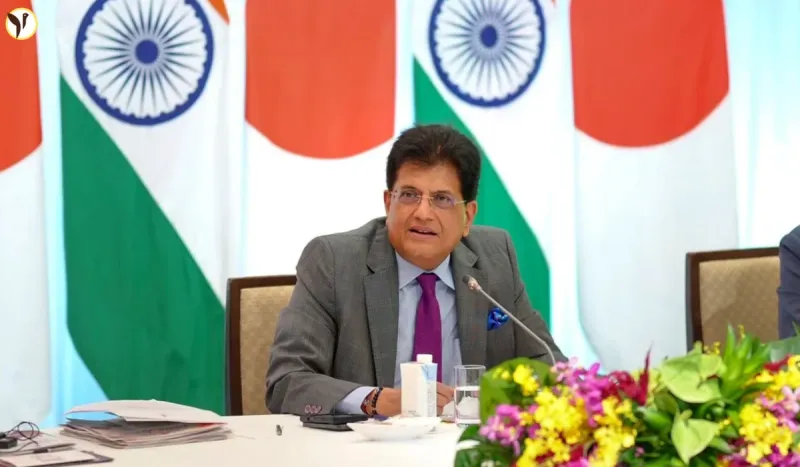
Speaking to Indian students and researchers in Germany, Goyal said he had asked his ministry to study which professions could remain important as technology changes the job market.
He highlighted India's strengths in handicrafts, handlooms, culinary arts and tourism. These sectors depend on traditional knowledge, practical skills, creativity and human interaction—qualities that technology may support but cannot always fully reproduce.
The remarks come as workers, job seekers and students worry about AI's growing ability to write content, analyse information, generate computer code and automate routine tasks.
However, Goyal's comments do not mean that all jobs in these sectors are completely safe. The broader message is that India needs to prepare its workforce for technological change while creating opportunities in areas where human skills remain important.
What Did Piyush Goyal Say About AI And Jobs?
Piyush Goyal said the Commerce Ministry was working to identify professions where AI could increase efficiency rather than replace human workers.
His concern is linked to the scale of India's employment needs. As technology advances, the country needs to prepare millions of people for a changing workplace.
Instead of looking at AI only as a threat, the government wants to identify areas where India can use its existing skills and strengths to create new opportunities.
Goyal specifically pointed towards traditional industries and services where human creativity, cultural knowledge and practical experience remain important.
His comments are particularly relevant for students deciding what to study, employees worried about automation and businesses considering how to use AI.
The exercise is intended to help identify promising areas for the future. It does not mean that the government has published a final list of occupations that AI will never affect.
Which Jobs Could Be Less Vulnerable To AI?
Goyal identified four broad areas where India has significant strengths: handicrafts, handlooms, culinary arts and tourism.
These sectors involve different kinds of work, but they share an important feature: human skill and experience can play a major role in the final product or service.
Here is a closer look at why these areas could continue to offer opportunities.
Handicrafts And Traditional Craftsmanship
Handicrafts are among the sectors Goyal highlighted while discussing professions less vulnerable to AI.
Traditional crafts often depend on the skill of artisans who shape, carve, paint, weave or decorate products by hand.
The value of a handmade product can come from its design, cultural meaning, local materials and the individual techniques used to create it.
For example, artisans working with pottery, wood carving, embroidery, jewellery-making and traditional decorative arts use practical experience that can take years to develop.
AI tools may help artisans create designs, promote products online, manage orders and reach customers in other countries. However, making a physical product by hand can still require human judgement, coordination and specialised knowledge.
This could create opportunities for artisans who combine traditional skills with modern tools.
India's traditional crafts could reach more customers if producers use digital platforms, better marketing and AI-assisted business tools without losing the human qualities that make their products distinctive.
Handloom And Textile Work
Handloom is another sector Goyal described as an important Indian strength.
Handloom products can involve specialised weaving techniques, traditional patterns, regional designs and knowledge passed between generations.
Many customers value these products because of their craftsmanship, cultural identity and individual characteristics.
AI can support the industry in several ways. Businesses can use digital tools to predict demand, design patterns, manage inventory and market products.
But weaving, finishing and handling materials can still require practical skills, especially when products involve specialised techniques and detailed manual work.
That does not mean every job in the textile industry is protected from automation. Large-scale textile production, digital design, sales and administration may experience different levels of technological change.
The important distinction is between using AI to support artisans and using machines to automate particular production tasks.
Workers and businesses that preserve specialised weaving skills while learning to use modern technology may be better placed to respond to changing customer demand.
Cooking And Culinary Arts
Goyal also highlighted India's culinary strengths.
Food is not just about following a recipe. Professional cooking can involve taste, texture, timing, presentation, ingredient selection, hygiene and the ability to respond to customer preferences.
Chefs, cooks and food entrepreneurs often make decisions based on experience and changing conditions in the kitchen.
AI can help with menu planning, recipe suggestions, stock management, cost calculations and customer service. Automated equipment may also handle some repetitive food-preparation tasks.
However, restaurants, catering businesses and food services continue to need people for many practical and customer-facing activities.
The level of automation will depend on the type of business. A highly standardised food-production process may be easier to automate than a kitchen offering specialised regional cuisine or customised dining experiences.
Culinary professionals can strengthen their prospects by combining cooking skills with food safety, customer service, business knowledge and the ability to use digital tools.
Tourism And Hospitality
Tourism was another area highlighted by the minister.
Travel and hospitality depend heavily on customer experience, communication, local knowledge and personal interaction.
Tour guides, hospitality workers, local experience providers and tourism entrepreneurs often help visitors understand a destination's history, culture, food and traditions.
AI can make travel planning easier by recommending destinations, translating languages, answering routine questions and helping customers organise itineraries.
Hotels and travel companies may also use AI to manage bookings and provide faster customer support.
But many travellers still value human interaction, personal recommendations and assistance when plans change unexpectedly.
Local guides who understand a destination deeply, hospitality workers who handle complex customer needs and entrepreneurs who create distinctive travel experiences may continue to have important roles.
Tourism workers who combine local knowledge and communication skills with digital tools could find new ways to serve travellers.
Does This Mean These Jobs Are Completely Safe From AI?
No. This is an important distinction.
Goyal's remarks point towards sectors that may be less vulnerable to AI-driven replacement. They do not establish that every occupation in handicrafts, handlooms, cooking or tourism will remain unchanged.
Even in these sectors, some tasks can be automated.
For example:
- A craft business may use AI to generate product descriptions and advertising material.
- A textile company may automate parts of its design or production process.
- A restaurant may use software to manage orders and inventory.
- A hotel may use chatbots to answer routine customer questions.
- A travel company may use AI to prepare standard itineraries.
In these examples, the technology may change how work is performed rather than remove every job in the sector.
The impact will depend on the occupation, the tasks involved, the cost of automation and the need for human judgement or physical work.
The safer approach is not to search for a job that will never change. It is to develop skills that remain useful as technology changes.
Which Types Of Work Could Face More AI Pressure?
Goyal's latest remarks focused on identifying less vulnerable professions. They did not provide a final list of jobs most likely to disappear.
However, routine and repetitive tasks are often easier to automate than work requiring complex judgement, physical adaptability or personal interaction.
Examples of tasks that AI tools may increasingly assist with include:
-
Preparing standard reports and summaries
-
Entering and organising routine data
-
Answering common customer questions
-
Producing basic marketing drafts
-
Performing repetitive document checks
-
Handling some standard administrative tasks
This does not mean that every person doing these tasks will lose their job.
In many workplaces, AI may take over part of a role while employees continue handling decisions, unusual cases, communication and quality checks.
The effect will also vary by industry. A task that can be automated in one business may require human involvement in another because of cost, safety, regulation or customer expectations.
For workers, the practical lesson is to understand which parts of their jobs are repetitive and which depend on their experience, judgement and relationships with people.
What About IT Jobs, Coding And Software Engineering?
The growth of AI has created particular concerns among students and professionals in the technology sector.
AI tools can now help write code, explain errors, generate tests, document software and assist with routine technical support.
This means some entry-level tasks may change as companies adopt more automation.
But software engineering involves much more than writing individual lines of code. Developers also need to understand business requirements, design systems, identify security risks, test solutions and maintain software over time.
AI-generated code can contain errors, security weaknesses or incorrect assumptions. Human review and accountability therefore remain important.
Technology workers can prepare by developing skills in areas such as:
- Problem-solving and system design
- Cybersecurity
- Cloud computing and infrastructure
- Data engineering and data quality
- Testing and reliability
- AI integration and evaluation
- Communication with clients and business teams
These areas are not guaranteed to be safe from future automation. However, combining technical knowledge with the ability to check AI outputs and solve complex problems can help workers adapt.
Goyal's latest comments do not specifically declare software engineering a safe or unsafe career. The ministry's reported exercise is focused on identifying professions and sectors where AI is less likely to replace human work.
What Is The Government Planning To Do?
Goyal said he had asked his ministry to work on identifying professions that are less vulnerable to AI.
The broader goal is to understand where India can create opportunities by combining technology with the country's workforce, traditional expertise and cultural strengths.
The minister also discussed the importance of attracting Indian scientists, engineers and researchers working abroad to return and contribute to India's development.
During his interaction with students and researchers in Germany, he sought their views on what would encourage them to work in India.
His remarks highlighted that financial incentives alone may not be enough. Research facilities, professional opportunities, support systems and a strong innovation environment can also influence people's decisions.
Goyal said he would engage with educational institutions, researchers, industry representatives and other stakeholders on these issues.
The approach could help connect education, industry and workforce planning. However, the specific policies, incentives and final list of AI-resilient professions will need further clarification from the government.
Why Is India Focusing On Jobs That AI May Not Replace?
India has a large workforce and millions of young people enter the labour market over time.
AI could help businesses become more productive, but the benefits will depend partly on whether workers can adapt to new tools and move into changing roles.
A strategy focused on less vulnerable professions could help India identify areas where traditional skills, local expertise and modern technology can work together.
For example, an artisan who uses online platforms to sell handmade products may be able to reach customers beyond their local market. A tour guide who uses translation tools may be able to serve visitors from more countries. A small food business may use AI to manage stock and promote its services.
In these examples, technology supports the worker or business rather than replacing every human task.
However, training, access to technology, market demand and business support will also matter. Simply identifying a promising sector will not automatically create enough jobs or guarantee stable incomes.
How Can Students Prepare For An AI-Driven Job Market?
Students do not need to abandon their chosen careers simply because AI is advancing.
Instead, they should understand how technology is changing their field and build skills that complement it.
Step 1: Learn The Basics Of AI
Understand what AI tools can do, where they make mistakes and how to use them responsibly.
Students should learn to verify AI-generated information rather than accepting every answer without checking it.
Step 2: Build Strong Core Skills
Whether a student chooses engineering, business, design, hospitality or another field, subject knowledge remains important.
AI tools are more useful when the person using them understands the problem and can judge whether the result is correct.
Step 3: Improve Communication And Problem-Solving
Clear communication, teamwork, decision-making and the ability to understand a customer's needs are useful across many professions.
These skills can help people work effectively with both humans and AI systems.
Step 4: Get Practical Experience
Projects, internships, apprenticeships and real-world assignments help students understand how their skills are used at work.
Practical experience also helps them identify which tasks require judgement, creativity or physical expertise.
Step 5: Keep Learning
AI tools and workplace requirements will continue to change.
Workers who update their skills and understand new technologies may find it easier to adapt when their responsibilities change.
What Piyush Goyal's AI Jobs Remarks Mean
The minister's remarks highlight three main points.
First, the government is examining jobs that may be less vulnerable to AI. The Commerce Ministry has reportedly been asked to identify professions where technology can improve efficiency without necessarily replacing workers.
Second, India may have an advantage in traditional skills and people-focused services. Handicrafts, handlooms, culinary arts and tourism were among the areas Goyal highlighted.
Third, workers still need to prepare for change. Even sectors that depend on human skills may adopt AI for marketing, administration, planning and other routine tasks.
The larger challenge is to make sure that workers receive the training and support needed to benefit from technological change.
Questions readers ask
What did Piyush Goyal say about AI and jobs?
Piyush Goyal said the government is identifying professions and sectors that are less vulnerable to artificial intelligence. The focus is on areas where AI can improve efficiency without necessarily replacing human workers.
Which jobs did Piyush Goyal identify as less vulnerable to AI?
He highlighted handicrafts, handlooms, culinary arts and tourism as areas where India has traditional skills and other strengths.
Is the government preparing a list of AI-proof jobs?
According to reports on Goyal's remarks, he has asked the Commerce Ministry to identify professions that are less vulnerable to AI. A final official list of occupations guaranteed to be safe has not been announced.
Can AI replace jobs in handicrafts and handlooms?
AI can assist with design, marketing and business management, while automation may affect some production tasks. However, specialised manual skills and traditional craftsmanship can continue to have value. The level of risk depends on the specific job.
Are cooking and tourism jobs safe from AI?
Not completely. AI can support menu planning, bookings, translation and customer service. But many roles in cooking and tourism also require practical skills, personal interaction and judgement. Their tasks may change as technology develops.