Why Were Protest Photos Removed? Raihan Vadra Raises Questions Over Delhi Show
Raihan Vadra says 74 photographs were removed from his Delhi exhibition at Bikaner House. Know why the protest photos became controversial.

- Published
- Reading time
- 7 minutes
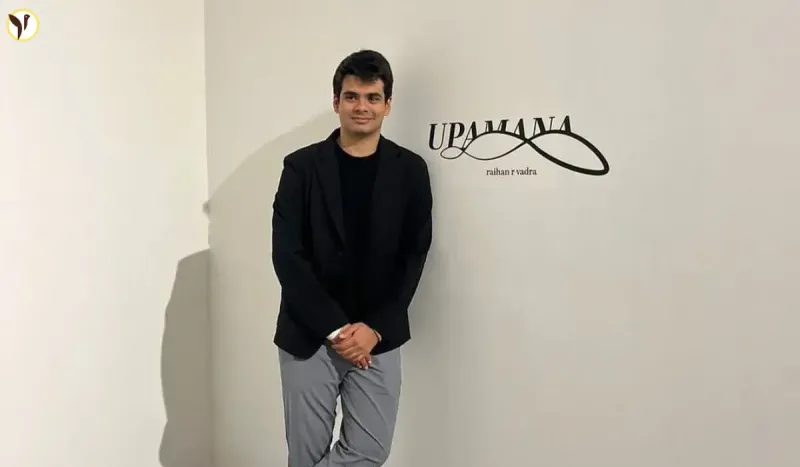
A controversy has erupted at Bikaner House in New Delhi after visual artist Raihan Rajiv Vadra alleged that the venue's management asked him to remove dozens of photographs from his exhibition shortly before it was scheduled to open.
Raihan, the son of Congress leader Priyanka Gandhi Vadra and businessman Robert Vadra, said he was asked to remove or replace 74 out of 105 photographs from his exhibition, titled No Idea Is Final.
Many of the photographs documented recent student and youth protests in Delhi. Raihan also said that the management objected to two photographs featuring the Indian national flag.
The incident has raised questions about artistic freedom, political expression and the rules followed by public cultural venues.
The exhibition went ahead with a reduced collection. Raihan said he planned to display the complete collection at another venue. Bikaner House officials had not issued a detailed public response to media queries at the time of the latest reports.
Who Is Raihan Vadra?
Raihan Rajiv Vadra is a visual artist, photographer and curator. He is the son of Congress leader Priyanka Gandhi Vadra and businessman Robert Vadra, and the nephew of Congress leader Rahul Gandhi.
He works across different forms of visual art, including photography. His work has covered subjects such as wildlife, abstract images and public movements.
Raihan is also associated with the Usual Suspects gallery and the You Cannot Miss This art collective.
His latest exhibition, No Idea Is Final, brought together photographs and other works exploring different subjects. However, the removal of protest-related images shortly before the opening has now placed the exhibition at the centre of a wider debate.
What Happened at the Delhi Exhibition?
The controversy developed on October 21, shortly before Raihan's exhibition was due to open at Bikaner House.
According to Raihan, the management first raised objections to the photographs because of their political nature and the timing of the exhibition.
He said he received a written request at around 3:30 pm asking him to remove or replace 74 photographs within a short period. He was told that the show could be cancelled if the photographs were not removed.
Raihan questioned why the objection had come so close to the opening, saying he had shared the exhibition layout with the venue earlier.
The exhibition eventually opened with a significantly smaller collection. The photographs that were removed had documented recent public movements and youth protests in Delhi.
The dispute has since attracted attention from political leaders, artists and people concerned about freedom of expression.
Why Were the Protest Photographs Removed?
According to Raihan, the management objected to the political nature of the images and said the timing and context were not suitable.
The photographs documented protests and public gatherings that had taken place in Delhi over the preceding months.
Raihan said he saw the work as a form of visual documentation. He described himself as both a participant and an observer of the public movements he photographed.
He also questioned the venue's decision because, according to him, the exhibition proposal had been approved well in advance.
The venue's booking policy was cited in the written objection, according to reports. However, Bikaner House had not provided a detailed public explanation addressing Raihan's claims at the time of reporting.
As a result, the full reasoning behind the removal of each photograph remains unclear.
Why Did Raihan Vadra Object to the Decision?
Raihan said he was surprised by the last-minute request because he believed the exhibition's themes and layout had already been shared with the venue.
He argued that the photographs were meant to document events rather than promote a particular political message.
He also raised concerns about the removal of images featuring the Indian national flag.
According to his account, he had refused to remove those photographs himself. He later said that at least one image was taken down by the venue's staff when he was away.
Raihan criticised restrictions on artistic expression and said he intended to find another venue where he could display the complete collection.
His position is that photographs documenting public events should be considered as works of art and visual records, rather than automatically rejected because their subjects are politically sensitive.
What Was Special About the Removed Photographs?
The photographs focused largely on recent public movements and youth protests in Delhi.
Raihan said he wanted to capture the atmosphere, movement and emotions of large gatherings through photography.
Rather than presenting a written political argument, he said his aim was to document what he saw around him.
The exhibition also included wildlife photography, abstract work and other images. The removal of the protest-related photographs therefore changed a significant part of the planned collection.
Reports said that after the removal request, only around 35 exhibits remained on display. The dispute also extended to the empty frames left behind after photographs were taken down.
How Did Priyanka Gandhi Vadra React?
Congress leader Priyanka Gandhi Vadra criticised the removal of her son's photographs.
She described the decision as unreasonable and said it amounted to suppressing the voices of young people.
She also argued that if photographs documenting protests could be removed from an exhibition, other artists could face similar restrictions in the future.
Her response brought a political dimension to the controversy because the photographs were connected with public demonstrations that have also drawn attention from opposition leaders.
However, the dispute is not only about the political views of one family. It has also raised broader questions about how cultural venues handle work that documents protests or other sensitive public events.
What Is Bikaner House, and Why Is It Important?
Bikaner House is a cultural venue in New Delhi managed by the Rajasthan government. It hosts exhibitions, cultural events and other public programmes.
Because it is a public cultural space, the dispute has raised questions about how its rules should be applied when an exhibition includes politically sensitive subjects.
Venues may have booking conditions covering the type of content they can display. At the same time, artists may expect that an approved exhibition will not face major last-minute changes without a clear explanation.
In this case, Raihan says the exhibition proposal had been approved earlier and that the objection came only shortly before the opening.
A detailed public response from the venue would help clarify how its policy was applied and why the specific photographs were considered unsuitable.
Was the Entire Exhibition Cancelled?
No. The exhibition went ahead, but with many fewer photographs than originally planned.
Raihan's show, No Idea Is Final, opened with a reduced collection after the removal of the disputed images.
Reports said that around 35 exhibits remained, while dozens of photographs were no longer on display.
Raihan also said he intended to find another venue to exhibit the complete collection.
The exhibition was scheduled to remain open at Bikaner House until October 25, 2026. Visitors should check the venue's latest announcements for current timings and display details.
Why Has the Incident Raised Questions About Freedom of Expression?
The controversy has renewed debate over the relationship between art, politics and public institutions.
Artists often document real events, including protests, demonstrations and political movements. Such photographs can become records of what happened and how people responded.
At the same time, cultural venues may have policies about the material they display.
The key question in this case is how those policies were applied and whether the reasons for removing the photographs were explained clearly and consistently.
Raihan has described the decision as an unnecessary restriction on artistic expression. The venue's detailed position was not available in the reports reviewed.
Without a complete response from the administration, it would be premature to make a final judgment about the decision or its legal implications.
What Happens Next?
Raihan has said he intends to display the removed photographs at another venue.
He has also shared some of the images online, allowing people to see parts of the collection that were not displayed at Bikaner House.
The next important development will be whether he announces a new venue or exhibition date for the complete collection.
A detailed response from Bikaner House could also help explain the policy concerns behind the removal request.
For now, the incident has become a wider discussion about how public cultural spaces should balance their rules with an artist's ability to document events and express ideas.
Questions readers ask
Who is Raihan Vadra?
Raihan Rajiv Vadra is a visual artist, photographer and curator. He is the son of Congress leader Priyanka Gandhi Vadra and businessman Robert Vadra.
Why were Raihan Vadra's protest photos removed?
Raihan said Bikaner House management objected to the political nature and timing of the photographs. The venue's booking policy was cited, but a detailed public explanation of the objections was not available in the reports reviewed.
How many photographs were removed from the exhibition?
Raihan said he was asked to remove or replace 74 out of 105 photographs.
What was the name of Raihan Vadra's exhibition?
The exhibition was titled No Idea Is Final and included photography and other visual works.
What did the removed photographs show?
Many of the photographs documented recent youth and student protests in Delhi. The collection also included images featuring the Indian national flag.