Are H-1B Workers Taking US Jobs? Congressman Targets Indian and Chinese Talent
US Congressman Riley Moore claims H-1B workers from India and China are replacing American graduates. Know his statement and its impact.

- Published
- Reading time
- 5 minutes
US Congressman Riley Moore has criticised the H-1B visa programme, claiming that foreign workers, particularly those from India and China, are taking jobs away from American graduates.
Moore argued that companies are hiring foreign professionals because they are willing to work for lower salaries. He also criticised the Optional Practical Training (OPT) programme, which allows eligible international students to gain work experience in the United States.
His comments have brought fresh attention to the debate over immigration, American jobs and the role of Indian professionals in the US technology industry.
What Did Congressman Riley Moore Say?
In a post on X, Moore called the H-1B and OPT programmes unfair to American workers.
He claimed that around 650,000 Americans graduated with computer science-related degrees, while the US issued more than 500,000 H-1B visas.
According to Moore, companies are choosing foreign workers instead of American graduates because they can hire them at lower wages.
He also argued that the H-1B programme was originally intended to bring skilled professionals into the country for jobs that employers could not fill locally.
These figures and claims were presented by Moore. They do not, by themselves, prove that H-1B workers are replacing an equal number of American graduates. Annual graduates and visa figures may cover different groups and periods, so they cannot automatically be compared as direct job-replacement numbers.
Why Did Moore Target Indian and Chinese Workers?
India and China are major sources of skilled foreign professionals working in the United States.
Indian nationals accounted for roughly 70% of H-1B beneficiaries in the 2025 US fiscal year, according to data cited by Hindustan Times.
Many Indian professionals work in areas such as software development, engineering, research and technology.
Moore's argument is that employers should give American workers priority when suitable candidates are available.
However, the nationality of a worker does not prove that the person has taken a job from an American applicant. Whether a job has been displaced depends on the employer's hiring decisions and the circumstances of the position.
What Is the H-1B Visa Programme?
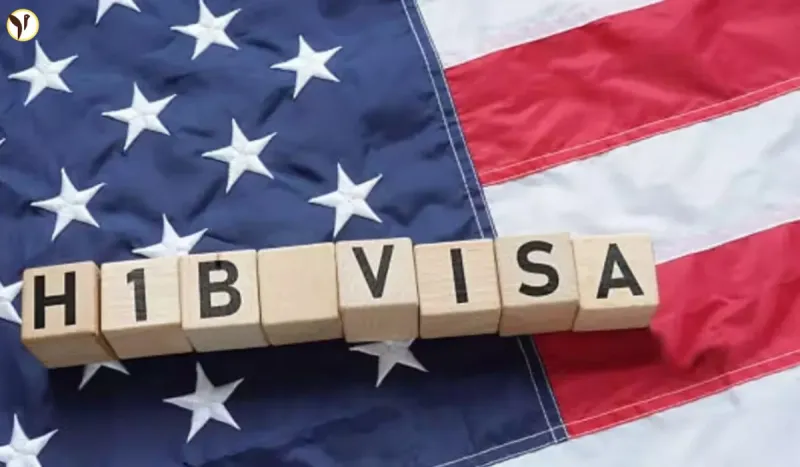
The H-1B visa is a US work visa that allows employers to hire eligible foreign professionals for specialised jobs.
It is widely used in industries such as technology, engineering, healthcare and scientific research.
US companies use the programme to recruit skilled workers when they need particular expertise. Indian professionals are among its largest beneficiary groups.
The programme is also controversial because critics argue that some employers may use it to reduce labour costs or avoid hiring American workers.
Supporters say it helps companies fill skill gaps and compete globally.
The debate is therefore about how to prevent misuse while allowing employers to hire the talent they need.
Are H-1B Workers Really Taking American Jobs?
There is no simple answer that applies to every company or industry.
Moore claims that foreign workers are replacing American graduates. But this is his political position, not proof that every H-1B worker has displaced a US employee.
The impact can vary depending on the employer, the job, salary levels and the skills required.
For example, a company may hire an overseas professional because it needs specialised experience. In another case, questions may arise if a company lays off American employees while hiring foreign workers for similar roles.
These situations need to be examined using evidence rather than assumptions based only on a worker's nationality or visa status.
The wider debate has intensified as US companies make job cuts while continuing to hire or sponsor skilled foreign workers.
What Could This Mean for Indian Professionals?
Moore's comments come amid wider calls in Washington to tighten rules for foreign workers.
If the US government introduces stricter H-1B rules, Indian professionals could face changes in hiring, sponsorship and visa procedures.
Possible policy changes could include higher salary requirements, tighter checks on employers or changes to how visa applications are selected.
However, Moore's latest remarks alone do not change the H-1B visa rules.
Indian workers should distinguish between political statements, proposed legislation and changes that have actually become law.
What Is OPT, and Why Did Moore Criticise It?
OPT stands for Optional Practical Training.
It allows eligible international students in the US to work temporarily in jobs related to their field of study, subject to immigration rules.
Many international students use OPT to gain work experience after completing their studies. Some eligible students in science, technology, engineering and mathematics fields may qualify for an extension.
Moore criticised OPT alongside the H-1B programme, arguing that both can increase competition for American graduates.
Supporters of international student work opportunities argue that these programmes help students gain experience and allow US employers to recruit skilled graduates.
Any changes to OPT would depend on government policy and the relevant legal process.
Will the US Government Change H-1B Visa Rules?
Moore's statement adds to an ongoing political debate about skilled immigration.
Other US lawmakers have also proposed legislation to change the H-1B system, including measures related to wages, hiring and employer requirements.
However, a politician's statement or a bill proposal does not automatically change the existing law.
Any new restrictions would need to move through the applicable government and legal processes before taking effect.
Indian professionals should follow official announcements from US immigration authorities for confirmed changes.
Congressman Riley Moore has renewed the debate over whether the H-1B visa programme protects US employers' access to skilled talent or puts American graduates at a disadvantage.
He claims that workers from India and China are replacing American graduates, but the figures he cited do not by themselves establish direct job replacement.
For Indian professionals, the key issue is whether the US government turns these political arguments into actual policy changes.
For now, Moore's remarks have added to the debate, but they do not themselves change H-1B visa rules or prove that foreign workers are taking American jobs.
Questions readers ask
Who is Riley Moore?
Riley Moore is a US Congressman who has criticised the H-1B visa programme over concerns about jobs for American workers.
What did Riley Moore say about H-1B workers?
He claimed that foreign workers, especially from India and China, are replacing American graduates and may be hired because of lower labour costs.
Are Indian H-1B workers taking American jobs?
Moore says they are, but his statement does not prove that H-1B workers are replacing American employees in every case. The impact depends on the employer and the job.
What is the H-1B visa?
It is a US work visa that allows employers to hire eligible foreign professionals for specialised jobs.
Why are Indian workers affected by the H-1B debate?
Indian nationals make up a large share of H-1B beneficiaries, so changes to the programme could affect many Indian professionals.