$300M Nvidia Chip Smuggling Case: What Prosecutors Allege
Greg Lui, owner of a San Gabriel Valley server company, is charged with smuggling $300 million in restricted Nvidia AI hardware to China. What prosecutors allege.

- Published
- Reading time
- 6 minutes
Federal prosecutors have charged Greg Lui, 38, owner of San Gabriel Valley server company Earthmade Computer Inc., with smuggling more than $300 million worth of export-controlled Nvidia AI hardware to China. The Department of Justice alleges that between 2023 and 2024 Lui and unidentified co-conspirators shipped servers containing restricted chips, including Nvidia H100 GPUs, through Malaysia and Singapore using false paperwork, and that he received more than $176 million from two Malaysian transshipment companies. He faces three counts, including conspiracy to violate US export controls, outbound smuggling and conspiracy to commit money laundering. Lui was arrested on Thursday and has not entered a plea. Prosecutors have asked that he be held without bail.
What prosecutors allege
The Department of Justice announced the charges on 1 October, following Lui's arrest the previous day.
According to the DOJ, Lui also known as Yiu Kong Lui worked with unidentified co-conspirators between 2023 and 2024 to ship servers containing export-controlled Nvidia chips to buyers in China without the licences US law requires.
The alleged mechanism is the part worth understanding, because it is the same one that has appeared in previous cases.
Advanced Nvidia AI chips cannot lawfully be exported to China without a licence. They can, however, be shipped to Malaysia and Singapore without one. Prosecutors allege the hardware was sent first to those countries, where no licence was needed, and onward to China from there a practice known as transshipment.
Prosecutors further allege that false paperwork was used to disguise the ultimate destination, and that Lui introduced two Malaysian transshipment companies to US-based suppliers capable of providing Nvidia hardware, brokering sales of close to $300 million. They allege he received more than $176 million in payments from those two companies.
In one transaction described by prosecutors, 27 servers containing Nvidia H100 GPUs were purchased for around $7.6 million from an unidentified US manufacturer.
The government alleges Lui was aware that US export law restricted shipments of advanced Nvidia chips to China to licence-holders.
"This defendant allegedly used false paperwork and shipments through third countries to smuggle more than $300 million in export-controlled computer servers to China," said First Assistant US Attorney Bill Essayli for the Central District of California.
None of this has been tested in court. Lui has not entered a plea and is presumed innocent.
The charges
Three counts:
Conspiracy to violate the Export Control Reform Act and the Export Administration Regulations. Outbound smuggling. Conspiracy to commit money laundering.
Reporting on the maximum sentence has varied. Several outlets have described the charges as carrying up to 20 years in prison, while others have reported a combined maximum of 50 years. The discrepancy appears to reflect the difference between an individual count's maximum and the aggregate across all three, and the actual exposure in any case depends on conviction and on sentencing guidelines rather than statutory maximums. The safe statement is that the charges carry a substantial potential sentence.
The DOJ has argued Lui should be detained without bail, citing a serious risk of flight if released.
A $300M chip smuggling scheme used fake paperwork and shell routes through Asia
— Quartz (@qz) October 2, 2026
A California tech executive is accused of funneling hundreds of millions in Nvidia AI chips to China by disguising shipments through Malaysia and Singapore — par#NvidiaChips #ExportControls #AITech pic.twitter.com/ehNgCUEg4l
This has happened before, through the same corridor
Here is the context that turns a single prosecution into something more interesting.
In 2025, federal prosecutors in Los Angeles charged two Chinese nationals living in Southern California, Chuan Geng, 28, of Pasadena and Shiwei Yang, 28, of El Monte, with illegally shipping tens of millions of dollars of Nvidia AI chips to China without licences.
The similarities are striking.
Their company, ALX Solutions, was based in El Monte, a few miles from the San Gabriel Valley. Prosecutors alleged more than 20 shipments were routed through freight forwarding companies in Singapore and Malaysia, described in the DOJ's own filing as common transshipment hubs used to conceal final destinations. The chips included Nvidia H100s.
An FBI agent's affidavit stated that ALX Solutions bought over 200 Nvidia H100 chips from San Jose-based server maker Super Micro Computer between August 2023 and July 2024, declaring the customers were in Singapore and Japan. A US export control officer in Singapore could not verify the chips had arrived, and the company did not exist at the address listed.
ALX also received a $1 million payment from a China-based company in January 2024, and further payments from entities in Hong Kong and mainland China not from the freight forwarders named on the paperwork.
Same chips. Same two countries. Same documentary method. Second prosecution in roughly a year, out of the same US Attorney's office.
That pattern, rather than any individual defendant, is the substance of this story. Export controls restrict where American companies may ship. They do not easily restrict what happens to hardware once it has lawfully reached a third country, and the gap between those two things is where these cases keep appearing.
Why the H100 matters
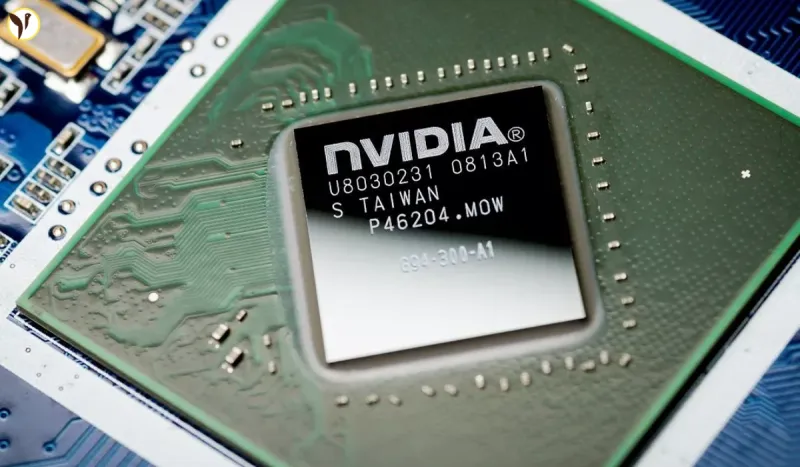
The Nvidia H100 is described in the DOJ's filings as the most powerful graphics processing unit on the market, designed specifically for AI applications.
These are the chips used to train large language models. They cost tens of thousands of dollars each, and demand for them is a substantial part of why Nvidia became the most valuable company in the United States.
Washington imposed sweeping export controls on advanced chips to China in order to slow Beijing's military modernisation, requiring licences for the most capable hardware. Some less advanced chips can still be shipped to China with a licence. The most advanced cannot.
The concern driving the policy is dual use. AI capability has military applications, and US lawmakers have pressed for further restrictions on Nvidia sales to China on national security grounds, framing it as an AI arms race. China has opposed the controls as harmful to normal trade.
Prosecutors in this case have alleged Lui helped China procure advanced hardware for the development of what they termed superintelligence.
Nvidia's position
Nvidia is not accused of wrongdoing in this case. The company has consistently stated its commitment to export compliance.
Responding to the earlier ALX Solutions case, a spokesperson said: "This case demonstrates that smuggling is a nonstarter." The company added that diverted products receive no service, support or updates.
That last point is a genuine commercial deterrent. An H100 obtained outside authorised channels cannot be supported, patched or warranted by Nvidia, which matters considerably in a data centre environment where hardware failures are routine and firmware updates are continuous.
What happens next
A detention hearing. The DOJ has asked that Lui be held without bail citing flight risk. That will be decided early, and it is the next thing likely to generate news.
Arraignment and plea. Lui has not entered one.
The co-conspirators. The DOJ's announcement refers to unidentified co-conspirators. Whether further charges follow is one of the open questions.
The Malaysian companies. Prosecutors have alleged two transshipment companies made payments totalling more than $176 million. Neither has been named publicly and neither is within US jurisdiction in any straightforward sense.
Policy response. Two prosecutions through the same corridor in a year is the kind of pattern that prompts regulatory change. Whether controls are tightened around transshipment hubs specifically, rather than around end destinations, is the policy question underneath the case.
Questions readers ask
Who is Greg Lui?
Greg Lui, also known as Yiu Kong Lui, is a 38-year-old California businessman and the owner of Earthmade Computer Inc., a privately held technology company based in the San Gabriel Valley. He was arrested on Thursday and charged by federal prosecutors. He has not entered a plea and is presumed innocent.
What is Greg Lui charged with?
Three counts: conspiracy to violate the Export Control Reform Act and the Export Administration Regulations, outbound smuggling, and conspiracy to commit money laundering.
What do prosecutors allege he did?
The Department of Justice alleges that between 2023 and 2024, Lui and unidentified co-conspirators shipped servers containing export-controlled Nvidia AI chips to buyers in China without the required US licences, routing them through Malaysia and Singapore and using false paperwork to disguise the destination. Prosecutors allege he introduced two Malaysian transshipment companies to US-based suppliers and brokered sales of close to $300 million, receiving more than $176 million in payments from those companies.
How much prison time does he face?
Reporting has varied, with some outlets describing the charges as carrying up to 20 years and others a combined maximum of 50 years, a difference that appears to reflect individual count maximums against the aggregate. Actual exposure depends on conviction and on sentencing guidelines rather than statutory maximums.
Has Greg Lui been convicted?
No. He has been charged and arrested but has not entered a plea, and none of the allegations has been tested in court. Prosecutors have asked that he be held without bail, citing a serious risk of flight.
What is the Nvidia H100 and why is it restricted?
The H100 is described in Department of Justice filings as the most powerful graphics processing unit on the market, designed specifically for artificial intelligence applications and used to train large language models. The United States imposed export controls on advanced chips to China to slow Beijing's military modernisation, requiring licences for the most capable hardware.