Christa Pike Survives Failed Tennessee Execution Attempt
Tennessee was unable to execute Christa Pike after administering two doses of pentobarbital. She is alive in hospital and the governor has halted executions for the year.

- Published
- Reading time
- 7 minutes
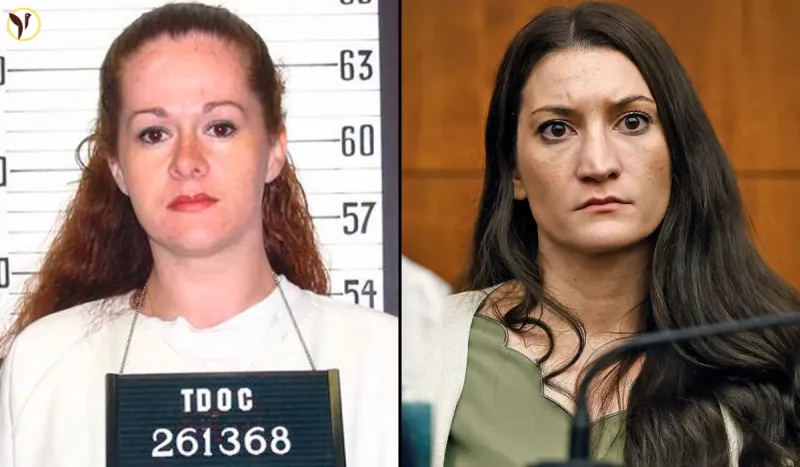
Tennessee was unable to execute Christa Gail Pike on Wednesday night after administering two doses of pentobarbital under its lethal injection protocol, and she was taken to an off-site hospital where she is receiving medical care. She is alive. Governor Bill Lee has halted the state's remaining executions for the rest of the year. Pike, 50, was sentenced to death for the 1995 torture and murder of 18-year-old Colleen Slemmer in Knoxville, a crime committed when Pike was 18. It is Tennessee's second failed execution procedure this year, following an attempt in May that was called off when the execution team could not establish intravenous access.
What happened on Wednesday
The execution was scheduled for 10am at Riverbend Maximum Security Institution in Nashville, which houses Tennessee's execution chamber.
An appeals court stayed it roughly an hour before it was due to begin. The Tennessee attorney general's office appealed that stay to the US Supreme Court, arguing that halting the execution at the last moment traumatised Colleen Slemmer's family and rewarded what it described as abusive delay tactics by Pike's attorneys. By around 6pm, the Supreme Court had vacated the stay, clearing the way for the execution to proceed.
Tennessee's protocol calls for two syringes of 50ml of pentobarbital. It also stipulates that a second round of injections be performed if the person is not determined to have died after the first set is administered.
Pike received both. She continued breathing.
The procedure was halted nearly two hours after it began, following an emergency motion filed by her attorneys and an appeal from an anti-death penalty group seeking to end the attempt and obtain medical care for her. Media witnesses described a scene of confusion.
She was transported to an off-site medical facility.
What the parties have said
The Tennessee Department of Correction, in a statement issued more than two hours after the failed attempt: "The Tennessee Department of Correction followed every step of the State's lawful, established execution protocol approved by the Attorney General's Office." The department added that the lethal injection chemical in the protocol has consistently been effective, that the protocol does not allow for additional procedures beyond what was carried out, and that "Christa Pike has been transported to an off-site medical facility."
Pike's attorneys, in a statement: "Tonight the State of Tennessee once again failed to carry out a lawful execution." They said she was being treated at a nearby hospital and criticised the state's execution protocol as secretive.
Governor Bill Lee had allowed the execution to move forward. Following its failure, he halted the state's remaining executions for the rest of the year.
A death penalty expert described the failure as unprecedented.
A press conference following the attempted execution of Christa Pike in Tennessee was interrupted by the arrival of an ambulance and firetruck behind the speakers.
— CBS News (@CBSNews) October 1, 2026
Witnesses to the attempted execution described hearing Pike snoring more than 40 minutes after she received two… pic.twitter.com/C29qzX2i0v
Colleen Slemmer
Any account of this has to hold her at the centre, because it is easy for a procedural story to lose the person it began with.
Colleen Slemmer was 18 years old. She was a student at a Knoxville Job Corps programme for young people, where she and Pike both studied.
In January 1995 she was lured to the University of Tennessee's agricultural campus and killed. She was tortured before she died. Pike, then also 18, was convicted along with her boyfriend Tadaryl Shipp. Prosecutors argued at trial that Pike believed Slemmer wanted to take her boyfriend from her.
A third person, Shadolla Peterson, testified against Pike at trial and received probation.
Slemmer's family have lived with this for thirty-one years. They travelled to Nashville for Wednesday, were told an hour beforehand that it would not happen, were told hours later that it would, and then watched it fail. The attorney general's office specifically cited the effect of the delay on them in its appeal.
Why Pike was on death row, and the arguments against it
Pike was 18 at the time of the killing, the youngest age at which a person can be sentenced to death in the United States. She is the last person in Tennessee sent to death row for a crime committed at that age.
Her attorneys argued in her final appeals that her trial counsel failed to properly present her childhood to the jury. "Christa's childhood was fraught with years of physical and sexual abuse and neglect," they said in a statement. She was later diagnosed with bipolar disorder and post-traumatic stress disorder, and her lawyers contended that her age, her history and those diagnoses should have exempted her from execution.
They also said in a statement earlier this year that "Christa has become a thoughtful woman with deep remorse for her crime."
Pike had separately sued over the execution protocol, arguing that it would be unconstitutionally cruel in her case because of her medical conditions, including a blood disorder that an anaesthesiologist, Dr Joel Zivot, wrote would very likely produce bloody froth in her lungs.
As her execution date approached she was returned to solitary confinement, which the protocol requires for 14 days beforehand.
Robin Maher, executive director of the Death Penalty Information Center, which publishes data on capital punishment without taking a position on it, has said that society's view of who is truly deserving of a death sentence has changed in the years since Pike was sentenced.
Those are the arguments her lawyers and others have made. The state's position, consistently, has been that she was lawfully convicted of a torture killing and lawfully sentenced, and that the sentence should be carried out.
This is the second failure this year, and the context is worse than that
Tennessee has now been unable to complete two executions in 2026.
In May, officials called off the lethal injection of Tony Carruthers after the execution team could not establish intravenous access.
Before that, the state had paused executions entirely for three years, after it emerged that it was not properly testing its lethal injection drugs for purity and potency. The attorney general's office conceded in court that two of the officials most responsible for overseeing those drugs had incorrectly testified under oath that the chemicals were being tested as required.
Tennessee switched from a three-drug protocol to single-drug pentobarbital in 2024, and resumed executions in May 2026.
Two failures in the first year of resumed executions, following a three-year suspension prompted by failures of oversight, is the pattern that now sits in front of the state.
Executions remain scheduled for other people in Tennessee, including Gary Sutton, Anthony Hines and Harold Nichols, with Donald Middlebrooks' execution already stayed pending a federal case challenging the state's protocols. The governor's halt covers the remainder of this year.
What a stay of execution is, and what happened to this one
A stay is a court order temporarily halting an execution, usually to allow an appeal to be considered. It does not overturn a sentence. It pauses it.
Stays are frequently sought in the final hours, which is why execution days often involve a sequence of rulings running into the evening. Wednesday followed that pattern in an unusually compressed form: a stay roughly an hour before the scheduled time, an appeal, and the US Supreme Court vacating the stay by around 6pm.
What is not routine is what came afterwards.
What happens now
Pike's medical condition. She is receiving care at an off-site facility. Her condition has not been publicly detailed.
Her legal position. It is unresolved. There is limited precedent in the United States for what follows a failed execution, and whether a second attempt may lawfully be made in these circumstances is likely to be litigated.
The protocol review. The governor's halt covers the rest of the year. What examination follows, and whether it is independent, will determine whether executions resume in 2027.
The other scheduled executions. Those remain on the calendar beyond the governor's pause.
Slemmer's family. They have been through thirty-one years, a trial, decades of appeals, and now this. Whatever anyone thinks about capital punishment, Wednesday did not give them resolution either.
Questions readers ask
Is Christa Pike still alive?
Yes. Tennessee was unable to carry out her execution on Wednesday night after administering two doses of pentobarbital, and she was transported to an off-site medical facility where she is receiving medical care.
What happened during the execution attempt?
Tennessee's lethal injection protocol calls for two syringes of 50ml of pentobarbital, and stipulates a second round of injections if the person is not determined to have died after the first. Pike received both rounds and continued breathing. The procedure was halted nearly two hours after it began, following an emergency motion from her attorneys and an appeal from an anti-death penalty group. Media witnesses described a scene of confusion.
Has Tennessee halted executions?
Yes. Governor Bill Lee halted the state's remaining executions for the rest of the year following the failed attempt. Executions remain scheduled for other individuals beyond that period.
What did Christa Pike do?
She was convicted of the 1995 torture and murder of Colleen Slemmer, an 18-year-old fellow student at a Knoxville Job Corps programme. Slemmer was lured to the University of Tennessee's agricultural campus and killed. Pike, then 18, was convicted along with her boyfriend Tadaryl Shipp. Prosecutors argued at trial that Pike believed Slemmer wanted to take her boyfriend. A third person, Shadolla Peterson, testified against Pike and received probation.
Who was Colleen Slemmer?
Colleen Slemmer was 18 years old and a student at a Knoxville Job Corps programme for young people, where she studied alongside Pike. She was killed in January 1995.
What is a stay of execution?
A court order temporarily halting an execution, usually to allow an appeal to be considered. It does not overturn a sentence; it pauses it. In this case an appeals court issued a stay around an hour before the scheduled execution, and the US Supreme Court vacated it by around 6pm, allowing the execution to proceed.
Why did Pike's lawyers argue she should not be executed?
They argued that her trial counsel failed to properly present her childhood to the jury, saying it was fraught with years of physical and sexual abuse and neglect, and that her age of 18 at the time of the crime, together with later diagnoses of bipolar disorder and post-traumatic stress disorder, should have exempted her from execution. She had also sued over the execution protocol, arguing it would be unconstitutionally cruel given her medical conditions, including a blood disorder.