Got NSE IPO Shares? When Is The Listing Date And What Happens Next?
Got NSE IPO shares? Check the September 24 listing date, allotment details, share credit, refund process and what investors should know before trading.

- Published
- Reading time
- 7 minutes
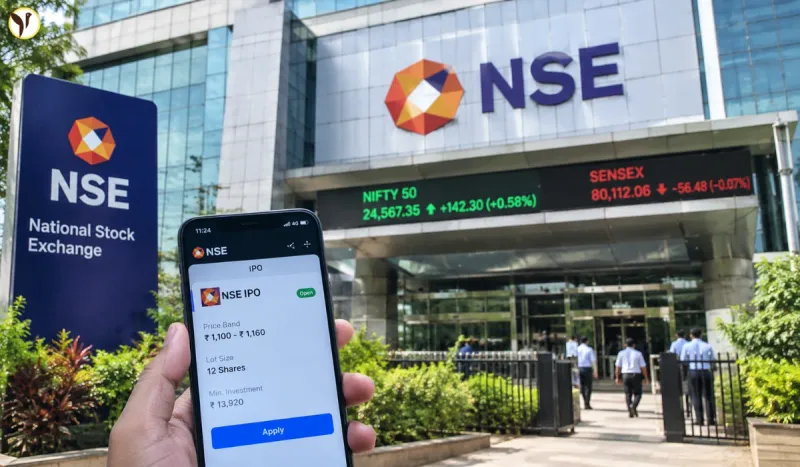
The wait is almost over for investors who received shares in the National Stock Exchange of India (NSE) IPO.
The NSE IPO allotment has been finalised, and the shares are scheduled to make their stock market debut on September 24, 2026.
The IPO opened for subscription on September 17 and closed on September 21. The allotment was finalised on September 22, while successful investors are scheduled to receive their shares in their demat accounts before the listing.
The NSE shares are scheduled to list on the BSE.
This means investors who got NSE IPO shares now have to wait for the actual market debut. Once trading starts, the share price will be decided by market demand and supply.
NSE IPO: Important Dates At A Glance
Here is the complete NSE IPO timeline investors should know:
|
|
|
|
|
|
|
|
|
|
|
|
|
|
|
|
|
|
|
|
|
|
|
|
The schedule shows that September 23 is mainly the transition day between allotment and listing, while September 24 is the key date for actual trading.
How Big Was The NSE IPO?
The NSE IPO was one of the most closely watched public issues in the Indian market.
The issue size was around ₹22,561.57 crore, and the IPO was completely an Offer for Sale (OFS).
This means the money raised through the IPO goes to the existing shareholders selling their shares rather than being raised by NSE through a fresh issue of shares.
The IPO had a price band of:
₹1,700 to ₹1,785 per share
The lot size was:
8 shares
Therefore, an investor applying for one lot at the upper price of ₹1,785 had to bid for:
8 × ₹1,785 = ₹14,280
The NSE's official issue information also confirms the ₹1,700–₹1,785 price range and eight-share bid lot.
NSE IPO Allotment: What Happens After You Get Shares?
If your NSE IPO application was successful, the process does not end with the allotment.
There are several steps between allotment and actual trading.
Shares Are Credited To Your Demat Account
After the allotment is finalised, successful applicants receive the allotted NSE shares in their linked demat accounts.
The scheduled credit date is September 23, 2026.
You can check your broker's holdings section to see whether the shares have appeared.
However, there can sometimes be a short delay in the display of newly credited shares depending on the broker's system.
Blocked IPO Money Is Released For Unsuccessful Applicants
If you applied for NSE IPO shares but did not receive an allotment, the amount blocked for the IPO is released according to the applicable process.
For UPI applications, the mandate or blocked amount is expected to be unblocked after the allotment process.
Investors should check their bank account or UPI application if the funds remain blocked beyond the expected timeline.
NSE Shares List On The BSE
The next major event is the September 24 listing.
NSE shares are scheduled to begin trading on the BSE.
Once trading begins, the market will determine the actual share price.
This is different from the IPO price.
For example, the IPO's upper price was ₹1,785, but the stock can open above, below or around that level depending on buying and selling interest.
What Happens On NSE IPO Listing Day?
Listing day can be an important moment because the IPO price changes into a live market price.
The basic process is:
IPO allotment → Demat credit → Listing → Trading begins → Market price discovered
Once trading starts, investors can see live NSE share prices through their broker or market platform.
The price may move quickly during the first trading session because of changing demand and supply.
Investors should therefore not assume that the IPO price or grey market indications will automatically become the actual listing price.
What Is The Expected NSE IPO Listing Price?
There has been considerable interest in the expected listing price of NSE shares.
One commonly watched indicator is the Grey Market Premium (GMP).
As of September 23, one report put the NSE IPO GMP at around ₹43, which, against the upper issue price of ₹1,785, indicated an estimated price of around ₹1,828.
That would represent roughly a 2.41% premium over the upper issue price.
However, this is only a GMP-based indication, not the actual listing price.
The real price will be determined by trading on the exchange when the shares list. GMP is unofficial and can change before listing.
GMP vs Actual Listing Price
|
|
|
|
|
|
|
|
|
|
|
|
|
|
|
|
|
|
|
|
|
|
|
|
How Much Was The NSE IPO Subscribed?
The NSE IPO received strong overall demand.
According to the final subscription data, the issue was subscribed around 5.71 times.
The category-wise subscription was approximately:
|
|
|
|
|
|
|
|
|
|
|
|
|
|
|
What Should Investors Do After Getting NSE IPO Shares?
Getting an allotment does not automatically mean that an investor has to sell on listing day.
After the shares are credited and listed, the investor can decide what to do based on their own investment plan and risk tolerance.
There are broadly three possible approaches investors may consider:
1. Sell After Listing
An investor who wants to exit after the stock becomes tradable can place a sell order through their broker.
The actual sale price will depend on the market price at the time the order is executed.
2. Continue Holding
An investor who wants to remain invested can continue holding the shares in the demat account.
The share price can move up or down after listing, so holding the stock also involves market risk.
3. Wait And Watch
Some investors may choose not to make an immediate decision.
They may first watch:
- Trading volume
- Market price
- Company results
- Regulatory developments
- NSE's future business performance
- Changes in the broader stock market
There is no fixed rule that an IPO allottee must sell on the listing day.
MSE just issued a circular admitting NSE (National Stock Exchange of India) shares under the "Permitted to Trade" category starting tomorrow, September 24, 2026.
— Thebaniyainvestors (@baniyainvestors) September 23, 2026
Symbol: NSE
Market Lot: 1
Series: EQ
Right after the mega IPO closed, MSE is making NSE shares tradable on its… pic.twitter.com/HjAtDsiPAb
Why Is The NSE Listing Important?
The NSE IPO is significant because the exchange itself is becoming a listed company.
The National Stock Exchange is one of India's major market infrastructure institutions and operates trading platforms across several market segments.
The IPO marks the end of a long process before the exchange's public-market debut.
Reuters reported that the NSE listing is also notable because only a relatively small portion of the company's pre-offer capital will be freely tradable at launch.
This can make the early trading sessions particularly important to watch, although it does not by itself determine the stock's future performance.
NSE IPO Was An Offer For Sale: What Does That Mean?
A major point investors should understand is that the NSE IPO was an OFS rather than a fresh issue.
In a fresh issue, the company issues new shares and receives the proceeds.
In an OFS, existing shareholders sell some of their holdings to public investors.
For the NSE IPO, the entire issue consisted of an offer for sale of up to 12.64 crore equity shares.
This distinction is important because it tells investors where the IPO proceeds are going.
Can Investors Buy More NSE Shares After Listing?
Yes.
Once NSE shares begin trading on the BSE, investors who did not receive an IPO allotment can potentially buy the stock through their normal stockbroker, subject to market availability and applicable trading rules.
The post-listing price, however, will not necessarily be ₹1,785.
It will be determined by the market.
For example:
- IPO price = ₹1,785
- Listing price could be higher
- Listing price could be lower
- The price can move further after trading begins
Therefore, buying after listing is different from receiving an IPO allotment.
Questions readers ask
When is the NSE IPO listing date?
The NSE IPO is scheduled to list on September 24, 2026, on the BSE.
Has NSE IPO allotment been finalised?
Yes. The allotment was finalised on September 22, 2026. Successful applicants are scheduled to receive their shares in their demat accounts before the listing.
What was the NSE IPO price?
The NSE IPO price band was ₹1,700 to ₹1,785 per share.
What was the NSE IPO lot size?
The lot size was 8 shares. At the upper price of ₹1,785, one lot required ₹14,280.
Where will NSE shares list?
NSE shares are scheduled to list on the BSE on September 24, 2026.