Why Does Uddhav Thackeray Want CEC Gyanesh Kumar Removed? Find Out
Uddhav Thackeray has demanded the removal of CEC Gyanesh Kumar after a report highlighted objections by two Election Commissioners. Know the full row.

- Published
- Reading time
- 11 minutes
A fresh political controversy has erupted around Chief Election Commissioner Gyanesh Kumar after a report raised questions about differences within the Election Commission of India (ECI).
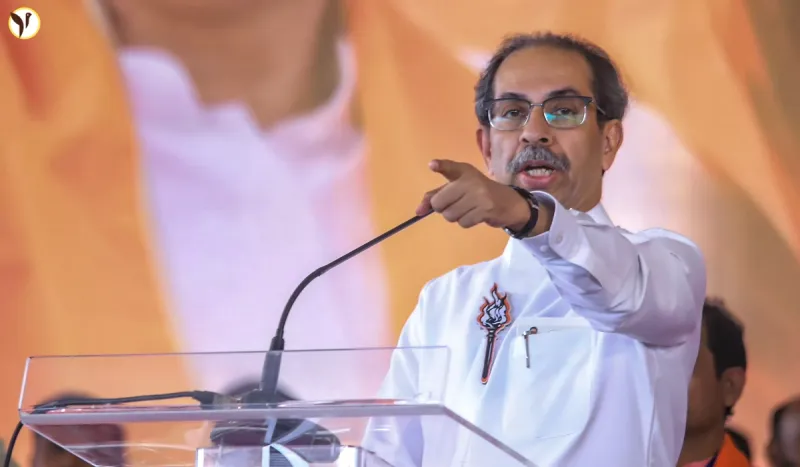
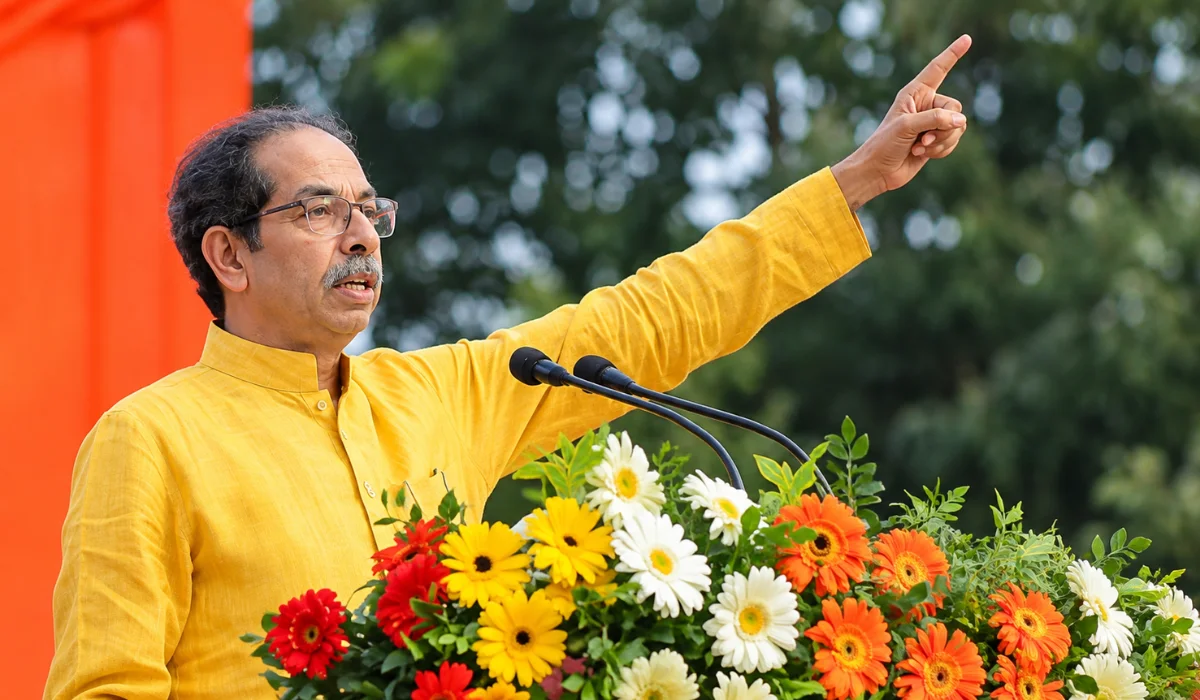
On September 23, 2026, Shiv Sena (UBT) chief Uddhav Thackeray demanded that Gyanesh Kumar be removed from the post and jailed. He also called for an inquiry into the functioning of the Election Commission and demanded fresh elections in Maharashtra, West Bengal and Tamil Nadu using ballot papers.
Thackeray's remarks came after an investigation by The Indian Express reported that Election Commissioners Sukhbir Singh Sandhu and Vivek Joshi had formally raised objections at least 14 times over 10 months regarding decisions and orders they said were taken without their knowledge.
However, the Election Commission has rejected the suggestion that its final decisions were taken without the approval of all three commissioners. ECI sources said that all decisions, including those concerning the Special Intensive Revision (SIR) of electoral rolls, were unanimous.
This difference between the reported internal objections and the Election Commission's explanation is at the centre of the latest political row.
Why Is Uddhav Thackeray Demanding Gyanesh Kumar's Removal?
Uddhav Thackeray's demand is directly linked to the reported objections raised by the two Election Commissioners.
According to The Indian Express investigation, Sandhu and Joshi raised objections on several issues related to electoral-roll management.
These reportedly included:
- Addition of new voters
- Deletion and restoration of voter names
- Appeals connected with electoral-roll decisions
- Changes to Form 6
- Access and control of voter databases
- Certain changes involving the Election Commission's IT systems
The investigation reported that the two commissioners formally objected at least 14 times over a 10-month period.
Thackeray cited these reported objections while arguing that serious questions had been raised about the functioning of the poll panel.
At his press conference, he demanded the immediate removal and arrest of Gyanesh Kumar and called for an investigation into the Election Commission's functioning.
It is important to note that these are Thackeray's political allegations and demands, not findings that establish wrongdoing by the CEC.
What Did The Indian Express Investigation Report?
The investigation published on September 23 said that Election Commissioners Sukhbir Singh Sandhu and Vivek Joshi had raised formal objections on record at least 14 times over the previous 10 months.
The report said some objections concerned decisions and orders that the two commissioners said were issued without their knowledge.
One of the reported areas was Form 6, which is used for registering new voters.
The investigation reported that changes were made to the online form during the SIR process, and that concerns were raised about whether the form could be changed in that manner without amendments to the relevant rules.
The report also discussed concerns about access to electoral-roll databases and whether some controls were becoming more centralised.
According to the investigation, the two commissioners also wrote to the Cabinet Secretary regarding changes involving the Election Commission's IT systems.
What Is The Election Commission's Response?
The Election Commission has presented a different account of the situation.
EC sources said that individual opinions or objections raised by commissioners should not be confused with final decisions of the Commission.
According to the Commission's response, all decisions, including decisions concerning the SIR exercise, were taken with the approval of:
- Chief Election Commissioner Gyanesh Kumar
- Election Commissioner Sukhbir Singh Sandhu
- Election Commissioner Vivek Joshi
The Commission said its final decisions were unanimous.
This is an important part of the story because the political criticism is based partly on reported internal objections, while the ECI maintains that those objections did not change the final decisions of the three-member Commission.
What Is SIR And Why Is It Important?
A major part of the controversy is the Special Intensive Revision (SIR) of electoral rolls.
SIR is a process aimed at checking and updating voter lists.
It can involve:
- Verification of voter records
- Addition of eligible voters
- Removal of ineligible or duplicate entries
- Correction of voter information
- Verification of documents
- Handling objections and appeals
The Election Commission has maintained that electoral-roll revision is intended to improve the accuracy of voter lists.
Opposition parties, however, have raised concerns about the possibility of genuine voters being left out of electoral rolls.
The latest internal-objection controversy has brought those concerns back into political debate.
What Were The Reported Objections About?
The reported objections were not limited to one issue.
Changes To Form 6
Form 6 is used by eligible citizens to apply for registration as voters.
According to the investigation, questions related to the SIR process were added to the online version of Form 6.
The report said Election Commissioner Vivek Joshi had raised concerns about changing the form without amending the relevant rules. Sukhbir Singh Sandhu later also recorded an objection, according to the report.
Voter Database Access
Another issue involved access to electoral-roll databases.
The investigation reported that the two commissioners raised questions about whether access to voter data was becoming more centralised.
They reportedly sought safeguards to ensure that only authorised statutory officials could make changes to voter records.
West Bengal Voter Appeals
The report also discussed appeals related to voters in West Bengal.
Sandhu reportedly questioned who had authorised certain appeals involving electoral-roll decisions.
This issue became important because the SIR process in West Bengal had already involved large-scale scrutiny of voter records.
Goa Voter Records
The investigation also highlighted a problem involving voters in Goa.
According to the report, some Electoral Registration Officers found voters eligible after reviewing their cases, but the software reportedly did not allow those decisions to be properly recorded in the final roll.
Uddhav Thackeray's Main Demands
Thackeray did not limit his criticism to asking for Gyanesh Kumar's removal.
He also demanded:
- Removal of Gyanesh Kumar as CEC
- Action against him
- An investigation into the Election Commission's functioning
- Cancellation of what he described as wrong decisions of the poll panel
- Fresh elections in Maharashtra, West Bengal and Tamil Nadu
- Use of ballot papers for the proposed fresh polls
These are political demands made by Thackeray. They do not mean that the elections have been cancelled or that fresh elections have been ordered.
As of September 23, there was no such order from the Election Commission or a court.
Why Did Thackeray Mention Maharashtra, West Bengal And Tamil Nadu?
The three states are relevant because their recent elections and voter-list revision processes have been the subject of political debate.
Maharashtra held its Assembly election in November 2024.
West Bengal and Tamil Nadu held their Assembly elections in April 2026.
Thackeray argued that the reported issues inside the Election Commission were serious enough to require examination of decisions connected with elections in these states.
However, this remains Thackeray's political demand. It is not an established finding that these elections were invalid.
What Happened With Maharashtra's Voter Numbers?
Maharashtra has been one of the states where opposition parties have raised questions about changes in voter numbers.
According to Election Commission data cited by The Indian Express, 48,81,620 electors were added between the 2024 Lok Sabha and Assembly elections, while 8,00,391 were deleted.
That resulted in a net increase of more than 40 lakh electors.
The Election Commission has said the increase did not represent an abnormal trend and pointed to the four qualifying dates for voter registration introduced under law.
This is important because there are two different positions:
- Opposition leaders have questioned the scale and timing of voter changes.
- The Election Commission has provided an explanation based on voter registration rules and qualifying dates.
What Is The Connection With West Bengal SIR?
West Bengal has also been at the centre of the SIR debate.
The Election Commission's revision process led to a large number of voter records being scrutinised.
According to The Indian Express, the Commission later told the Supreme Court that 38.31 lakh appeals had been filed before tribunals, including more than 22 lakh appeals by voters seeking restoration of their names.
The Supreme Court has also been involved in aspects of the West Bengal SIR process.
This has made the handling of voter records in West Bengal an important part of the wider political and legal discussion.
Is There Really An Internal Rift In The Election Commission?
The answer depends on what is meant by “rift”.
The Indian Express investigation reported repeated written objections from Sandhu and Joshi.
The report said the two commissioners questioned several decisions and also raised concerns about voter databases and electoral-roll management.
At the same time, the Election Commission has said that final decisions were unanimous and had the approval of all three commissioners.
|
|
|
|
|
|
|
|
|
|
|
|
|
|
|
|
|
|
|
|
|
Who Is Gyanesh Kumar?
Gyanesh Kumar is the current Chief Election Commissioner of India.
According to the Election Commission's official profile, he was appointed an Election Commissioner on March 15, 2024, and later became Chief Election Commissioner.
The Election Commission of India is a constitutional authority responsible for conducting elections to the Lok Sabha, Rajya Sabha, state legislative assemblies and the offices of the President and Vice-President.
The CEC therefore heads an institution that has a central role in India's electoral process.
Why Is The Issue Politically Sensitive?
The Election Commission is expected to administer elections and electoral rolls independently.
Because voter lists determine who can participate in elections, any controversy involving:
- Addition of voters
- Deletion of voters
- Voter verification
- Electoral databases
- Election administration
can quickly become politically sensitive.
Opposition parties have used the latest report to question the functioning of the Election Commission.
The Commission, on the other hand, says its final decisions were unanimous and that the reported individual objections did not represent separate institutional decisions.
Uddhav Thackeray and Arvind Kejriwal know nothing about the issue.
— Amit Kumar Sindhi (@AMIT_GUJJU) September 23, 2026
They didn’t even read the Indian Express article.
They just heard that ECI & Gyanesh Kumar are trending and came with their same old script.
Divided by state borders, united by their clownery. 😹 pic.twitter.com/VUGFGYJWdC
Has Gyanesh Kumar Actually Been Removed?
No. As of September 23, 2026, Uddhav Thackeray has demanded Gyanesh Kumar's removal, but that does not mean the CEC has actually been removed from office.
Earlier in April 2026, an impeachment/removal motion against Gyanesh Kumar had also been rejected by the presiding authorities of both Houses of Parliament.
The latest political demand is therefore a new call for action, not an announcement that Kumar has already lost his post.
Can A Chief Election Commissioner Be Removed Easily?
The CEC has constitutional protection regarding removal from office.
The Constitution provides that the Chief Election Commissioner can be removed from office in a manner similar to a Supreme Court judge.
This means a political leader cannot simply remove the CEC through a public statement.
There is a formal constitutional and parliamentary process for removal.
Therefore, Thackeray's demand and an actual removal are two separate matters.
Why Has The Row Become Bigger Now?
The latest controversy comes at a politically important time because voter-list revision is taking place across several parts of India.
The SIR exercise has already generated political debate between the Election Commission and opposition parties.
The new report about objections from two Election Commissioners has added another layer to the controversy.
Opposition leaders are using the report to question the functioning of the poll panel, while the Election Commission is stressing that its final decisions were unanimous.
Timeline Of The Gyanesh Kumar Controversy
|
|
|
|
|
|
|
|
|
|
|
|
|
|
|
|
|
|
|
|
|
|
|
|
|
|
|
What Are Other Opposition Leaders Saying?
Uddhav Thackeray is not the only opposition leader to react to the latest report.
Several opposition parties have criticised the Election Commission and called for action against Gyanesh Kumar.
Congress leaders have also raised questions about the functioning of the poll panel, while leaders from parties including TMC, AAP, CPI(M) and SP have criticised the reported objections and demanded action.
TMC leader Abhishek Banerjee separately demanded Kumar's removal and called for a court-monitored investigation into the functioning of the Election Commission.
These are political demands and should not be treated as established findings of wrongdoing.
What Does The Election Commission Say About SIR?
The Election Commission has maintained that SIR is aimed at updating electoral rolls and identifying issues such as duplicate or ineligible entries.
The Commission's latest response is that its final decisions on SIR were taken unanimously.
This directly addresses the central issue raised by the latest political criticism.
However, the reported written objections by the two commissioners remain part of the public record described by The Indian Express, which is why the issue has become a major political controversy.
Questions readers ask
Why does Uddhav Thackeray want Gyanesh Kumar removed?
Uddhav Thackeray's demand came after a report said Election Commissioners Sukhbir Singh Sandhu and Vivek Joshi had repeatedly raised objections to decisions concerning electoral rolls and other Election Commission processes. Thackeray said the reported objections raised serious questions about the functioning of the poll panel.
What did the two Election Commissioners object to?
According to the investigation, their concerns included voter additions and deletions, Form 6 changes, electoral-roll database access, appeals concerning voter decisions and aspects of the Election Commission's IT systems.
How many objections were reportedly raised?
The Indian Express investigation reported at least 14 formal objections over 10 months, including four on one day.
What has the Election Commission said?
The Election Commission has said that all its final decisions, including decisions related to SIR, were unanimous and approved by all three commissioners.
Has Gyanesh Kumar been removed as CEC?
No. As of September 23, 2026, he remains Chief Election Commissioner. The removal is a political demand made by Thackeray and other opposition leaders, not an accomplished removal.