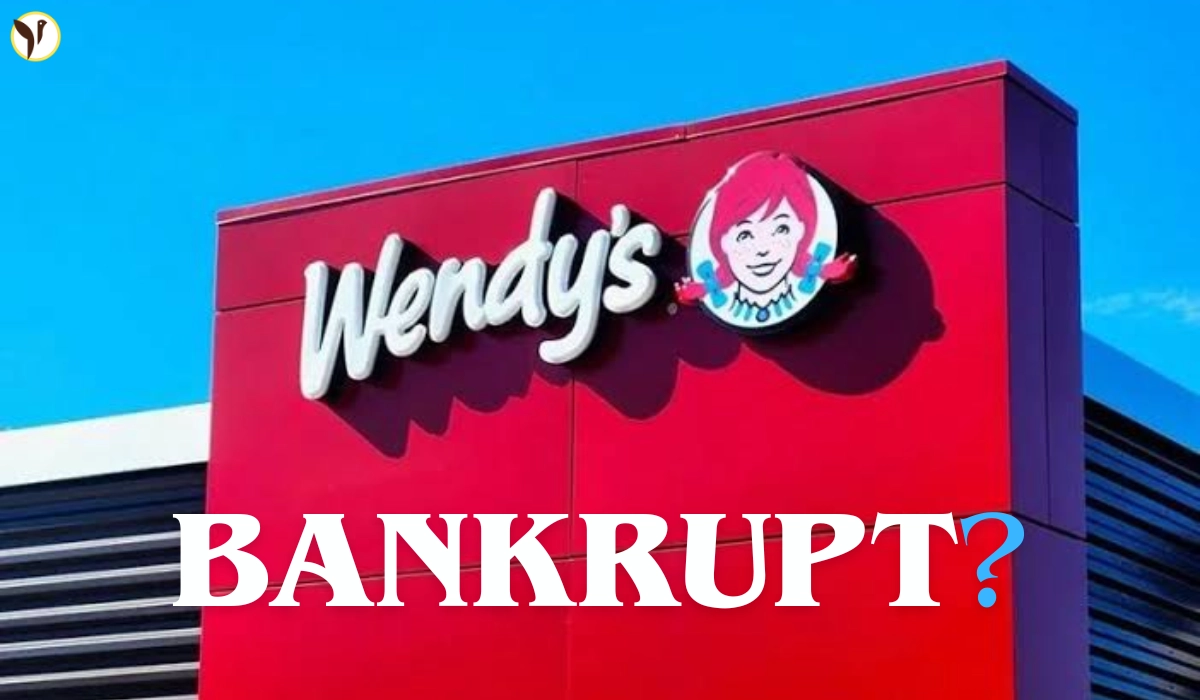


A major operator of Wendy’s restaurants has filed for Chapter 11 bankruptcy after suffering a sharp collapse in profitability, rising food costs and weakening customer demand. But customers should not mistake the development for the bankruptcy of Wendy’s itself.
Meritage Hospitality Group, one of the largest Wendy’s franchise operators in the United States, has sought bankruptcy protection while it attempts to restructure its finances. The Michigan-based company operates 314 Wendy’s restaurants across 15 states, along with one Bojangles restaurant and five independently branded outlets.
The filing places hundreds of restaurants and approximately 9,000 employees under close attention. Meritage has said it intends to keep its restaurants operating and continue paying employees during the restructuring process.
The franchisee has blamed its financial decline partly on problems affecting the wider Wendy’s brand, including marketing decisions that it says failed to attract customers, aggressive discounting, rising beef prices and falling restaurant sales.
Is Wendy’s Itself Filing for Bankruptcy?
No. The Wendy’s Company has not filed for bankruptcy.
The company seeking Chapter 11 protection is Meritage Hospitality Group, an independent franchisee that operates Wendy’s restaurants under agreements with the fast-food brand.
Wendy’s restaurants are run through a combination of company-owned locations and independently operated franchises. A franchisee pays for the right to use the Wendy’s name, menu, products and operating system while remaining responsible for its own employees, expenses, loans and restaurant-level finances.
This distinction matters because headlines about a major Wendy’s operator entering bankruptcy could lead customers to believe the entire restaurant chain is collapsing. That is not what has happened.
Major Wendy’s Franchisee Files for Bankruptcy https://t.co/ILl9wUMcgr
— Restaurant Development Experts, LLC. (@RDE_Restaurants) September 21, 2026
The bankruptcy applies to Meritage and related entities included in its filing. Other Wendy’s franchisees and corporate-owned restaurants are separate businesses.
Why Did the Wendy’s Franchisee File for Bankruptcy?
Meritage’s financial difficulties did not come from one isolated problem. The company reportedly faced a combination of falling sales, expensive ingredients, promotional discounts, debt obligations and declining restaurant profitability.
The company’s Wendy’s restaurants experienced a 48% decline in store-level earnings before interest, taxes, depreciation and amortisation during 2025, according to bankruptcy-related disclosures. That pushed restaurant-level profitability to its lowest point in approximately 30 years.
Beef prices also increased, placing pressure on the cost of producing Wendy’s core burgers. Restaurants could not necessarily pass every increase on to customers because consumers were already becoming more selective about eating out.
At the same time, discount-heavy promotions reduced the amount restaurants earned from individual orders. Such offers may increase customer traffic, but they can hurt franchisees when the additional sales are insufficient to cover food, labour and operating costs.
Meritage also pointed towards marketing problems at Wendy’s. The franchisee’s position is that unsuccessful campaigns and wider brand-level pressures contributed to weaker restaurant traffic and financial results.
That claim represents Meritage’s explanation of the situation. It is not a court finding that Wendy’s marketing alone caused the bankruptcy.
What Did Meritage Say About Wendy’s Marketing?
The operator argued that Wendy’s failed to generate enough customer demand through its marketing and promotional strategy.
This is a serious issue in a franchise system because operators generally contribute money towards advertising and must participate in campaigns developed or approved by the main brand. Franchisees still carry most of the restaurant-level costs, including wages, rent, utilities and ingredients.
When a nationwide promotion offers heavily discounted food, customers may see good value. The franchise operator, however, must determine whether the promotion produces enough additional orders to offset the lower margin on every discounted meal.
Meritage indicated that discounting and weak marketing results contributed to its financial pressure. Rising beef costs made the situation more difficult because Wendy’s menu depends heavily on fresh-beef hamburgers.
However, marketing was not the only problem. Meritage also faced debt and payment obligations while attempting to manage declining profitability across hundreds of locations.
How Much Does Meritage Owe?
Meritage listed both assets and liabilities in the range of $10 million to $50 million in its initial bankruptcy paperwork.
A Wendy’s affiliate named Quality Is Our Recipe LLC was listed as the company’s largest unsecured creditor, with approximately $24.9 million reportedly owed in deferred franchise-related fees.
An unsecured creditor does not have specific collateral guaranteeing repayment of the outstanding amount. What that creditor ultimately receives can depend on the restructuring plan approved through the bankruptcy process.
Meritage reportedly spent more than a year attempting to negotiate an out-of-court solution with its lenders and Wendy’s before filing for Chapter 11 protection.
Will the 314 Wendy’s Restaurants Close?
Meritage has not announced that all 314 Wendy’s restaurants will close.
Chapter 11 is generally used by US businesses that want to continue operating while reorganising their debts and financial commitments. It is different from a liquidation in which a company immediately shuts down and sells its remaining assets.
Meritage is seeking debtor-in-possession financing. If approved, this financing can provide money needed to maintain restaurant operations, purchase supplies and pay employees while the company works through the restructuring.
Some underperforming locations could eventually be sold, transferred or closed if Meritage determines that they cannot become profitable. Contracts and property leases could also be renegotiated or rejected with court approval.
However, customers should not assume that every Meritage-operated Wendy’s restaurant will disappear because of the filing.
What Happens to Meritage’s 9,000 Employees?
The company says it plans to continue paying employees and operating its restaurants during the Chapter 11 process.
That means the bankruptcy filing does not automatically terminate the jobs of all approximately 9,000 workers. Restaurants will still require managers, cooks, cashiers, cleaning employees and delivery support while they remain open.
The long-term effect on employment will depend on Meritage’s final restructuring plan. If stores are closed or sold, some employees could be transferred, offered work by a new operator or face job losses.
For now, the company’s immediate objective is to obtain financing and maintain normal business operations while reducing its financial burden.
Can Customers Still Use Wendy’s Rewards and Gift Cards?
Customers should generally be able to continue ordering from Meritage-operated restaurants that remain open.
The bankruptcy filing does not automatically cancel Wendy’s nationwide mobile application, loyalty programme or corporate gift-card system. These programmes are connected to the wider Wendy’s brand, which has not filed for bankruptcy.
However, customers should confirm that a specific restaurant is open and participating before travelling or placing a large order. Availability can vary if individual locations change ownership or temporarily close during restructuring.
Wendy’s Has Been Losing Ground to Rivals
Meritage’s bankruptcy has placed fresh attention on challenges across the Wendy’s system.
Wendy’s has experienced several consecutive quarters of declining US same-restaurant sales. The company has struggled to attract value-conscious customers as McDonald’s, Burger King and Taco Bell compete aggressively through discounted meals, menu launches and loyalty offers.
Value has become especially important as consumers deal with higher living costs. Many customers are reducing restaurant visits or looking for meals that provide more food at a lower price.
Wendy’s must therefore protect its franchisees’ profit margins while offering prices capable of competing with larger rivals. Discount too little, and customers may go elsewhere. Discount too aggressively, and restaurant operators may struggle to earn a sustainable return.
This tension is central to Meritage’s bankruptcy filing.
Will the Bankruptcy Affect Wendy’s Stock?
The bankruptcy does not directly place The Wendy’s Company in Chapter 11, but investors could view it as a warning about the financial health of major franchise operators.
Franchisees are critical to Wendy’s because they operate most of the brand’s restaurants and pay royalties, advertising contributions and other fees. When a large operator cannot meet its obligations, Wendy’s may face delayed payments, restaurant closures or the need to find replacement franchisees.
The $24.9 million reportedly owed to a Wendy’s affiliate is also financially relevant, although the eventual recovery will depend on the court-supervised restructuring.
One franchisee’s bankruptcy does not prove that Wendy’s entire franchise network is in distress. Still, Meritage’s size makes the case more significant than the failure of a small operator with only a few restaurants.
Investors will now watch restaurant traffic, same-store sales, franchisee profitability and Wendy’s efforts to improve its menu, marketing and customer experience.
What Happens Next?
The bankruptcy court will consider Meritage’s requests to continue paying employees, maintain restaurant operations and obtain financing.
Meritage will also need to negotiate with its lenders, Wendy’s and other creditors. The company may propose changes to its debt, restaurant portfolio, franchise agreements and property leases.
A successful restructuring could allow Meritage to emerge from bankruptcy with lower debt and a smaller but more profitable restaurant network. If the company cannot obtain financing or win support for a workable plan, it could be forced to sell more locations or close underperforming restaurants.
The case may also increase pressure on Wendy’s management to demonstrate that its turnaround strategy can improve restaurant traffic without forcing franchisees to rely on financially damaging discounts.
The Bigger Issue for Wendy’s
The most important part of this story is not simply that a Wendy’s franchisee has entered bankruptcy. It is that one of the chain’s largest operators says brand-level problems severely damaged the economics of running its restaurants.
Meritage’s claims do not establish that Wendy’s marketing was solely responsible. The franchisee also faced rising costs, debt and its own operational decisions. Still, a 48% decline in store-level earnings shows that the company’s financial condition deteriorated sharply.
Customers are unlikely to see all 314 restaurants disappear immediately. Employees are expected to continue working while the restructuring proceeds. For Wendy’s, however, the filing is a warning that a marketing strategy cannot be judged only by the attention it generates. It must also bring enough profitable business to the franchisees paying to operate the restaurants.