Trump Accounts Live: Who Gets $1,000 and How to Claim It
Treasury auto-enrolled 60 million US children in Trump Accounts, but the $1,000 only goes to kids born 2025–2028 and only after a parent claims the account and files Form 4547. Full rules.

- Published
- Reading time
- 7 minutes
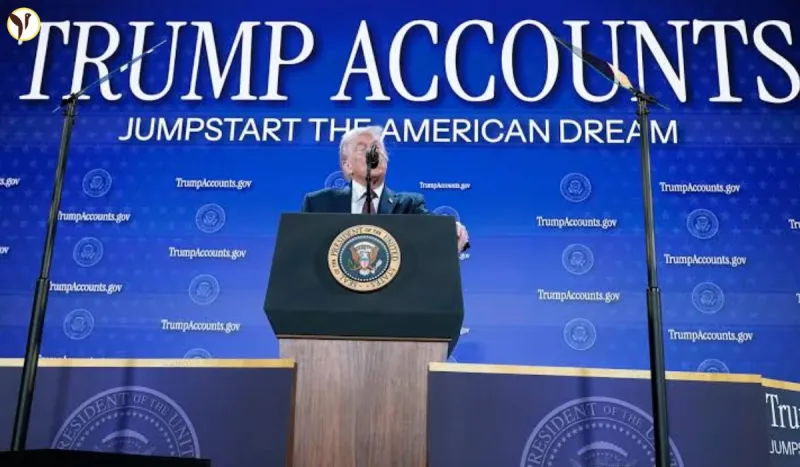
The US Treasury auto-enrolled more than 60 million children in Trump Accounts on 1 October, but the headline $1,000 federal deposit does not arrive on its own. It goes only to US citizen children born between 1 January 2025 and 31 December 2028 roughly 14.4 million kids and only once a parent downloads the Trump Accounts app, verifies their identity and relationship to the child, claims the account, and separately elects the federal contribution using Form 4547. Auto-enrolment creates the account. A parent has to fund it.
That gap between enrolment and funding is where most of the confusion sits, and it is worth being precise about, because the two numbers being reported together 60 million accounts, $1,000 each do not describe the same group of children.
The accounts and the money are two different programmes
A Trump Account is a 530A account: a tax-advantaged investment account in a child's name, launched on 4 July 2026. Any US child under 18 with a valid Social Security number can have one. That is the 60 million figure, and the White House expects it to reach roughly 70 million once enrolment completes.
The $1,000 is a separate, much narrower federal contribution. It is restricted to US citizen children born in the four-year window from 1 January 2025 through 31 December 2028. Treasury's own arithmetic puts that at about 14.4 million children a little over a fifth of the children being enrolled. Of those, roughly 5.8 million are in low- and moderate-income households.
So a parent of a seven-year-old now has an account for that child. They do not have a $1,000 deposit coming, and no amount of app activity will produce one.
Treasury Secretary Scott Bessent described the accounts as "ready to be claimed" language that captures the design precisely. The government has opened the door. Walking through it is on the family.
70 MILLION Trump Accounts and counting. The next generation is getting a head start on the American Dream. 💰 Catch up on every event through today on Trump TV! 📲 https://t.co/vjH7oTsNu9 https://t.co/OK5SREULPp
— Stephen Moore (@StephenMoore_11) October 7, 2026
What a parent actually has to do
The sequence has two distinct steps, and people are completing the first and assuming the second happens by itself.
Step one: claim the account. Download the Trump Accounts app, which is linked from trumpaccounts.gov. Verify your own identity. Verify your relationship to the child. The account then becomes yours to manage. One login can hold multiple children, so a parent with three eligible kids does not need three separate sign-ins.
Step two: elect the federal contribution. This is a separate filing Form 4547 and it is the step that releases the $1,000 for children in the qualifying birth window. Claiming the account alone does not trigger it.
Anyone who completed step one in the pre-enrolment period and has been waiting for money to appear is almost certainly missing step two.
Why this took until October to work
There was a real obstacle earlier in the year. In March, objections were raised that auto-enrolling children would mean exposing protected taxpayer information because creating an individual account for a named child with a named Social Security number is, in effect, a disclosure. Treasury's solution was structural: a single master trust, with individual accounts created beneath it rather than as standalone disclosures. That design is what made 1 October possible.
Madeline Brown of the Urban Institute summarised the shift bluntly: "The rulemaking essentially introduces the idea of auto accounts, created for every child under 18 with a Social Security number."
Take-up before the automatic enrolment was low, and the reported figures depend heavily on what you divide by some sources put it under 8 per cent, others around 39 per cent, using different denominators. Either way, auto-enrolment was a response to families not signing up, not a victory lap.
The Dells are filling the gap the federal money leaves
Michael Dell, the Dell Technologies founder, and his wife Susan have pledged $6.25 billion to put $250 into accounts for 25 million children born between 2016 and 2024 in lower-income ZIP codes.
Note the birth years. Those are precisely the children the federal $1,000 does not reach kids who are now roughly two to ten years old and who got an account on 1 October with nothing in it. In New York City alone, with around 754,200 children, the Dell programme would amount to roughly $188.5 million.
One detail is genuinely unsettled in the reporting: the income threshold for a qualifying ZIP code. Most accounts cite a median household income cut-off of $150,000; at least one source puts it at $118,000. Families near either line should not assume eligibility until the programme publishes its own criteria.
Dell has framed the pledge around financial literacy rather than the cash itself. "Financial education is critical," he said, adding: "I believe there will be a number of additional philanthropists that join us." Brad Gerstner of Altimeter Capital, who attended the announcement, is among the named donors. Charles Schwab is among employers offering matching contributions to staff.
Both the federal and the Dell deposits sit outside the $5,000 annual family contribution cap, so accepting them does not reduce what a parent can add themselves. More than $4.5 billion has been deposited into Trump Accounts since the 4 July launch.
The rule change that changed what can go in
Temporary regulations effective 30 September altered what philanthropic contributions may consist of. Previously, donated money had to go into low-cost broad index funds. The new rules permit contributions of individual company shares.
This is the part of the story almost nobody is leading on, and it cuts both ways. For a company or a founder, donating stock is simpler and more tax-efficient than donating cash. For a child's account, a single company's shares carry concentration risk that an index fund is specifically designed to avoid a bad year for one employer can land directly on one cohort of children's balances.
There is no implication of bad faith here; stock donation is ordinary philanthropic practice. But parents should understand that a donated share is not the same asset class as a donated index fund, and should check what their child's account actually holds.
The rule parents most often get wrong
Money in a Trump Account is locked until the child turns 18. The growth period runs to 31 December of the year the child turns 17, after which traditional IRA rules apply.
That last clause is the one that matters, and it is why framing these accounts as college funds is a mistake. Under traditional IRA treatment, withdrawals before retirement age are generally taxable and subject to an early-withdrawal penalty. A parent who deposits $5,000 a year assuming it will pay tuition at 18 may find the money taxed and penalised on the way out. A 529 plan, by contrast, is built for education costs and pays them out tax-free.
Neither account is obviously better than the other; they are built for different things. The error is assuming a Trump Account does what a 529 does.
A predictable scam window is now open
A new federal programme, 60 million newly created accounts, an unfamiliar app and a form number most people have never heard of is close to ideal conditions for fraud. The only legitimate route is trumpaccounts.gov and the app linked from it.
No government body will phone, text or email asking for a Social Security number, bank login or payment to "release" a child's $1,000. Any message doing so is a scam, regardless of how official the sender's name looks. Treasury will not charge a fee to claim an account.
What is still unresolved
The 2028 birth cut-off means the $1,000 is, for now, a four-cohort programme rather than a permanent entitlement whether it extends is a decision for a future Congress. The Dell ZIP code threshold needs confirming. And the real test of auto-enrolment is not how many accounts exist on paper but how many parents complete both steps; if the pre-enrolment take-up rates are any guide, a large share of the $1,000 deposits authorised for eligible children may simply go unclaimed.
This article is for information only and is not financial advice. Account rules, eligibility windows and contribution limits can change. Check trumpaccounts.gov for current terms, and consider speaking to a qualified financial adviser or tax professional about your own situation.
Questions readers ask
What is a Trump Account?
A Trump Account is a 530A account a tax-advantaged investment account held in a child's name, launched on 4 July 2026. Any US child under 18 with a valid Social Security number is eligible to have one. Families can contribute up to $5,000 a year, and the money is locked until the child turns 18.
Which children get the $1,000 federal deposit?
Only US citizen children born between 1 January 2025 and 31 December 2028 approximately 14.4 million children. Having a Trump Account does not by itself qualify a child for the $1,000. Children born before 2025 are enrolled in the programme but are not eligible for the federal contribution.
My child was auto-enrolled on 1 October. Why hasn't the money arrived?
Auto-enrolment creates the account; it does not fund it. If your child is in the 2025–2028 birth window, you must download the Trump Accounts app from trumpaccounts.gov, verify your identity and your relationship to the child to claim the account, and then separately elect the federal contribution using Form 4547. The deposit follows that election, not the enrolment.
Do the federal $1,000 and the Dell $250 count toward the $5,000 annual limit?
No. Both the federal contribution and philanthropic deposits such as the Dell programme sit outside the $5,000 annual family contribution cap, so receiving them does not reduce how much a parent can add.
Which children qualify for the Michael and Susan Dell $250 deposit?
The Dells have pledged $6.25 billion to deposit $250 into accounts for 25 million children born between 2016 and 2024 who live in lower-income ZIP codes. Reports differ on the ZIP code median household income threshold most cite $150,000, while at least one source puts it at $118,000 so families near either figure should wait for the programme's published criteria before assuming eligibility.