


Gold savings platform Jar has raised ₹29 crore from existing backer Unitary Fund, a small round that comes with a notable twist the company's valuation has climbed 23% even as its bigger fundraising plans quietly fell apart.
The more interesting detail here is what didn't happen. Jar had been in talks to raise $100 million from investors including WestBridge Capital, but those discussions have reportedly fizzled out. Instead, an existing investor stepped in with a much smaller cheque — at a higher price.
That's an unusual sequence: failed talks for a large round, followed by a modest insider round at a markup, all while the company sits under active regulatory investigation.
The Details
- Amount raised: ₹29 crore
- Investor: Unitary Fund (existing backer), full amount
- Instrument: 1,70,589 Series B2 compulsorily convertible preference shares (CCPS) at ₹1,700/share
- Post-money valuation: ~₹3,155 crore, up 23% from ~₹2,565 crore in the previous round
- Use of funds: Working capital and general corporate purposes
- Context: Comes after reported failure of $100 Mn talks with WestBridge Capital and other investors
A Markup That's Bigger Than the Round Itself
The ₹29 crore raised is worth noting for its size relative to the valuation bump it created.
At a ~₹3,155 crore valuation, this round represents less than 1% of Jar's total value a token check, not growth capital.
That points to this being less about raising money and more about an existing investor validating the company's worth on paper, even as larger institutional investors stayed away.
Gold, Jewellery, and Now Insurance
Jar started as a platform letting users automate small savings into digital gold. It has since expanded into jewellery through its Nek vertical and added insurance offerings.
Sources say the D2C jewellery business has been scaling quickly a sign the company is diversifying beyond its original gold-savings core, likely to reduce dependence on a category now facing regulatory heat.
Financially, Jar reported ₹208 crore in operating revenue for FY25, with gross revenue around ₹2,450 crore. The company says it narrowed losses and turned profitable in the second half of FY25.
The Regulatory Cloud Over Digital Gold
Jar doesn't fall under SEBI's regulatory ambit, but that hasn't shielded it from scrutiny.
Bengaluru Police filed an FIR against the company over allegations of unauthorised collection of money against digital gold, without required approvals. The Karnataka High Court refused to quash the FIR, allowing the investigation to continue.
The fallout has spread beyond Jar. Larger fintech players like GPay, PhonePe and Paytm have reportedly pulled back on promoting digital gold products the way they used to a sector-wide chilling effect triggered by one company's legal trouble.
What the Ownership Table Reveals
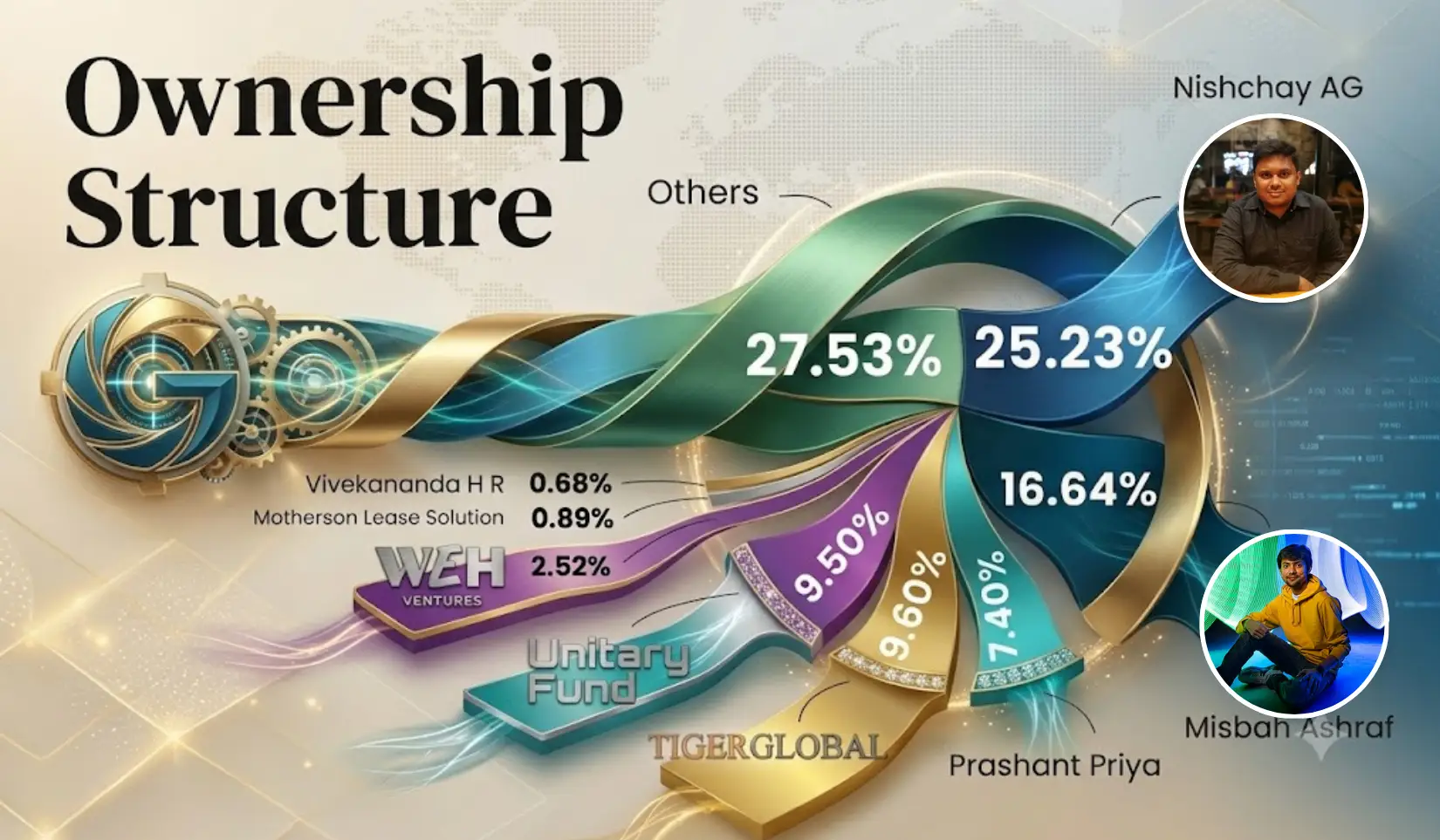
Post this round, Tiger Global holds 9.60%, Unitary Fund 9.50%, with WEH Ventures and Motherson Lease Solution holding smaller stakes of 2.52% and 0.89%.
Founders Nishchay Babu (25.23%), Misbah Ashraf (16.64%) and Captain Prashant Priya (7.40%) together still hold a substantial chunk a sign the founding team hasn't been heavily diluted despite multiple funding rounds.
What This Round Actually Signals
A 23% valuation bump sounds like good news, but the size of the round tells a different story than the headline number. When a $100 Mn institutional round falls through and is replaced by a sub-₹30 crore insider check, it usually means new investors wanted to wait and watch likely due to the ongoing FIR while an existing backer stepped in to keep the valuation intact ahead of any future raise. The profitability claim is doing a lot of work here: it's the company's strongest argument that the business is healthy independent of the regulatory cloud hanging over it.
The Bottom Line
The real test for Jar isn't this ₹29 crore check it's whether the FIR resolves cleanly enough for WestBridge-sized investors to come back to the table.