

Bengaluru-based seafood supply-chain startup Captain Fresh has posted ₹5,169 Cr in revenue for FY26, up 52% from ₹3,397 Cr the year before. The IPO-bound company also stayed profitable through the growth spurt.
The more telling number sits below the top line: adjusted EBITDA nearly tripled, from ₹136 Cr to ₹371 Cr. That's a company growing revenue fast while getting meaningfully more efficient at the same time not always the case at this stage of scale-up.
Captain Fresh is now chasing ₹10,000 Cr in FY27 revenue which means it needs to roughly double again in a single year, right as it heads toward a public listing.
The Details
- FY26 revenue: ₹5,169 Cr, up 52% YoY from ₹3,397 Cr in FY25
- Adjusted EBITDA: ₹371 Cr, up from ₹136 Cr a 2.7x jump
- Gross margin: 23.5%
- FY27 target: ₹10,000 Cr revenue implying the company needs a quarterly run-rate of ~₹2,500 Cr, nearly double its current pace
- Debt load: ~₹2,300 Cr of inventory-linked working capital debt
- Status: IPO-bound, financials disclosed ahead of a public listing
From Fishermen to Global Retailers
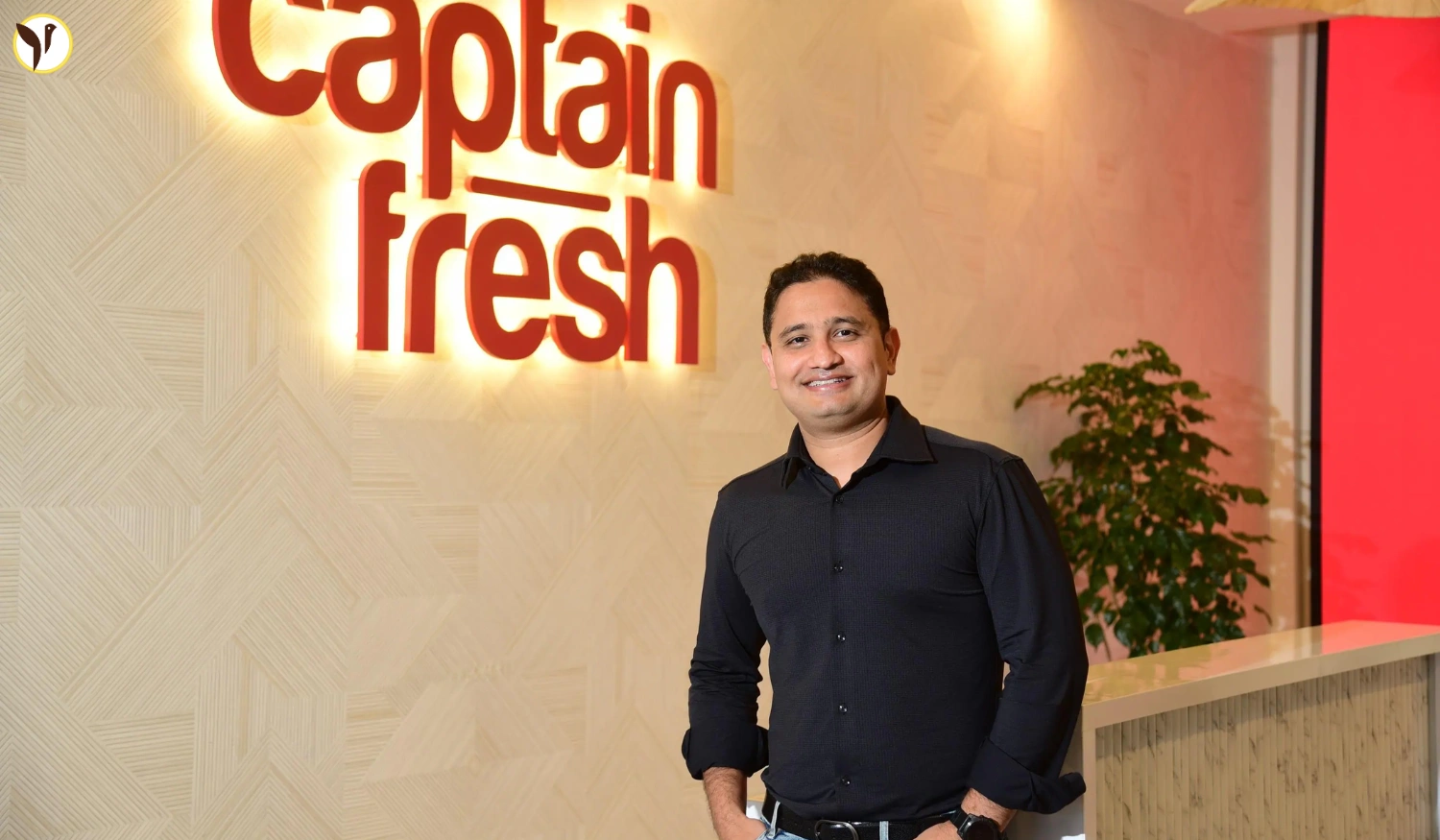
Founded in 2019 by Utham Gowda, Captain Fresh runs a tech-enabled, asset-light platform connecting fishermen and aquaculture farmers directly to retailers, distributors and foodservice chains worldwide.
Its edge is CF DOS, a proprietary digital operating system built to bring traceability and order to a historically fragmented, paper-heavy seafood supply chain.
The company has grown partly through acquisitions picking up Spain's Frime, Poland's Koral, and US-based CenSea and now sells under house brands including CenSea, Koral, Frime and Ocean Garden.
Exports Are Doing the Heavy Lifting
The US alone accounted for 71% of Captain Fresh's revenue in FY25, and that dependency has only deepened as the company scales export markets now drive the overwhelming majority of the business, with domestic India revenue a small fraction.
That's a strategic choice, not an accident. Seafood margins in export markets, particularly the US, tend to be healthier than in India's fragmented domestic retail but it also means Captain Fresh's fortunes are tied tightly to US demand, freight costs, and trade policy.
The Debt Behind the Growth
Scaling a seafood supply chain isn't capital-light inventory has to be bought, stored and shipped before it's ever sold. That's reflected in Captain Fresh's ₹2,300 Cr of inventory-linked debt, a number that will only grow if the company is serious about hitting ₹10,000 Cr next year.
Managing that debt against improving margins will likely be the single biggest thing IPO investors scrutinize.
What the Numbers Don't Tell You
Tripling EBITDA while growing revenue 52% is a genuinely strong combination but it's happening right before an IPO, when companies have every incentive to show their best possible numbers.
The real test is whether that 23.5% gross margin holds as Captain Fresh tries to nearly double revenue again in FY27. Export-heavy, low-margin commodity businesses like seafood often see margins compress as they scale into new geographies and take on more competitive pricing.
Inventory-linked debt at this size isn't alarming on its own, but it does mean working capital discipline not just revenue growth will decide whether this IPO story holds up post-listing.
The Bottom Line
Captain Fresh has the growth numbers IPO investors want to see the real question is whether ₹2,300 Cr of inventory debt becomes a footnote or a headline once the company is answering to public shareholders.