Sensex Jumps 1,100 Points! Is LTCG Tax Relief Finally on the Way for Investors?
Sensex surged 1,109 points on October 13 after LTCG tax remarks by Nirmala Sitharaman. Check what she said, why markets rallied and whether tax relief is confirmed.

- Published
- Reading time
- 8 minutes
The Indian stock market witnessed a strong recovery on Tuesday, October 13, 2026, as the BSE Sensex jumped more than 1,100 points and the Nifty 50 closed above the 22,700 mark. The rally came after Finance Minister Nirmala Sitharaman spoke about the ongoing debate around long-term capital gains (LTCG) tax and securities transaction tax (STT).
Investors took the comments as a possible sign that the government may hear calls for changes to the taxation of equity investments during the upcoming Budget consultations. However, there is no confirmed announcement that LTCG tax will be removed or reduced.
The market rally was also supported by strong buying in information technology stocks, including HCLTech and Tata Consultancy Services (TCS). A stronger rupee and softer crude oil prices added to the positive sentiment.
Sensex Today: How Much Did the Market Rise?
The Sensex closed at 73,033.78, gaining 1,109.10 points, or around 1.54%, on October 13. The Nifty 50 rose 358.60 points, or approximately 1.6%, to finish at 22,721.95.
The IT sector was among the strongest performers. The Nifty IT index rose more than 5%, with HCLTech and TCS attracting strong buying interest after their quarterly results.
The rally followed a difficult period for Indian equities, with investors concerned about foreign fund outflows, crude oil prices, currency weakness and global uncertainty.
The latest recovery brought some relief to investors, but one positive trading session does not necessarily mean that the market has entered a sustained upward trend.
What Did Nirmala Sitharaman Say About LTCG Tax?
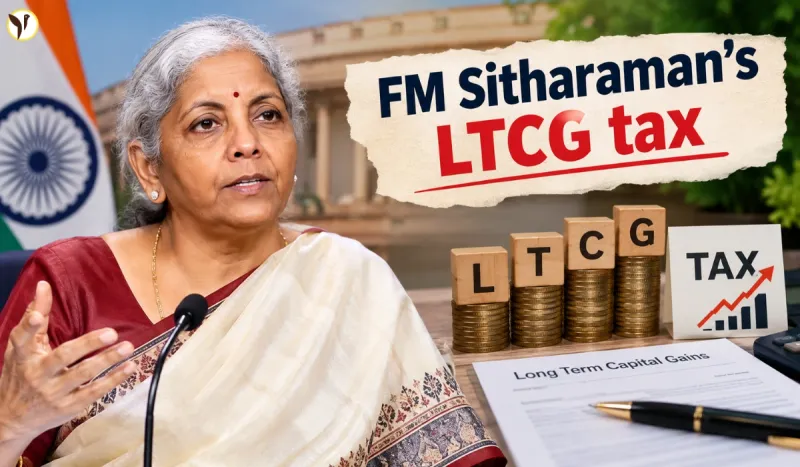
Speaking at the Bloomberg New Economy Forum in New Delhi, Finance Minister Nirmala Sitharaman acknowledged that investors from India and overseas have been discussing LTCG tax, STT and the way different asset classes are taxed.
She said that these issues were being debated and that hearing different views during the Budget consultation process was healthy.
Her remarks brought the possibility of tax reform back into the market conversation. Investors have been discussing whether a change in capital gains taxation could make Indian equities more attractive and improve the returns investors receive after tax.
However, Sitharaman's comments should not be treated as a promise to remove LTCG tax. She did not announce a new tax rate, an exemption or a confirmed policy change.
For now, the comments indicate that the subject is part of a wider discussion, not that a final decision has been made.
What Is LTCG Tax and Why Does It Matter?
LTCG stands for Long-Term Capital Gains. It refers to profit made when an investor sells an asset after holding it for the period required under the applicable tax rules.
For listed equity shares and certain equity-oriented mutual funds, the long-term holding period and tax treatment depend on the relevant provisions of the Income-tax Act.
Under the equity capital gains rules introduced in 2024, qualifying long-term gains on listed equity shares and equity-oriented funds are generally taxed at 12.5% on gains exceeding the annual exemption threshold of ₹1.25 lakh, subject to applicable conditions.
For example, if an eligible investor makes ₹2 lakh in qualifying long-term equity gains during a financial year, the taxable amount under that framework would generally be ₹75,000 after applying the ₹1.25 lakh exemption. The tax calculation may vary depending on the type of asset, transaction details and the investor's circumstances.
LTCG tax matters because it affects the amount of profit investors keep after selling their investments. A change in the rate or exemption threshold could therefore influence investment decisions, portfolio planning and the attractiveness of equity investments.
Investors should follow the law currently in force until any new provision is officially announced and implemented.
Could the Government Remove LTCG Tax?
The possibility of removing or reducing LTCG tax has become a subject of discussion among market participants. Some analysts argue that lower taxes on long-term equity gains could encourage investors to hold investments for longer periods and help attract capital to Indian markets.
SBI Research has reportedly recommended abolishing LTCG tax on equity investments while extending the holding period to two or three years. The proposal is linked to concerns about foreign portfolio investor outflows and the need to make Indian equities more attractive.
However, a research recommendation is not the same as a government decision. The Finance Minister's willingness to hear views also does not automatically mean that the government will accept the proposal.
The final decision, if any, would depend on the government's policy priorities, revenue requirements, economic conditions and the formal Budget or legislative process.
Why Did the Sensex Rally by More Than 1,100 Points?
LTCG tax remarks were one factor behind the rally, but they were not the only reason. Several developments supported buying on Dalal Street.
1. Hopes of a possible tax review
Sitharaman's comments revived discussion about whether the government may review LTCG tax and STT. Investors responded positively to the possibility of future consultations, although no change has been confirmed.
2. Strong buying in IT stocks
IT shares led much of the market's advance. HCLTech rose sharply following its quarterly results, while TCS also gained. The Nifty IT index climbed more than 5%, providing strong support to the benchmark indices.
3. Stronger rupee
The Indian rupee strengthened against the US dollar, helping improve market sentiment after a period of pressure on the currency.
4. Lower crude oil prices
A decline in global crude oil prices offered some relief because India imports a large amount of its crude oil requirements. Lower oil prices can ease pressure on the import bill and inflation, although the final impact depends on how long prices remain lower.
5. Buying after recent market weakness
Indian equities had faced pressure in recent sessions. Some investors returned to the market after the decline, while the positive tax headlines and IT results added to the recovery.
These factors together help explain why the market rose strongly. It would be inaccurate to attribute the entire rally to LTCG tax expectations alone.
What Is the Difference Between LTCG Tax and STT?
Investors often discuss LTCG tax and STT together, but they are different charges.
LTCG tax is a tax on eligible profits made when an investor sells an asset after the applicable long-term holding period.
Securities Transaction Tax (STT) is charged on specified securities transactions, such as eligible purchases or sales of shares and other securities, according to the applicable rules.
A change to one tax does not automatically mean a change to the other. The government would need to announce the relevant measures separately or through a policy package that clearly explains each change.
Sitharaman's remarks brought both taxes into the discussion, but no new LTCG or STT rate was confirmed in the reported comments.
What Would LTCG Tax Relief Mean for Retail Investors?
If the government eventually reduces the LTCG rate or increases the exemption limit, eligible investors could pay less tax on qualifying long-term equity gains.
The impact would depend on the type of relief announced. For example:
-
A lower tax rate could reduce the tax payable on eligible long-term gains.
-
A higher exemption threshold could allow investors to realise a larger amount of qualifying gains before tax applies.
-
A longer holding period could change when an investment qualifies for long-term treatment.
-
A change in STT would affect eligible securities transactions covered by the revised rules.
These are possible effects of different policy options, not confirmed measures.
Investors should also remember that tax relief does not guarantee higher stock prices. Share prices continue to depend on company earnings, valuations, interest rates, economic growth, foreign investment flows and global developments.
Should Investors Buy Stocks After the Sensex Rally?
A sharp rise in the market can create excitement, but investors should avoid making decisions based only on one day's movement or an unconfirmed tax possibility.
Long-term investors should consider their financial goals, investment horizon, risk tolerance and the fundamentals of the companies they are buying. They should also check whether a stock's current valuation is reasonable relative to its earnings and growth prospects.
Short-term traders face different risks because market prices can change quickly when new information emerges. If investors are buying mainly because they expect LTCG tax to be removed, they should remember that no such change has been confirmed.
A diversified portfolio and a clear investment plan can help investors avoid reacting emotionally to daily market movements. People who are unsure about the tax treatment of their investments should consult a qualified tax professional.
What Happens Next?
The next important step is the government's Budget consultation and policy process. Investors will watch for more specific statements, official proposals or changes to tax legislation.
Until then, the existing tax rules remain applicable. The market may continue to react to statements about LTCG tax and STT, but expectations should not be confused with confirmed policy.
Any actual relief would need to be explained through an official announcement and, where required, implemented through the relevant legal process.
Is LTCG Tax Relief Finally on the Way?
The Sensex's 1,109-point jump on October 13 gave investors a reason to feel more positive after a difficult period. Finance Minister Nirmala Sitharaman's comments added to hopes that LTCG tax and STT could receive attention during future policy discussions.
But LTCG tax relief is not confirmed yet. The government has not announced a new rate or a decision to abolish the tax. The rally also received strong support from IT stocks, better quarterly results and other market factors.
For investors, the sensible approach is to follow official announcements, understand the tax rules currently in force and avoid making investment decisions based on speculation alone.
Questions readers ask
Why did the Sensex jump by 1,100 points on October 13, 2026?
The Sensex rose 1,109.10 points, supported by strong buying in IT stocks, positive sentiment after Finance Minister Nirmala Sitharaman's comments on LTCG tax and STT, and other market factors.
Has the government announced LTCG tax relief?
No. The Finance Minister acknowledged the ongoing debate and said investor views could be heard during Budget consultations. No final decision to remove or reduce LTCG tax was announced.
What is the current LTCG tax rate on listed equity investments?
Under the rules introduced in 2024, qualifying long-term gains on listed equity shares and equity-oriented mutual funds are generally taxed at 12.5% on gains exceeding ₹1.25 lakh in a financial year, subject to applicable conditions.
What did Nirmala Sitharaman say about LTCG tax?
She said LTCG tax, STT and the tax treatment of different asset classes were being discussed by Indian and foreign investors. She described the debate as healthy but did not promise tax relief.
What is the difference between LTCG tax and STT?
LTCG tax applies to eligible profits from selling assets after the required holding period. STT is charged on specified securities transactions under the applicable rules.