UPI MDR Is Not a Tax: What Sitharaman Said and What It Means for You
Nirmala Sitharaman says the UPI charge is not a tax and will not reach customers. She is right but that is not what people are actually worried about.

- Published
- Reading time
- 7 minutes
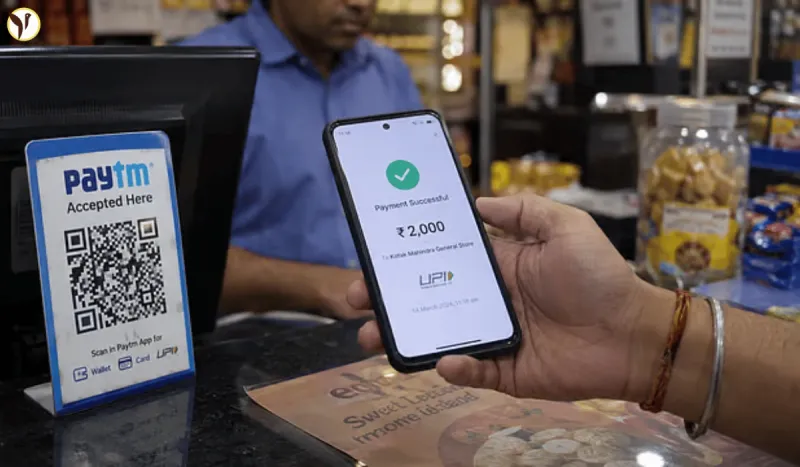
Finance Minister Nirmala Sitharaman has said the merchant discount rate on UPI payments above Rs 2,000, effective 15 October, is not a tax, cess or surcharge, that no part of it reaches the government, and that it will not be passed on to customers. On the facts, she is right the charge sits with merchants and is shared among NPCI, banks and payment providers. But the concern among shoppers was never an extra line on their bill. It is that some merchants, including petrol pump associations in Madhya Pradesh and Mumbai and now a trade body representing six crore shopkeepers, have warned they may simply stop accepting UPI above Rs 2,000 rather than absorb the cost.
What she actually said
Speaking to PTI, Sitharaman was unusually direct.
"This is not a tax, this is not a cess, and it is not even a surcharge. The collection is not going to the Consolidated Fund of India. So, let us first understand that this is not a government issue."
She explained who is charging it and who receives it. "The MDR is being charged by NPCI, the aggregator, the service provider, those who provide the POS machines, and the merchant bank. They are the ones providing the service. Above Rs 2,000, the merchant is the one who will pay. That money is not coming to the Government of India, and we are not imposing it. And this will not be passed on to the customer."
She described opposition allegations as a complete misconception, saying the opposition was levelling allegations without fully understanding the issue, and that she wished to clarify so that traders and citizens were well informed.
The rate, she said, was mutually agreed between the banks providing POS machines, QR service providers and collecting banks, with proceeds shared among NPCI, banks, POS machine providers and merchant banks.
Government sources separately told PTI that not a single penny of the MDR would reach the government.
On the narrow question, she is correct
It is worth saying plainly, because it is the part readers most need settled.
A merchant discount rate is a fee paid by a business for accepting a digital payment, deducted from what it receives. It has applied to card payments in India for years without anyone calling it a tax. There is no mechanism by which a UPI app charges you Rs 5 or 0.4% at the point of payment, and the government does not collect the money.
If your question was "will my UPI app start deducting a fee", the answer is no.
The actual rate card
| Payment type | Charge from 15 October |
|---|---|
| Person to person, any amount | Free |
| Merchant payment up to Rs 2,000 | Free |
| Eligible merchant payment above Rs 2,000 | 0.4%, capped at Rs 300 |
| Railways, telecom, fuel, insurance above Rs 2,000 | Flat Rs 5 |
| Capital markets, including mutual funds and stockbroking | 0.02%, capped at Rs 300 |
The Rs 300 cap applies to transactions of Rs 75,000 and above.
The government says 96% of merchant UPI transactions will remain unaffected by the framework. NPCI issued the circular on 15 September.
Finance Minister #NirmalaSitharaman has said the proposed #MDR on select #UPI transactions will not be passed on to customers, adding that merchants already absorb similar charges on card payments.@apexa_rai #DigitalPayments #UPIMDRhttps://t.co/7FoIprOPM2 pic.twitter.com/BOrtbkEfet
— Business Standard (@bsindia) September 25, 2026
Essential services were given the concessional flat Rs 5 rate precisely because those sectors run on thin margins. Capital markets got an even lower rate.
So what is the problem?
Here is the gap between the reassurance and the worry.
Almost nobody was afraid of a Rs 5 line item on their bill. What people are afraid of is standing at a counter with a full trolley and being told the shop does not take UPI above Rs 2,000.
That is not a hypothetical. It is already being threatened.
The Madhya Pradesh Petroleum Dealers Association, covering around 4,700 pumps, has said its members will stop accepting UPI above Rs 2,000 from mid-October unless the charge is withdrawn. Dealers in Mumbai, where more than 60% of fuel transactions are digital, have warned of the same. Associations in Delhi-NCR, Punjab, Uttar Pradesh, Karnataka, Rajasthan and Jammu and Kashmir have objected.
And now it has moved beyond fuel. The Chamber of Trade and Industry has written to Sitharaman urging a rollback before 15 October, saying the decision has caused deep disappointment among the country's six crore shopkeepers, traders and entrepreneurs. CTI chairman Brijesh Goyal said the organisation fears merchants may reconsider UPI for larger transactions once the charge takes effect.
A merchant who declines to accept UPI is not passing the cost on. They are avoiding it. The customer is not charged anything they simply cannot pay the way they intended to.
Both things the Finance Minister said can be true, and the problem can still exist.
What this means for you
If you pay by UPI for everyday things. Nothing changes. Person-to-person transfers stay free at any amount, and merchant payments up to Rs 2,000 stay free. The government's own figure is that 96% of merchant transactions are unaffected, and that is credible given where the threshold sits.
If you regularly pay more than Rs 2,000 in one go. A full tank of fuel, a large grocery run, a electronics purchase, a restaurant bill for a group, a hospital or clinic payment. You will not be charged, but you may be asked to pay another way. This is the group actually affected.
Carry a card or some cash from mid-October. Not because of a fee, but because of refusal. If you have not carried cash in years, this is the month to put some back in the wallet.
Ask before you commit to a purchase, particularly at petrol pumps in states where associations have made announcements. Finding out at the counter is worse than finding out at the door.
You can split the payment. Paying Rs 2,000 or less by UPI and the balance by cash or card keeps you under the threshold, and two separate transactions under Rs 2,000 each would also fall outside it. Not every merchant will allow this.
If a merchant tries to add a charge to your bill. That is not permitted under the framework as the government has described it. The MDR is a merchant cost, not a customer charge, and the finance ministry has said it is engaging banks and traders' bodies to ensure it does not filter down the chain. Raise it with the merchant, and with your bank if it appears on a statement.
The merchants' case, fairly stated
It is easy to read the trade bodies as complaining about a small number. The arithmetic explains why they are not.
Petrol pump dealers work on commissions reported at roughly Rs 2.40 to Rs 3.40 a litre and do not set fuel prices. On a Rs 2,000 fill of around 20 litres, that is roughly Rs 60 in gross margin, so a Rs 5 charge is close to 8% of the earnings on that sale.
For general retail on the 0.4% rate, a Rs 10,000 purchase carries Rs 40 of MDR. On a category doing 3% net margin, that is a meaningful share of the profit on the sale.
Merchants also point out that they already absorb MDR on card transactions, which is exactly the comparison Sitharaman drew though they would say it proves their point rather than hers.
What happens between now and 15 October
The finance ministry has said it is engaging with banks and traders' bodies. That is a concrete step rather than a statement, and it suggests the government is aware the refusal problem is the real one.
Three outcomes are live: the framework proceeds as announced, specific categories receive exemptions or further concessional rates, or the implementation date moves.
Trade bodies including CTI and the petroleum dealers' associations are pressing for a rollback. The government has not indicated it will withdraw the framework.
What to watch
Any announcement before 15 October on exemptions, particularly for fuel, which is where the organised opposition is strongest.
Whether the Madhya Pradesh dealers follow through. They have named a date. It is the first real test.
Whether the finance ministry's engagement produces anything public, such as an undertaking from traders' bodies not to refuse UPI.
Your own bank's notifications. Banks and payment apps will communicate any customer-facing change directly, and any information not coming from them or from NPCI should be treated with caution.
Questions readers ask
Will I be charged for UPI payments above Rs 2,000?
No. The merchant discount rate is paid by the business accepting the payment, not by the customer. Finance Minister Nirmala Sitharaman has stated that the charge will not be passed on to customers and that no part of it reaches the government.
What did Nirmala Sitharaman say about UPI MDR?
Speaking to PTI, she said it is neither a tax nor a cess nor a surcharge, that the collection does not go to the Consolidated Fund of India, and that the charge is levied by NPCI, aggregators, service providers, POS machine providers and merchant banks. She said the merchant pays it above Rs 2,000, that the government is not imposing it, and that it will not be passed to customers. She described opposition allegations as a complete misconception.
What are the UPI MDR rates from 15 October?
Person-to-person transfers remain free at any amount, and merchant payments up to Rs 2,000 remain free. Eligible merchant transactions above Rs 2,000 attract 0.4%, capped at Rs 300 for transactions of Rs 75,000 and above. Essential services including railways, telecom, fuel and insurance attract a flat Rs 5 above Rs 2,000. Capital markets transactions including mutual funds and stockbroking attract 0.02%, also capped at Rs 300.
How many UPI transactions are affected?
The government has said around 96% of merchant UPI transactions will remain unaffected by the revised framework.
Who receives the money from UPI MDR?
It is shared among participants in the payments ecosystem, including NPCI, banks, POS machine providers and merchant banks. The government has said no part of it reaches the Consolidated Fund of India, and government sources told PTI that not a single penny would go to the government.
Will shopkeepers stop accepting UPI above Rs 2,000?
Some have threatened to. The Madhya Pradesh Petroleum Dealers Association, covering around 4,700 pumps, has said members will stop accepting UPI above Rs 2,000 from mid-October unless the charge is withdrawn, and Mumbai dealers have warned of the same. The Chamber of Trade and Industry has written to the Finance Minister urging a rollback, saying six crore shopkeepers, traders and entrepreneurs are affected and warning that merchants may reconsider UPI for larger transactions.
Can a merchant add the MDR to my bill?
Not under the framework as the government has described it. The charge is a merchant cost rather than a customer charge, and the finance ministry has said it is engaging banks and traders' bodies to ensure it does not filter down the chain.
Are person-to-person UPI transfers still free?
Yes. Person-to-person payments remain free regardless of the amount transferred.
Can I split a payment to stay below Rs 2,000?
Paying Rs 2,000 or less by UPI and the balance by cash or card keeps you below the threshold, and two separate UPI transactions each under Rs 2,000 would also fall outside the charge. Not every merchant will permit split transactions.