Rahul Gandhi Raises Tata Row: Did Nirmala Sitharaman's Reply Change The Debate?
Rahul Gandhi accused the government over the Tata Sons dispute. Nirmala Sitharaman hit back. Here is what both leaders said and why the row matters.

- Published
- Reading time
- 5 minutes
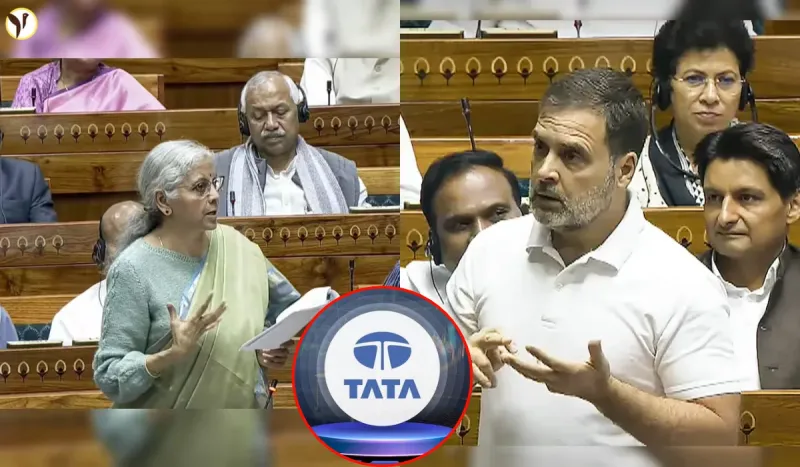
A dispute over the leadership of Tata Sons has turned into a political exchange between Congress leader Rahul Gandhi and Union Finance Minister Nirmala Sitharaman.
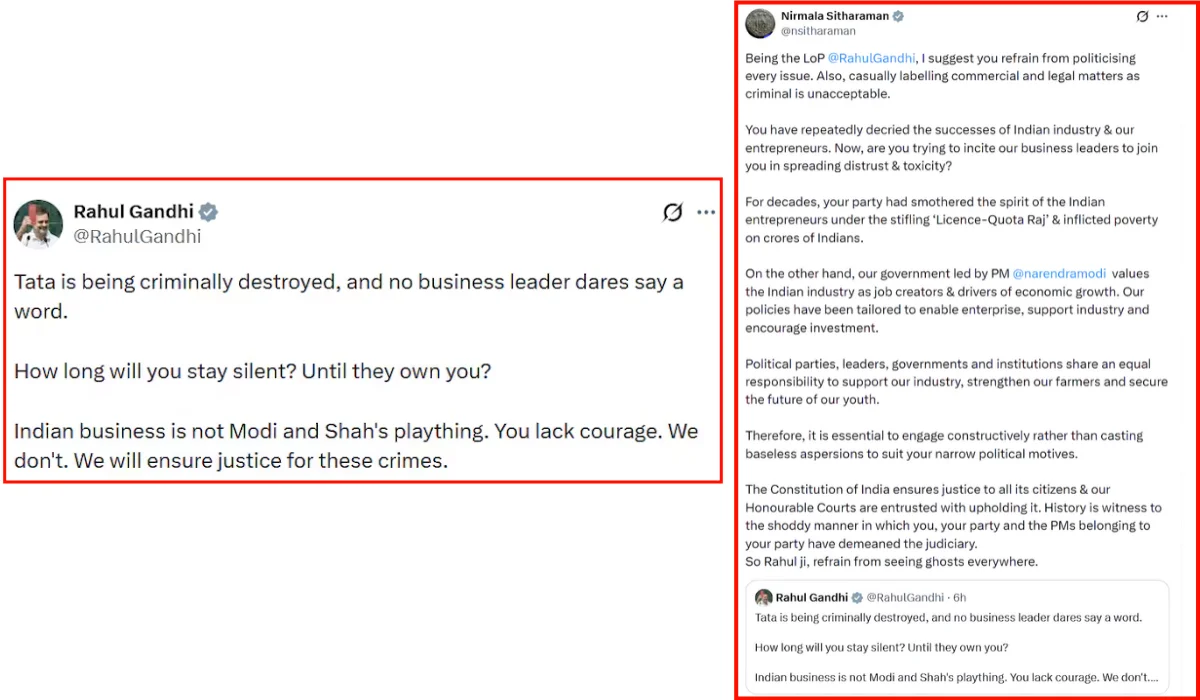
Rahul Gandhi accused the government of allowing Indian businesses to be treated like political “playthings” and alleged that the Tata Group was being “criminally destroyed”. Sitharaman responded by saying that commercial and legal matters should not be casually labelled criminal or turned into political issues.
The exchange comes amid a dispute between Tata Trusts chairman Noel Tata and the board of Tata Sons over the reappointment of N. Chandrasekaran as executive chairman.
The central question is whether this is mainly a corporate governance dispute or whether it also raises wider concerns about the relationship between business and politics.
What Did Rahul Gandhi Say About Tata?
Rahul Gandhi raised the issue in a post on X on October 28.
He alleged that the Tata Group was being seriously harmed and questioned why business leaders were not speaking publicly about the dispute. He also criticised Prime Minister Narendra Modi and Home Minister Amit Shah, arguing that Indian businesses should not be treated as their personal property.
Gandhi said his party would seek justice over what he described as wrongdoing.
These statements represent Rahul Gandhi's political allegations. They do not, by themselves, establish that a criminal offence has taken place.
How Did Nirmala Sitharaman Respond?
Finance Minister Nirmala Sitharaman responded to Gandhi on October 28.
She argued that a Leader of the Opposition should avoid politicising every issue and said that commercial and legal matters should not be casually described as criminal.
Sitharaman also defended the Modi government's approach to business. She said government policies were designed to support industry, encourage investment and help businesses create jobs.
She criticised the Congress's economic record, referring to the earlier Licence-Quota Raj, which she argued restricted entrepreneurship.
Her response shifted the debate towards two competing political arguments: Gandhi's questions about the treatment of Indian businesses and the government's claim that its policies support industry and investment.
What Is The Tata Sons Dispute About?
The political exchange is connected to a disagreement within the Tata Group over the reappointment of N. Chandrasekaran as executive chairman of Tata Sons, the group's main holding company.
Tata Trusts chairman Noel Tata has challenged the validity of the board resolution that approved Chandrasekaran's reappointment for another five-year term.
According to reports, Noel Tata raised concerns about the September 17 board meeting, including whether the agenda clearly mentioned the reappointment and whether the required procedures and approvals were followed.
Tata Sons has relied on a different interpretation of its Articles of Association, including rules concerning voting and the chairman's casting vote.
The two sides therefore disagree about how the company's internal rules should be applied. The allegations about procedural irregularities should not be treated as proven violations unless established through the relevant process.
Why Is N. Chandrasekaran's Reappointment Important?
N. Chandrasekaran has led Tata Sons as executive chairman, making his position important to the group's leadership and long-term direction.
The disagreement over his reappointment matters because Tata Sons sits at the centre of the wider Tata business structure.
The dispute raises questions about board procedures, shareholder rights and the interpretation of the company's governing documents.
It is important to distinguish this internal corporate disagreement from Rahul Gandhi's wider political allegations. The fact that the issue has attracted political attention does not itself prove government interference or criminal wrongdoing.
Is The Tata Group Also Facing A Debate Over Listing?
Yes. The wider dispute has also included questions about Tata Sons' regulatory status and whether it should be listed on the stock market.
Tata Trusts has expressed concerns about a listing and its possible effect on the group's existing structure and philanthropic role. Tata Sons, meanwhile, faces regulatory questions connected with its classification as a core investment company.
These issues are related to the wider debate about Tata Sons' future, but they are not identical to the disagreement over Chandrasekaran's reappointment.
Did Sitharaman's Reply Change The Debate?
Sitharaman's response did not settle the corporate dispute. Instead, it highlighted the difference between the two political positions.
Rahul Gandhi's argument: The Tata dispute raises wider questions about the treatment of Indian businesses and the silence of business leaders.
Nirmala Sitharaman's argument: Gandhi is politicising a commercial and legal matter, while the government says it supports industry, investment and job creation.
The underlying questions about Tata Sons' board decision still depend on the company's rules, relevant documents and any further legal or regulatory developments.
What Happens Next?
The next important developments will concern the corporate dispute itself.
Key questions include:
- How will Tata Sons respond to Noel Tata's objections?
- Will the company provide the requested board documents and records?
- How will the parties interpret the relevant provisions of the Articles of Association?
- Will the dispute lead to further legal or regulatory proceedings?
- What decisions will be taken about Tata Sons' longer-term regulatory status?
The answers could clarify the leadership dispute and its implications for the group's governance.
Why Does This Matter For Indian Business?
The Tata Group is one of India's best-known business groups, so a public disagreement over its leadership attracts attention beyond the company itself.
The dispute highlights the importance of clear corporate rules, transparent board decisions and proper procedures for major appointments.
It also shows how corporate disagreements can become political issues when leaders from different parties offer competing interpretations.
However, political claims and corporate allegations need to be assessed separately from any final legal or regulatory findings.
Questions readers ask
Why did Rahul Gandhi raise the Tata issue?
Rahul Gandhi criticised the handling of the Tata Group dispute and questioned why business leaders were not speaking publicly about it. He also accused the government of treating Indian businesses as political “playthings”.
What did Nirmala Sitharaman say?
Sitharaman accused Gandhi of politicising commercial and legal matters. She defended the government's policies, saying they aim to support industry, encourage investment and create jobs.
What is the Tata Sons controversy?
The dispute centres on Noel Tata's objections to the board decision to reappoint N. Chandrasekaran as executive chairman of Tata Sons for another five-year term.
Who is Noel Tata?
Noel Tata is the chairman of Tata Trusts, a major shareholder in Tata Sons. He has raised objections to the process used for Chandrasekaran's reappointment.
Who is N. Chandrasekaran?
N.Chandrasekaran is the executive chairman of Tata Sons, the holding company at the centre of the Tata Group's corporate structure.