Rahul Gandhi FIR Row: What Will the Supreme Court Decide on October 26?
Rahul Gandhi faces a plea over allegations involving a pregnant journalist. Know why the Supreme Court may hear the matter on October 26 and what happens next.

- Published
- Reading time
- 8 minutes
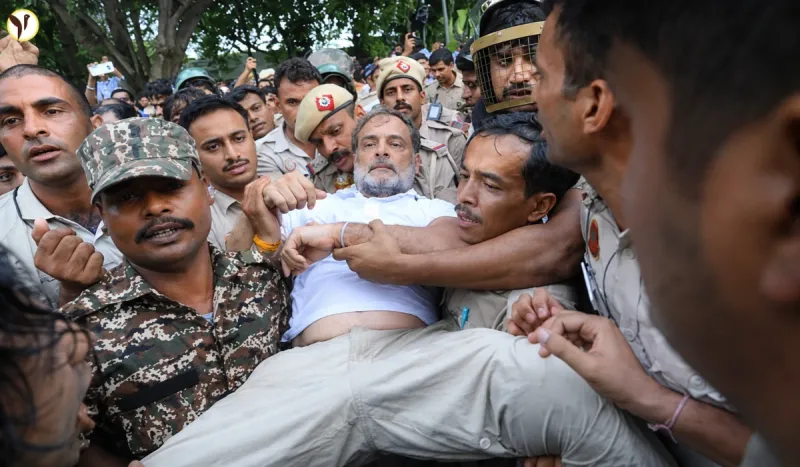
New Delhi, October 16, 2026: The legal controversy involving Congress leader Rahul Gandhi and a woman journalist is likely to return to the spotlight when the Supreme Court considers the matter on October 26 or 27. The case follows an allegation that Gandhi pushed a pregnant journalist during a gathering outside the Supreme Court premises in New Delhi on October 12.
The matter was raised before a bench headed by Chief Justice of India Surya Kant and Justice Joymalya Bagchi. Senior advocate Gaurav Bhatia brought the allegation to the court's attention and sought judicial intervention.
According to reports published on October 16, the bench indicated that the matter could be considered on October 26 or 27 through a formal application. The court's next step will depend on the application and the issues placed before it.
The development has raised several questions: Will the Supreme Court direct the registration of an FIR? Will it ask the parties to respond? And what exactly happened during the October 12 gathering?
At this stage, it is important to understand that the allegation has not been established as fact. The hearing date also does not mean that the court has already decided whether an FIR should be registered.
What Is the Rahul Gandhi FIR Controversy?
The controversy centres on an allegation made by a woman journalist who reportedly approached the Supreme Court after an incident during the opposition leaders' march on October 12.
The journalist is alleged to have said that Rahul Gandhi pushed her during the commotion outside the court premises. Senior advocate Gaurav Bhatia raised the issue before the Supreme Court and said the journalist had been hospitalised following the incident. These details have been reported as allegations presented to the court, not as findings established by a judicial inquiry.
The incident took place amid a politically charged gathering involving opposition leaders who had gone to the Supreme Court in connection with a petition challenging the Election Commission's Special Intensive Revision (SIR) of electoral rolls.
The journalist-related allegation has now become a separate legal issue alongside the wider dispute over the protest and the opposition's petition.
The central question is whether the court will order any further legal action after examining the formal application and the material placed before it.
Why Is the Supreme Court Hearing Expected on October 26?
The Supreme Court was informed about the journalist's allegation on October 16. According to reports, the bench said the matter could be taken up on October 26 or 27, after the court reopens following its Dussehra recess.
The bench did not announce a final decision on whether an FIR should be registered. Instead, the matter was raised for consideration through the proper legal process.
This distinction is important.
When a matter is mentioned before a court, the judges may decide whether it should be formally listed, whether notices should be issued, whether the parties need to respond, or whether further material is required. The precise next step depends on the application and the court's orders.
Therefore, the October 26 date should be understood as an expected date for the court to consider the matter, not as a confirmed deadline for a final judgment on the allegations.
What Could the Supreme Court Do on October 26?
The court's exact response cannot be predicted before the hearing. However, there are several possible procedural steps.
Consider the Formal Application
The court may first examine the application and the relief being requested. This would help determine the legal questions that need to be addressed.
Ask for Responses
Depending on the application and the material before it, the court could seek responses from relevant parties. Whether it does so will depend on the circumstances and the applicable legal procedure.
Examine the Request for an FIR
If the application specifically seeks directions relating to the registration of an FIR or investigation, the court may consider whether such directions are legally justified. No such final decision has been announced yet.
Give Further Directions
The court could issue procedural directions or decide to consider the matter at a later stage. It would be premature to say that it will order an FIR, an investigation or any particular action against Rahul Gandhi.
The hearing may determine how the legal request proceeds, but the court's eventual decision will depend on the application, evidence and arguments.
What Has the Journalist Alleged?
The journalist's complaint, as described in media reports, concerns an alleged physical incident during the October 12 gathering outside the Supreme Court.
Senior advocate Gaurav Bhatia told the bench that the journalist was pregnant and had to be hospitalised after the incident. He asked the court to take note of the matter.
These claims have attracted attention because they concern the safety of journalists and conduct within the premises of the country's highest court.
However, an allegation made in court is not the same as a judicial finding. The facts will need to be assessed through the relevant legal process, including any evidence and responses placed before the court.
It is also important not to assume that an FIR has already been ordered or registered merely because the matter has been raised before the Supreme Court.
What Was Rahul Gandhi Doing at the Supreme Court on October 12?
Rahul Gandhi and other opposition leaders went to the Supreme Court on October 12 in connection with a petition challenging alleged irregularities in the Election Commission's Special Intensive Revision of electoral rolls.
The opposition has raised concerns about voter-list changes and the conduct of the electoral-roll revision process. These are allegations and legal challenges, not findings that can be treated as proven without a court ruling.
The gathering outside the court premises became controversial, with separate legal issues subsequently raised about the march, the conduct of political leaders and the treatment of journalists.
The journalist's allegation emerged from this wider episode. The Supreme Court is now being asked to consider the matter through a separate legal request.
The two issues should not be confused: the opposition's challenge to the SIR process concerns electoral rolls, while the journalist-related matter concerns an alleged incident during the October 12 gathering.
Has an FIR Been Registered Against Rahul Gandhi?
The reports available as of October 16 do not establish that the Supreme Court has ordered an FIR against Rahul Gandhi in relation to this journalist's allegation.
The matter was raised before the bench, which indicated that it could be considered on October 26 or 27 through a formal application. The exact relief sought and any subsequent court order should be checked against official records as the matter develops.
Readers should distinguish between three separate stages:
- An allegation: A person claims that an incident took place.
- A request for legal action: A complaint or application asks the authorities or court to take action.
- An official order or registered FIR: A formal step is taken under the applicable legal process.
These stages are not interchangeable. Until an official record confirms otherwise, it would be inaccurate to report that the Supreme Court has ordered an FIR in this case.
Why Is the Case Politically Sensitive?
The controversy involves the Leader of the Opposition in the Lok Sabha, a journalist and an incident reportedly connected to a politically charged gathering at the Supreme Court.
For the opposition, the October 12 visit was linked to its challenge to the Election Commission's SIR process. The allegation involving the journalist has added another legal and political dimension to the episode.
At the same time, the case raises broader questions about the safety of journalists covering political events and the importance of orderly conduct around judicial institutions.
Political reactions may continue as the matter develops. However, the legal outcome will depend on the court's assessment of the application and the relevant material, not simply on statements made by political parties or social media users.
What Happens If the Court Orders an FIR?
If the Supreme Court directs the registration of an FIR, the next steps would depend on the wording of its order and the applicable law.
An FIR generally records information about a suspected cognisable offence and can lead to a police investigation. It does not, by itself, establish that the accused person is guilty.
Investigators would need to examine the available evidence, record relevant statements and follow the legal process. Any further action would depend on the findings and the applicable procedural requirements.
However, this is only a possible scenario. As of October 16, the Supreme Court has not announced a final order directing an FIR against Rahul Gandhi in this journalist-related matter.
What If the Supreme Court Does Not Order an FIR?
The absence of an immediate direction would not automatically establish that the allegation is false or that no other legal remedy is available.
The court may decide that a different procedural step is appropriate, seek more information or leave the matter to be pursued through another lawful route. The outcome would depend on the application and the court's reasoning.
It is therefore too early to predict whether the court will direct an FIR, seek responses or take another course.
The October 26 or 27 hearing is important because it may clarify how the request will proceed.
What Should Readers Watch Before the Hearing?
Readers following the case should focus on verified developments rather than speculation.
The most important points to watch are:
- Whether the application is formally listed for October 26 or 27.
- What specific relief the applicant seeks.
- Whether the Supreme Court issues notice or asks for responses.
- Whether an official order addresses the request for an FIR or investigation.
- Whether the parties provide additional material or statements.
Any report about an FIR, investigation or court direction should be checked against the actual order or a reliable report quoting it.
Questions readers ask
What is the Rahul Gandhi FIR case about?
The matter concerns an allegation that Rahul Gandhi pushed a pregnant woman journalist during a gathering outside the Supreme Court premises on October 12, 2026. The allegation has been raised before the Supreme Court, but it has not been established as fact.
When will the Supreme Court hear the Rahul Gandhi FIR matter?
Reports on October 16 said the matter could be taken up on October 26 or 27. The exact listing and proceedings should be verified through the latest court updates.
Will the Supreme Court order an FIR against Rahul Gandhi on October 26?
That is not confirmed. The court may consider the application and decide what procedural step is appropriate. No final order directing an FIR had been reported as of October 16.
Has an FIR already been registered against Rahul Gandhi in this case?
The reports reviewed for this article do not establish that the Supreme Court has ordered an FIR in connection with this journalist-related allegation. Any claim that an FIR has been registered should be verified through official records.
Who raised the journalist's allegation before the Supreme Court?
Senior advocate Gaurav Bhatia raised the matter before a bench headed by Chief Justice of India Surya Kant and Justice Joymalya Bagchi, according to media reports.