Rahul Gandhi Enters Gokul Dairy Row: Why Has Maharashtra Politics Heated Up?
Rahul Gandhi attacks BJP over Maharashtra's Gokul Dairy row after Congress-backed panel wins 13 seats. Know why the government nomination proposal sparked a political fight.

- Published
- Reading time
- 6 minutes
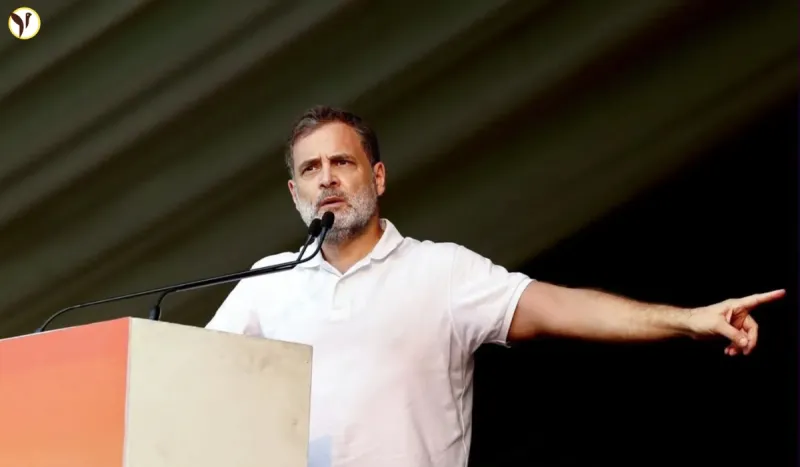
The political battle over Maharashtra's Gokul Dairy has intensified after Congress leader Rahul Gandhi criticised the BJP-led Maharashtra government over its decision to appoint government-nominated directors to large cooperative institutions.
On November 5, Rahul Gandhi accused the BJP of trying to change the rules after losing the Gokul Dairy board election. He alleged that the government was attempting to take control of the cooperative by adding nominated directors with voting rights.
In a post on social media platform X, Rahul said that milk producers had defeated the BJP-backed panel in the election, but the government was now trying to change the board's numbers.
He described the move as an attempt to steal the mandate of milk producers.
The controversy has created a fresh political confrontation between the ruling Mahayuti alliance and the Opposition Congress in Maharashtra.
What Is the Gokul Dairy Row?
Gokul Dairy is officially known as the Kolhapur District Cooperative Milk Producers' Union. It is one of Maharashtra's major cooperative dairy institutions.
The organisation plays an important role in the milk business and rural economy of western Maharashtra. Thousands of milk-producing farmers and village-level cooperative societies are connected with it.
The controversy started after the election for its 25-member board of directors.
In the October 19, 2026 election, the Congress-backed panel led by Satej Patil won 13 seats, while the BJP-led Mahayuti-backed panel secured 12 seats.
The result gave the Congress-backed group a one-seat advantage. However, the election of the dairy's chairman became complicated because the required number of directors did not attend the board meeting.
Why Did Rahul Gandhi Accuse the BJP of Changing the Rules?
Rahul Gandhi's criticism followed the Maharashtra Cabinet's approval of a proposal to appoint government-nominated members to the managing committees of large cooperative institutions.
Under the approved proposal, the government would be able to appoint five members to the boards of eligible cooperative institutions with annual turnover above ₹500 crore.
Four of these nominated members would have voting rights, while the fifth would be a government officer without voting rights.
The Opposition believes that these appointments could change the balance of power at Gokul Dairy, where the Congress-backed panel won 13 seats against Mahayuti's 12.
Rahul Gandhi alleged that the government was attempting to increase the ruling alliance's influence after it failed to secure a majority through the election.
However, the government has not established that the nominated directors will automatically give the Mahayuti control of Gokul. The actual impact will depend on the implementation of the proposed legal changes and the board's composition.
What Did Rahul Gandhi Say About the Gokul Dairy Issue?
Rahul Gandhi strongly criticised the BJP over the proposed changes.
He alleged that the BJP had lost the election but was now trying to increase its numbers by bringing four voting directors into the board.
His main argument was that the votes of milk producers should be respected and that the government should not change the board's composition after the election.
Rahul also warned that farmers would remember any attempt to undermine their electoral decision.
His statement brought the Gokul Dairy controversy into the national political discussion, making it more than a local cooperative election dispute.
Why Is the Gokul Dairy Chairman Election Stuck?
Another important part of the controversy is the ongoing deadlock over the election of Gokul Dairy's chairman.
After the October 19 results, the newly elected board needed to choose its chairman.
However, the 12 directors supported by the Mahayuti alliance did not attend the meeting. Under Gokul's rules, at least 14 directors are required to complete the quorum.
Only the 13 Congress-backed directors were present. As a result, the meeting could not proceed as planned.
The Congress-backed group subsequently held a separate meeting and declared Shashikant Patil Chuyekar elected as chairman. However, the dairy administration did not recognise this result.
The matter then reached the Bombay High Court. On November 2, the court directed that a fresh meeting be held on November 10, with notices sent to all 25 directors.
What Is the Maharashtra Government's Position?
The Maharashtra Cabinet approved the proposal to appoint five government-nominated members to the managing committees of large cooperative institutions.
The proposal covers eligible institutions with an annual turnover above ₹500 crore, excluding district central cooperative banks.
Four nominated members would have voting rights, while one government officer would be a non-voting member.
The move has become controversial because Gokul Dairy falls within the category of large cooperative institutions covered by the proposal.
Opposition leaders have questioned the timing of the decision, arguing that it could affect the result of an election that has already taken place.
The key issue is whether the proposed changes will affect the independence of elected cooperative boards.
Why Is Gokul Dairy So Important in Maharashtra Politics?
Gokul Dairy is not just a milk-producing organisation. It is also an influential institution in the rural economy and cooperative politics of western Maharashtra.
The cooperative was established in 1963 and has a large network of milk producers.
According to reported figures:
- Around 4.41 lakh milk producers are associated with Gokul.
- It has 8,009 village-level primary cooperative societies.
- Its network covers approximately 1,810 villages.
- Its reported turnover for the 2024–25 financial year was ₹3,966.28 crore.
These figures explain why political parties are interested in controlling the institution.
Gokul's influence extends beyond the dairy business because milk production provides income to thousands of rural households. Control over such a large cooperative can also strengthen a political party's local influence among farmers and village communities.
Why Is the BJP-Congress Fight Getting Bigger?
The Gokul controversy has become another point of confrontation between the BJP-led Mahayuti government and the Congress in Maharashtra.
For Congress, the 13-seat victory was an important political success in Kolhapur. The party now argues that the government should respect the result and allow the elected board to function.
For the ruling alliance, the issue involves the functioning and composition of large cooperative institutions. Its supporters have also argued that the 12 Mahayuti-backed directors were elected by milk producers and that the existing quorum rules must be followed.
The disagreement has therefore moved beyond the chairman's election and turned into a wider debate over government intervention in cooperative institutions.
Will Congress Challenge the Government's Decision in Court?
The controversy is also moving towards a legal battle.
Congress leader Pawan Khera said the party was challenging the government's decision in the Supreme Court to protect the mandate of milk producers and the independence of cooperative institutions.
Separately, senior Congress leader Satej Patil announced that he would challenge the Cabinet's decision in the Bombay High Court.
The chairman's election is also scheduled for November 10 following the Bombay High Court's direction for a fresh meeting.
The legal questions include whether the proposed government nominations can be applied to Gokul and how they may affect the rights of its elected directors. The final position will depend on the legal process and the applicable cooperative law.
What Happens Next in the Gokul Dairy Row?
The next important date is November 10, when a fresh meeting is scheduled to elect Gokul Dairy's chairman.
At the same time, the proposed changes to cooperative law and the Opposition's legal challenge could shape the future of the institution.
Rahul Gandhi's intervention has increased the political importance of the dispute. What began as a cooperative board election has now become a major debate about farmers' voting rights, government nominations and political control over rural institutions.
For now, the final outcome remains uncertain.
Questions readers ask
Why is Rahul Gandhi criticising the BJP over Gokul Dairy?
Rahul Gandhi accused the BJP-led Maharashtra government of trying to change the election mandate by appointing government-nominated directors to Gokul Dairy's board.
What is the Gokul Dairy controversy?
The controversy concerns the control of the Kolhapur District Cooperative Milk Producers' Union after the Congress-backed panel won 13 of 25 board seats and the Mahayuti-backed panel won 12.
Who won the Gokul Dairy election in 2026?
The Congress-backed panel led by Satej Patil won 13 seats, while the Mahayuti-backed panel secured 12 seats in the October 19 election.
Why did the Maharashtra Cabinet approve nominated directors?
The Cabinet approved a proposal allowing the government to appoint five members to the managing committees of eligible large cooperative institutions.
How many nominated directors will have voting rights?
Four of the five government-nominated members will have voting rights. The fifth will be a government officer without voting rights.