CM Vijay Makes Big Demand to PM Modi: Will Chennai Get a Supreme Court Bench?
Tamil Nadu CM Vijay writes to PM Modi seeking a permanent Supreme Court bench in Chennai. Know why the demand matters and what Article 130 says.

- Published
- Reading time
- 8 minutes
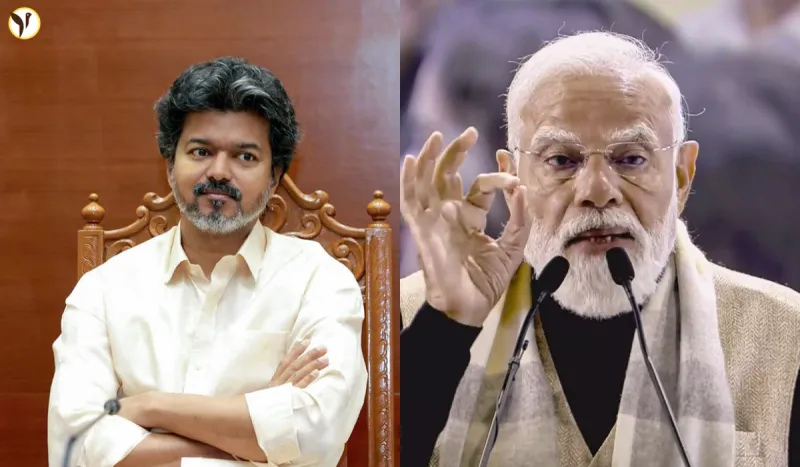
Tamil Nadu Chief Minister C Joseph Vijay has raised an important judicial demand before Prime Minister Narendra Modi. He has written a letter to the Prime Minister requesting steps to establish a permanent bench of the Supreme Court in Chennai.
The demand is not new. Tamil Nadu has been raising this issue since 1980, arguing that people from southern states face difficulties when they have to travel to New Delhi to approach the country's highest court.
Vijay believes that a Supreme Court bench in Chennai could make the justice system more accessible for people across South India. He has also referred to recommendations made by parliamentary committees and Law Commission reports in support of regional benches.
However, the proposal has faced resistance in the past. The Supreme Court had earlier found no sufficient reason to change its position on establishing regional benches.
So, will Chennai finally get a Supreme Court bench? What does the Constitution say, and why is Vijay asking PM Modi to take up the matter again? Here is everything you need to know.
What Did CM Vijay Ask PM Modi?
Tamil Nadu Chief Minister C Joseph Vijay has requested Prime Minister Narendra Modi to take up the long-pending proposal for establishing a Supreme Court bench in Chennai.
In his letter, Vijay asked the Prime Minister to approach the Supreme Court again and request it to reconsider its earlier position on the issue.
He said Chennai is an important city in South India and could serve people from several southern states.
According to the Chief Minister, citizens from Tamil Nadu and neighbouring states should not have to travel all the way to New Delhi every time they need to approach the Supreme Court.
Vijay also argued that setting up a regional bench would support India's federal structure and make access to justice more equal for people living in different parts of the country.
His request has brought the long-running debate over regional Supreme Court benches back into the national spotlight.
Why Does Tamil Nadu Want a Supreme Court Bench in Chennai?
One of the biggest reasons behind this demand is the distance between South India and New Delhi.
The Supreme Court is located in New Delhi. Therefore, people from Tamil Nadu, Kerala, Karnataka, Andhra Pradesh and Telangana may have to travel long distances when they need to appear before the country's highest court.
For many ordinary citizens, travelling to Delhi can create financial and practical difficulties.
These expenses may include:
- Air or train tickets.
- Hotel accommodation.
- Food and local transport.
- Legal and other case-related expenses.
- Time away from work and family.
Vijay believes a permanent Supreme Court bench in Chennai would reduce these difficulties for people from southern states.
It could also make it easier for lawyers and litigants to participate in court proceedings without repeatedly travelling to the national capital.
The Chief Minister has argued that access to the highest court should not become difficult simply because a citizen lives far away from Delhi.
What Is Article 130 of the Indian Constitution?
Article 130 of the Indian Constitution is an important part of Vijay's argument.
It deals with the place where the Supreme Court of India can sit.
The Article states that the Supreme Court shall sit in Delhi or at another place or places as the Chief Justice of India may decide, with the approval of the President.
This means the Constitution does not make Delhi the only possible location for Supreme Court sittings.
However, establishing a permanent bench in another city is not an automatic decision. The constitutional procedure and the role of the Chief Justice of India and the President are important.
Vijay has referred to this provision to argue that a Supreme Court bench in Chennai is constitutionally possible.
He has requested PM Modi to take up the matter with the Supreme Court so that the proposal can be reconsidered.
Why Is the Supreme Court Bench Demand So Old?
The demand for a Supreme Court bench in Chennai goes back several decades.
According to Vijay's letter, Tamil Nadu first raised the proposal in 1980.
The issue had also been discussed during a conference of Chief Justices in 1979.
The main argument was that people living in southern states should have easier access to the Supreme Court.
Chennai was considered a suitable location because of its importance in South India and the presence of an established legal community.
The Madras High Court, located in Chennai, is also one of India's oldest chartered High Courts. It was established in 1862.
Tamil Nadu has argued that the city already has a strong legal infrastructure and could support a regional Supreme Court bench.
What Happened When the Supreme Court Rejected the Proposal Earlier?
The proposal has faced difficulties in the past.
In its meeting on August 7, 2007, the Supreme Court's Full Court found no justification for changing its earlier position on regional benches.
This decision came even after Tamil Nadu had assured the court that it would provide the necessary infrastructure.
The state had offered to arrange facilities, including residential accommodation for Supreme Court judges.
Despite these assurances, the Full Court did not agree to the proposal.
This earlier decision is one of the biggest challenges facing the current demand.
Vijay has now asked the Prime Minister to take up the matter again and request the Supreme Court to reconsider its position.
Did the Law Commission Support Regional Supreme Court Benches?
Yes. The idea of regional benches has received support in earlier legal and parliamentary discussions.
The Law Commission's 229th Report, submitted in 2009, recommended a constitutional bench in Delhi and regional appellate benches in different parts of the country.
The report proposed regional locations, including Chennai or Hyderabad, to improve access to the Supreme Court.
Parliamentary Standing Committees have also discussed the need for regional benches in reports from 2004, 2006, 2008 and 2021.
These recommendations are important because they show that the demand is not limited to one state government.
Supporters believe regional benches could help reduce travel difficulties and improve access to justice.
However, recommendations from the Law Commission or parliamentary committees do not automatically create new Supreme Court benches. The required constitutional and institutional decisions would still have to be made.
How Could a Chennai Bench Benefit Other Southern States?
Vijay has argued that a Chennai bench would not benefit Tamil Nadu alone.
It could also help litigants from other southern states.
Possible benefits include:
Lower travel expenses: People may not need to travel to Delhi for every relevant court appearance.
Better access to justice: Citizens living far from the national capital could find it easier to approach the Supreme Court.
Support for lawyers: Lawyers from southern states could have better access to proceedings at the country's highest court.
Reduced travel time: A regional bench could reduce the time and effort required for people travelling from southern cities.
Regional representation: Supporters say it could make the Supreme Court more accessible to citizens across different regions of India.
However, the actual benefits would depend on how such a bench is structured, which cases it hears and how the Supreme Court manages its work.
Will a Chennai Bench Affect the Independence of the Judiciary?
Vijay has also addressed concerns about judicial independence.
In his letter, he argued that establishing a regional bench would not affect the independence of the judiciary because control over the Supreme Court would remain with the Chief Justice of India.
His argument is that a change in the geographical location of court proceedings does not necessarily mean a change in judicial authority.
The Supreme Court would continue to function under the constitutional framework.
However, the exact structure, powers and administrative arrangements of any regional bench would need careful consideration.
The issue is therefore not only about location. It also involves how the Supreme Court should organise its work while maintaining its independence and institutional unity.
What Happens Next? Can PM Modi Approve a Chennai Supreme Court Bench?
Vijay has asked PM Modi to take up the issue with the Supreme Court and seek a fresh consideration of the proposal.
However, this does not mean that the Prime Minister can independently announce or establish a permanent Supreme Court bench.
Article 130 gives the Chief Justice of India a central role in deciding where the Supreme Court may sit, subject to the President's approval.
Therefore, the proposal would require the appropriate constitutional and judicial process.
The Prime Minister's response, the Supreme Court's position and any future institutional decision will be important developments.
As of November 4, 2026, Vijay's letter represents a renewed political and administrative request. No final approval for a permanent Supreme Court bench in Chennai has been announced.
Conclusion
Tamil Nadu Chief Minister C Joseph Vijay has renewed the long-standing demand for a permanent Supreme Court bench in Chennai by writing to Prime Minister Narendra Modi.
His main argument is that people from South India face unnecessary travel expenses and difficulties when approaching the Supreme Court in New Delhi.
The demand is supported by earlier Law Commission recommendations and discussions in parliamentary committees. However, the Supreme Court had previously rejected the proposal in 2007.
For now, Chennai has not received approval for a permanent Supreme Court bench. The next important question is whether the Centre and the Supreme Court will reconsider the proposal.
If approved through the required constitutional process, the move could become a significant development for access to justice in South India.
Questions readers ask
What did Tamil Nadu CM Vijay demand from PM Modi?
Tamil Nadu Chief Minister C Joseph Vijay requested Prime Minister Narendra Modi to take steps towards establishing a permanent Supreme Court bench in Chennai.
Why does CM Vijay want a Supreme Court bench in Chennai?
He believes people from South India face difficulties and high travel expenses when they have to approach the Supreme Court in New Delhi.
When was the demand for a Chennai Supreme Court bench first raised?
According to Vijay's letter, Tamil Nadu first raised the demand in 1980.
What is Article 130 of the Indian Constitution?
Article 130 deals with the location of Supreme Court sittings. It allows the court to sit in Delhi or at another place decided by the Chief Justice of India with the President's approval.
Has the Supreme Court approved a bench in Chennai?
No. There is no final approval for a permanent Supreme Court bench in Chennai as of November 4, 2026.