PM Modi's Big Metro Update: 26 Cities Connected, Is Your City on the List?
PM Modi says India's metro network has expanded from five cities in 2014 to 26 cities, with nearly 1,200 km of operational routes and over one crore daily commuters.

- Published
- Reading time
- 6 minutes
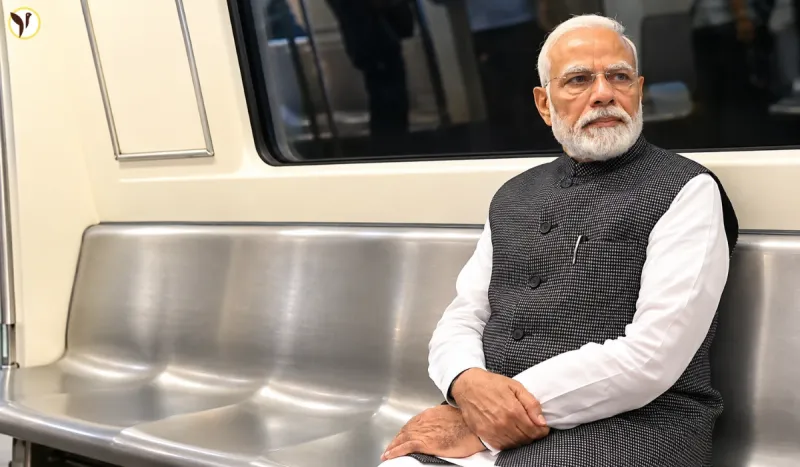
India's metro rail network has witnessed major expansion over the past 12 years. Prime Minister Narendra Modi has highlighted that metro services, which were available in only five cities in 2014, are now operating in 26 cities across the country.
On November 5, 2026, PM Modi said that India's operational metro network had increased from 248 kilometres in 2014 to nearly 1,200 kilometres. He also stated that more than one crore people travel by metro every day.
The Prime Minister shared these figures while highlighting the growth of India's urban transport infrastructure. According to him, metro expansion is helping people save commuting time, reduce their dependence on road transport and improve their daily travel experience.
Metro Network in India: 2014 vs 2026
The difference between India's metro network in 2014 and the current situation shows the scale of expansion.
In 2014, metro services were available in only five cities, with an operational network of around 248 kilometres. Today, the network covers 26 cities and has reached nearly 1,200 kilometres, according to the latest statement by PM Modi.
Here is a comparison:
|
|
|
|
|
|
|
|
|
|
|
|
|
|
|
|
The daily ridership comparison is based on government figures for 2013–14 and the latest statement for 2026. It shows that metro travel has become an important part of public transport in India.
What Did PM Modi Say About Metro Expansion?
PM Modi said that the growth of metro services reflects a major change in India's urban transport system.
He highlighted how metro connectivity can improve the daily lives of people living in large cities. Faster public transport can reduce the time commuters spend in traffic and allow them to use that time for work, family and other activities.
The Prime Minister also compared the pace of metro development before and after 2014. Referring to Pune, he said that if the network had continued growing at its earlier pace, the city might have had to wait for decades to receive metro connectivity.
He described this expansion as part of the government's efforts to improve ease of living and transportation for the urban population.
Why Is India's Metro Network Expanding?
India's cities are growing rapidly, and more people are travelling every day for jobs, education, business and other activities.
As the number of vehicles increases, cities face challenges such as traffic congestion, longer travel times and air pollution. Metro rail offers a high-capacity public transport option that can carry large numbers of passengers.
Some major reasons behind metro expansion include:
Growing urban population
More people are moving to cities for employment and education. This has increased the demand for reliable public transport.
Traffic congestion
Metro services provide an alternative to private cars and two-wheelers. They can help reduce pressure on busy roads when supported by good last-mile connectivity.
Faster daily travel
Metro trains generally operate on dedicated tracks, helping commuters avoid many road traffic delays.
Cleaner transport
By encouraging people to use public transport instead of private vehicles, metro systems can help reduce fuel consumption and transport-related emissions.
Economic development
Metro projects also create work for construction workers, engineers, contractors, suppliers and businesses connected with infrastructure development.
More Than One Crore People Travel by Metro Every Day
One of the most important figures shared by PM Modi is the daily metro ridership.
According to his statement, more than one crore people now use metro services every day across India.
Government data presented in Parliament earlier in 2026 also showed that average daily metro ridership had increased from approximately 28 lakh in 2013–14 to around 1.15 crore in 2025–26.
This increase highlights the growing role of metro rail in India's urban transport system.
For daily commuters, metro connectivity can offer more predictable travel times, convenient access to business areas and an alternative to crowded roads.
Pune Metro Projects Worth ₹21,800 Crore
The latest announcement about metro expansion came alongside major developments in Pune.
On November 5, the Prime Minister's Office published details of metro projects worth around ₹21,800 crore that PM Modi inaugurated and for which he laid foundation stones through video conferencing.
The projects are expected to strengthen connectivity between different parts of Pune. The Hinjawadi-Shivajinagar corridor is particularly important because it connects a major IT hub with other parts of the city.
PM Modi said better metro connectivity would support Pune's growth and improve ease of living for residents.
The projects also reflect the importance of public transport in cities that are growing as centres for IT, automobiles, pharmaceuticals, manufacturing and startups.
Maharashtra Metro Network Also Sees Major Growth
PM Modi also highlighted the expansion of metro infrastructure in Maharashtra.
According to his statement, the state had only around 10 to 11 kilometres of operational metro lines in 2014. Today, nearly 175 kilometres are operational.
He added that construction work is underway on more than 680 kilometres of metro corridors, with investments exceeding ₹2.5 lakh crore.
These projects are expected to improve connectivity in major urban areas and support employment in construction, engineering, manufacturing and related industries.
However, the 680-kilometre figure refers to corridors under construction, not completed or operational routes.
India Has Become One of the World's Largest Metro Networks
India's metro expansion has also increased its position in the global urban transport sector.
PM Modi said that India is now counted among the world's top three metro networks.
The expansion is not limited to adding more kilometres of tracks. Modern metro projects also involve improved train systems, digital ticketing, better station facilities, passenger safety and integration with other modes of transport.
The government's broader infrastructure focus is to make urban travel more convenient and support the development of growing cities.
However, the benefits of metro expansion will also depend on factors such as affordable fares, station access, last-mile connectivity, service frequency and passenger safety.
What Does Metro Expansion Mean for Daily Commuters?
The expansion of metro services can make a significant difference to people who travel regularly within cities.
For office workers, students and business owners, better metro connectivity can reduce dependence on road transport. It can also make it easier to reach workplaces, educational institutions, hospitals and commercial areas.
Some expected benefits include:
- Less time in traffic: Metro trains can help commuters avoid road congestion.
- Better connectivity: More routes can connect residential areas with important city locations.
- Lower dependence on private vehicles: More public transport options may encourage people to leave their vehicles at home.
- Employment opportunities: Metro construction and operations support jobs across several sectors.
- Urban development: Improved transport links can support business activity and development around stations.
However, the actual benefits differ from city to city and depend on how well metro systems connect with buses, local trains and other transport services.
What Is Next for India's Metro Network?
India's metro expansion is expected to continue as cities look for better ways to manage growing travel demand.
Several projects are already under construction or at different stages of planning and approval. Their completion could bring metro connectivity to more areas and improve existing routes.
The next challenge will be to ensure that new projects are completed on time and that passengers receive safe, affordable and reliable services.
The increase from five cities in 2014 to 26 cities in 2026 marks a major change in India's urban transport infrastructure. With more than one crore daily commuters, metro rail has become an important part of how people travel in modern Indian cities.
Questions readers ask
How many cities in India have metro services in 2026?
According to PM Modi's November 5, 2026 statement, metro services are now operating in 26 cities across India.
How long was India's metro network in 2014?
India had around 248 kilometres of operational metro lines in 2014.
What is the current length of India's metro network?
PM Modi said the operational metro network has reached nearly 1,200 kilometres in November 2026.
How many people travel by metro every day in India?
More than one crore people travel by metro every day, according to the Prime Minister's latest statement.
Which Indian city had metro services first?
Kolkata was the first Indian city to introduce metro rail services, which began operating in 1984.