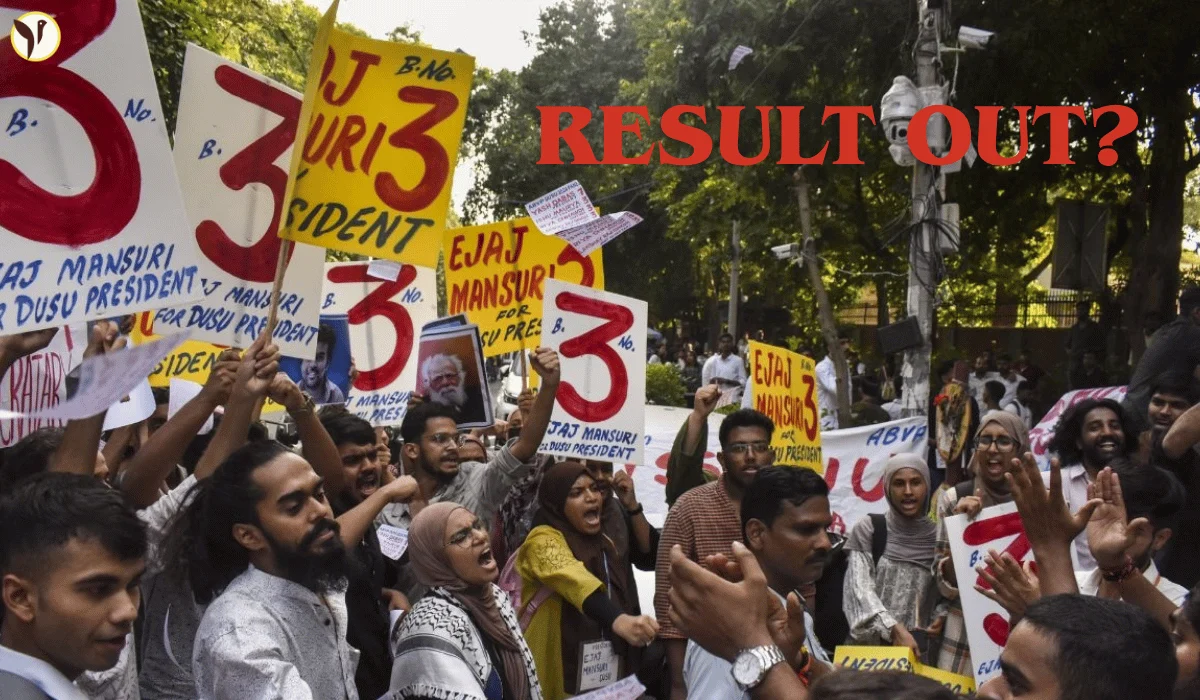


Counting is underway for the Delhi University Students' Union election 2026, with ABVP's Yash Dabas leading the presidential race after early rounds. Voting took place on Friday across 52 colleges, with a turnout of 40.46% from more than 1.51 lakh eligible students — the highest in three years, and still under half. The Delhi High Court has barred all victory processions, and Delhi Police have deployed heavily around the counting centre in North Campus. Results for all four posts are expected through Saturday evening.
Where the count stands
Counting began at 8am on Saturday at the Multipurpose Hall of the University Sports Stadium in North Campus.
After the sixth round, ABVP's Yash Dabas led the presidential race with 7,346 votes, ahead of NSUI's Vijay Shankar Meena on 6,760. Deepanshu Shokeen was ahead in the Vice President count.
Early-round leads are not results. Last year's count ran to 18 rounds and concluded in the afternoon, with declarations following through the evening. NSUI's Meena told PTI on Saturday that he expected the result to be declared tomorrow, so the timing may yet move.
The police presence is not routine
North District DCP Niharika Bhatt said there was heavy police deployment around the strong room, involving North District personnel and outside forces, with traffic arrangements made across Delhi University to keep roads moving.
She confirmed that no victory procession would be allowed, that the university had already conveyed the High Court's direction to all candidates, and that arrangements were in place to ensure counting and the declaration of winners passed off peacefully.
That is the practical position on campus today: the count is guarded, the roads are managed, and celebration is prohibited by court order.
What this means for you
If you are a DU student. The four people elected today will represent you to the administration for the next year on hostel allocation, fee-related grievances, facilities and student welfare, and will run the university's cultural calendar. DUSU has a real budget and real access to the Vice Chancellor's office. It does not set your syllabus, your exam schedule or your fees — those sit with the university and the UGC.
If you are in or near North Campus today. Victory processions are banned by court order. Delhi Police have been directed to prevent them on roads, in hostels and inside colleges. Expect heavy policing around the University Sports Stadium and the Arts Faculty area. Traffic around Vishwavidyalaya and Patel Chest will be affected. If you have no business there, the counting area is worth avoiding until the result settles.
If you are a DU aspirant or a parent. Note which colleges take part. Only 52 of the university's 91 colleges and faculties vote in DUSU elections. St Stephen's, Lady Shri Ram and Jesus and Mary are outside the process entirely and run their own unions. If campus political activity is something you want your child near or away from, that distinction is worth knowing before you fill in preferences.
Vote counting is underway at Delhi University’s North Campus after voter turnout hit a 3-year high of 40.46%.
— NDTV Profit News (@NDTVProfit) September 19, 2026
More than 2,000 security personnel have been deployed, while the Delhi HC has barred post-result victory processions.https://t.co/h8CWYcpRFz
If you are none of the above. DUSU is one of the most reliable feeder routes into mainstream Indian politics. A significant number of sitting MPs, MLAs and ministers across parties began here. The names declared today are worth remembering.
Who is standing
Three panels are contesting all four posts.
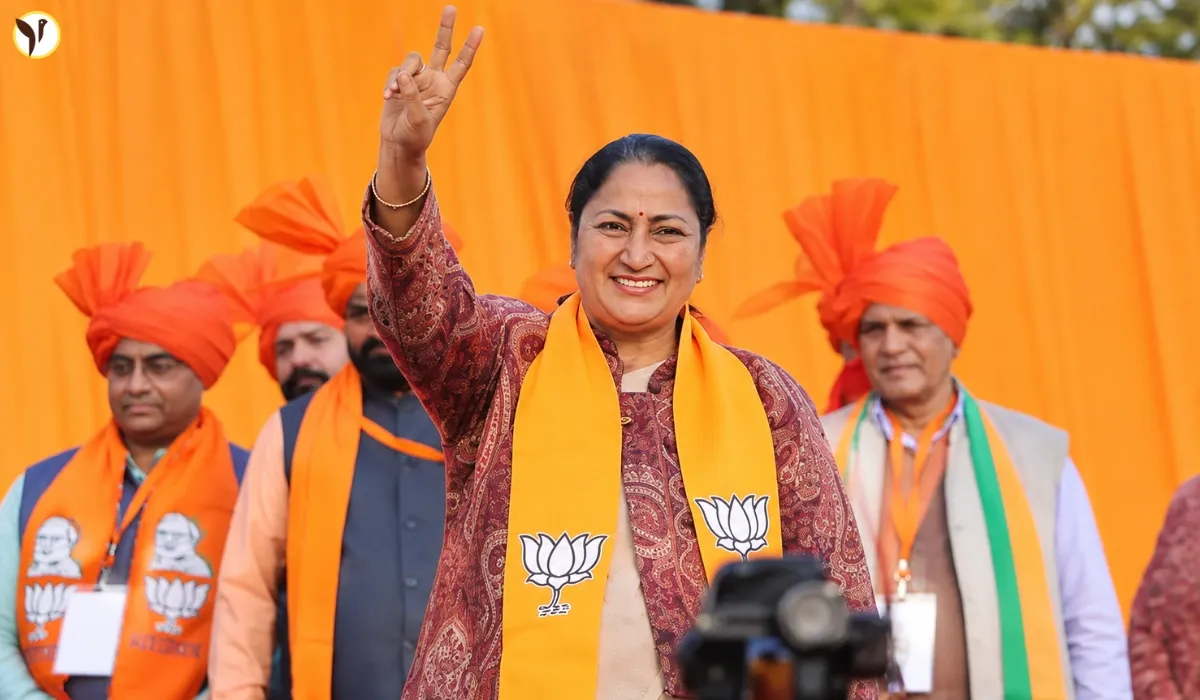
ABVP, affiliated to the RSS, has fielded Yash Dabas for President, Ishu Maurya for Vice President, Riya Chhawadi for Secretary and Lakshya Raj Singh for Joint Secretary.
NSUI, the Congress student wing, has nominated Vijay Shankar Meena for President, Veer Chatrath for Vice President, Namrata Chaudhary for Secretary and Gopal Choudhary for Joint Secretary.
The AISA-SFI joint panel, on the left, is led by Ananya Raturi for President, with Stanzin Deskyong for Secretary and B Parijaat for Joint Secretary.
Of the 20 candidates in total, seven are contesting the President's post, five the Vice President's, and four each for Secretary and Joint Secretary.
Writing on X before counting began, NSUI's Vijay Shankar Meena said he was fully confident the decision would go in his favour given the support he had received.
The number underneath the result
Turnout was 40.46%.
More than 1.51 lakh students were eligible to vote. Roughly six in ten of them did not.
Two things are true about that number, and most coverage will only report one of them.
It is the highest turnout in three years. Last year it was 39.5%. Participation went up.
And fewer than half of Delhi University's students still chose to vote. The union that will speak for the whole university is being elected by a minority of it.
The NOTA figures from last year sharpen the point. In the 2025 election, more than 23,000 votes went to NOTA across the four posts — 3,175 for President, 5,820 for Vice President, 7,365 for Secretary and 7,314 for Joint Secretary. That is a substantial bloc of students who turned up, queued, and declined to back anyone on offer.
Why processions are banned
The Delhi High Court has barred victory processions following violent clashes during the campaign, and directed Delhi Police to ensure none are held on roads, in hostels or inside colleges.
The court has also warned candidates over violations of the Lyngdoh Committee rules, the framework governing student union elections in India. Those rules cap campaign spending, restrict the use of printed material and vehicles, and set eligibility conditions on candidates. They exist precisely because DUSU campaigns have historically been expensive, noisy and occasionally violent.
For students, this is the most immediately relevant part of today. A court-ordered ban with police enforcement changes what campus looks like tonight.
How the voting worked
The university deployed 1,000 electronic voting machines, of which 960 were used for polling and 40 held in reserve. EVMs were brought from polling centres to the counting venue at the University Sports Stadium in North Campus.
Only 52 of Delhi University's 91 colleges and faculties participate in DUSU elections. St Stephen's College, Lady Shri Ram College and Jesus and Mary College are among those outside the process.
What happened last year
ABVP took three of the four central posts in 2025.
Aryan Maan won the President's post with 28,841 votes out of 59,882. Kunal Chaudhary took Secretary with 23,779, and Deepika Jha Joint Secretary with 21,825. NSUI's Rahul Jhansla won Vice President with 29,339 votes out of 59,869, ahead of ABVP's Govind Tanwar on 20,547.
The year before that told a different story. In 2024, NSUI's Rounak Khatri won the President's post with 20,207 votes out of 50,689, defeating ABVP's Rishabh Chaudhary by just over 1,300 — the first time since 2017 that NSUI had taken two central posts.
So the pattern across three years is not a settled one, which is part of why the contest draws the attention it does.
Early indications from the colleges
Individual college results have been coming in ahead of the central panel declaration, and ABVP has done well in them.
The organisation has taken all four key posts at Aditi Mahavidyalaya, Sri Aurobindo College (Morning), Dr BR Ambedkar College, Bharati College and Shivaji College. At Ramjas College, ABVP candidates won President, Secretary, Central Councillor and the Internal Complaints Committee position.
College-level results are not a reliable predictor of the central panel, which is decided on a university-wide count, but they indicate where organisational strength sits.
What to watch next
The declaration, post by post. President and Vice President typically draw the largest vote counts and are declared across multiple rounds.
The NOTA numbers. If they hold above 20,000 again, that is the second consecutive year of a large deliberate abstention.
Whether the procession ban holds. Compliance with the court order tonight will shape how the next campaign is regulated.
The margins. A narrow President's result means a live contest next year; a wide one means the question is settled for a while.