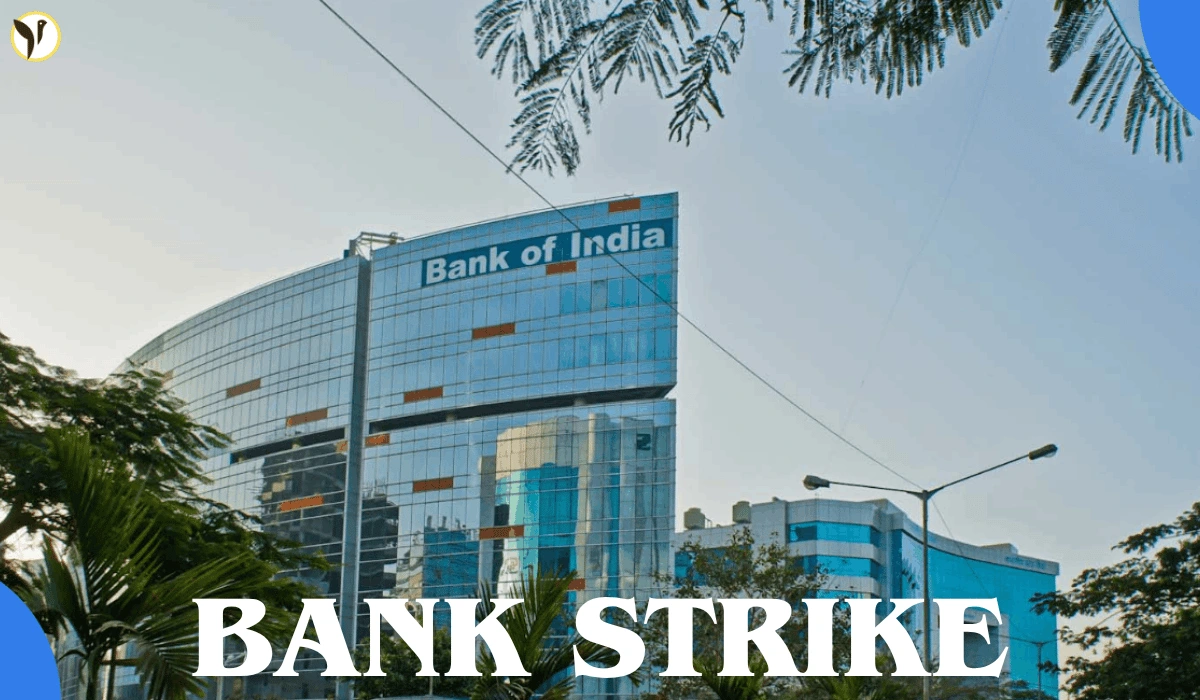


Saturday 12 September is the second Saturday of the month, which is a nationwide bank holiday. Indian banks open only on the first, third and fifth Saturdays. Sunday follows.
So the sequence runs: strike on Friday, second-Saturday closure on Saturday, Sunday on Sunday. Three consecutive days without normal branch banking, of which only the first is being reported as a disruption.
Anyone needing to deposit cash, present a cheque or complete paperwork at a counter is looking at Monday 14 September as the next realistic opportunity. Some state-specific festival holidays fall in September as well, so it is worth checking the RBI list for your state rather than assuming.
What actually stopped, and what didn't
For most people the honest answer is that very little changed, and it is worth saying so plainly rather than leading with alarm.
Digital banking worked throughout. UPI, internet banking and mobile apps functioned normally. If your financial life runs through your phone, the strike was invisible to you.
Branch services were hit hard. Cash deposits and withdrawals at counters, cheque clearances and administrative work were disrupted at large numbers of branches. Most public sector bank branches were fully or partially closed.
Private banks largely operated normally, though some older private sector banks reported disruption.
Cheque clearing is the one to watch. A cheque presented before the weekend may take longer than usual to clear, because clearing is a branch-side process rather than a digital one. If you have a payment riding on a cheque clearing this week, allow extra time.
Most public sector banks had warned customers in advance that services might be affected, which is standard practice before a scheduled strike.
Why eight lakh people stopped working
The UFBU, an umbrella body of bank unions representing the overwhelming majority of bank officers and employees, said around eight lakh public sector bank workers took part.
The headline demand is a five-day working week. At present, bank branches open on the first, third and fifth Saturdays of each month, and unions want those abolished so that banking aligns with the two-day weekend already standard across most of the financial sector, including the Reserve Bank of India itself.
It is not the only demand, and the others are arguably harder to settle:
- Pending wage issues, unresolved through successive rounds of negotiation
- Disagreement over performance-linked incentive schemes, which unions argue threaten job security and create divisions among staff
- Pension demands, including improved benefits and a uniform dearness allowance formula for all pensioners
- An option for employees under the National Pension System to move back to the Old Pension Scheme
- Adequate recruitment across all cadres
Union leaders said the strike had been forced on them because talks had produced no positive outcome and the government had not agreed to their demands.
The part that matters more than today
Friday's strike was phase one.
The UFBU has called a three-day strike from 28 to 30 September, and threatened an indefinite strike from 26 October if its demands remain unaddressed.
Run the September dates against the calendar and the picture changes considerably.
Saturday 26 September is the fourth Saturday another nationwide closure. Sunday 27 September follows. The strike then runs Monday 28, Tuesday 29 and Wednesday 30.
That is five consecutive days in which branch banking would be unavailable or severely disrupted, from Saturday the 26th through Wednesday the 30th.
For salaried individuals that is inconvenient. For small businesses dealing in cash and cheques, for anyone with a loan disbursement, property transaction or documentation deadline in that window, it is a genuine problem — and it falls at the end of a month and the close of a quarter, when paperwork volumes are at their heaviest.
If you have branch business that can be completed before 25 September, doing it before 25 September is simply sensible.
But it may not happen
Here is the necessary caution, and it cuts against the alarm.
Indian bank unions have a long record of calling strikes and then deferring them. In March 2025, the UFBU called off a two-day nationwide strike shortly before it was due to begin, after receiving assurances from the finance ministry and the Indian Banks' Association at a conciliation meeting convened by the Chief Labour Commissioner. Strike notices have been issued and withdrawn repeatedly over the past two years on substantially the same set of demands.
The pattern is familiar: a strike notice creates pressure, conciliation follows, assurances are given, the strike is deferred, and the underlying issue continues unresolved until the next notice.
That is not cynicism about the demands, which are real and long-standing. It is simply how this negotiation has run. A conciliation meeting before 28 September could well take the three-day strike off the table, and the indefinite strike is further away still.
The sensible reading is to prepare for the September window without assuming it will happen.
What to do before the end of the month
Finish counter business early. Anything requiring a branch visit — cash deposits, cheque presentation, documentation, locker access, KYC updates — is best completed before 25 September.
Move payments to digital where you can. UPI, NEFT, RTGS and IMPS were unaffected on Friday and would be expected to function through any further strike.
Allow extra time for cheques. Clearing depends on branch operations and is the service most likely to slip.
Keep some cash. ATMs generally continue working during strikes, but replenishment depends on branch staff, so machines in high-traffic areas can run empty during extended closures.
Watch for a deferral. If a conciliation meeting is announced in the last week of September, the strike may not go ahead. We will update this article as the position becomes clear.