Is Your SBI Data Safe? Dark Web Alert Flags Nearly 3,900 Customer Records
SBI reports a cyberattack exposing 3,897 customer records on the dark web. Check what information was exposed and how customers can stay safe.

- Published
- Reading time
- 9 minutes
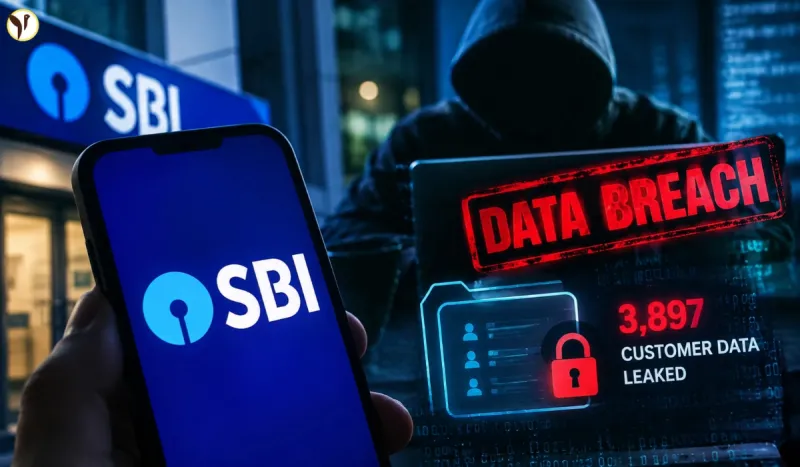
State Bank of India (SBI), India's largest public sector bank, has reported a cyberattack involving the exposure of 3,897 customer records on the dark web. The incident has raised fresh concerns about customer privacy, data protection and cybersecurity in India's banking sector.
According to reports, a preliminary assessment found that the exposed information included customer names, mobile numbers, dates of birth, email addresses, residential addresses, customer identifiers and loan-related records.
SBI has engaged an independent cybersecurity agency to investigate the incident and assess the nature and extent of the data exposure.
The bank has said that the incident is not expected to have a material impact on its core business operations, financial performance or business continuity.
However, the exposure of personal information can create risks for affected customers. Cybercriminals may attempt to use leaked details to send fraudulent messages, make fake banking calls or create convincing phishing attempts.
Here is what SBI customers need to know about the reported data breach, the possible risks and the steps they can take to protect themselves.
What Happened in the SBI Data Breach?
SBI reported a cyberattack that resulted in 3,897 customer records being disclosed on the dark web.
The dark web is a part of the internet that is not normally accessible through standard search engines. Some of its services are used for legitimate privacy purposes, but criminal groups also use dark web platforms to trade stolen information and share illegally obtained data.
In this incident, the preliminary findings indicated that personal and customer-related information had been exposed.
The exact circumstances behind the exposure, including how the information was obtained and the full extent of the incident, require further investigation.
SBI has engaged an independent cybersecurity agency to examine the matter and determine the nature and scope of the data leak.
The investigation will be important in establishing how the records became accessible and whether additional information was affected.
What Information Was Exposed?
According to reports, the exposed records contained several types of personal and customer-related information.
The information reportedly included:
- Customer names: Names that could be used to identify individuals.
- Mobile numbers: Contact details that could be used for fraudulent calls and messages.
- Dates of birth: Personal information that criminals might use to make scams appear more convincing.
- Email addresses: Details that could be targeted through phishing emails.
- Residential addresses: Information that could create additional privacy and security concerns.
- Customer identifiers: Identifying details associated with customer records.
- Loan-related records: Information connected with loan records.
The exposure of these details does not automatically mean that every affected customer will experience financial loss or identity theft.
However, leaked personal information can help scammers create more believable stories and impersonate banks, financial service providers or other trusted organisations.
Customers should therefore remain alert to unexpected communications that refer to their personal details or banking relationships.
Does the SBI Data Leak Mean Your Bank Account Is at Risk?
The reported exposure of personal information does not, by itself, establish that bank accounts have been accessed or that money has been stolen.
It is important to distinguish between a personal data breach and unauthorised access to a banking account.
A data breach involves information becoming accessible to people who should not have access to it. Account compromise, on the other hand, occurs when an unauthorised person gains access to an account or its security credentials.
The two can be connected, but one does not automatically prove the other.
SBI has stated that the incident is not expected to have a material impact on its core operations, financial performance or business continuity.
Customers should not panic or assume that their accounts have been compromised solely because of this report.
At the same time, they should take sensible precautions, monitor their accounts and report suspicious activity through official banking channels.
How Can the SBI Data Leak Affect Customers?
Even when a reported breach involves personal information rather than confirmed stolen funds, there can be potential risks.
Fake Calls in the Name of SBI
Scammers may contact customers while pretending to be bank employees.
They might claim that a customer's account has been blocked, that KYC information needs updating or that suspicious transactions have been detected.
They may then ask the customer to reveal an OTP, PIN, password or other confidential information.
Customers should never disclose these details to someone who contacts them unexpectedly.
Phishing Messages and Emails
Criminals may use exposed contact information to send messages that appear to come from a bank.
These messages may contain links to fake websites designed to collect login details or other sensitive information.
Customers should avoid clicking suspicious links and should verify banking notifications through official channels.
Identity Misuse
Personal details such as names, addresses and dates of birth may be used in attempts to impersonate individuals.
The exposure of such information does not prove that identity fraud has occurred. However, customers should be cautious if they receive unexpected requests for personal documents or discover unfamiliar financial activity.
Loan-Related Fraud
Because loan-related records were reportedly among the exposed information, customers should be alert to suspicious communications about loan applications, approvals, repayments or outstanding dues.
Do not trust a caller simply because they know details about a loan or your personal information.
Verify the information independently using the bank's official contact channels.
What Should SBI Customers Do Now?
Customers can take several practical steps to reduce the risk of fraud.
Step 1: Check Your Bank Account Regularly
Review recent transactions through SBI's official digital banking services or other authorised banking channels.
Look for unfamiliar payments, unexpected withdrawals or other activity you do not recognise.
If you find a suspicious transaction, contact the bank immediately.
Step 2: Never Share OTPs, PINs or Passwords
Never disclose your one-time password (OTP), ATM PIN, internet banking password or other confidential security credentials to a caller or message sender.
A person knowing your name, mobile number or loan details does not prove that they represent SBI.
Step 3: Avoid Suspicious Links
Do not click links in unexpected SMS messages, emails or social media posts claiming that your SBI account will be blocked.
Instead, open the bank's official website or application independently.
Step 4: Be Careful With KYC Requests
Fraudsters frequently use KYC updates as a reason to contact bank customers.
If you receive an unexpected request to update your KYC information, verify it directly with the bank before sharing any documents or personal details.
Do not install unknown applications or give another person remote access to your phone to complete a banking process.
Step 5: Report Suspicious Transactions Immediately
If you notice unauthorised transactions or believe that someone has accessed your banking credentials, contact SBI through its official channels without delay.
In India, suspected financial cyber fraud can also be reported through the National Cyber Crime Reporting Portal or by calling the national cybercrime helpline at 1930.
For official assistance, visit the National Cyber Crime Reporting Portal at cybercrime.gov.in.
Step 6: Change Compromised Passwords
If you believe your banking password or email password has been exposed, change it through the relevant official service.
Use strong, unique passwords for important accounts. Do not reuse your banking password on other websites.
If you receive an unexpected OTP or account-security notification, do not share it with anyone. Check your account through official channels.
Has SBI Confirmed a Major Banking System Failure?
The reported exposure of 3,897 customer records should not automatically be interpreted as a failure of SBI's entire banking system.
The bank has stated that the incident is not expected to have a material impact on its core business operations, financial performance or business continuity.
This means the reported incident and its potential effect on the bank's operations must be considered separately from the risks faced by individual customers.
The independent cybersecurity assessment will help establish more details about the incident and the extent of the exposure.
Customers should also distinguish between verified information about the reported 3,897 records and separate claims circulating online about other, potentially larger datasets. Different claims may refer to different incidents or datasets and should not be treated as the same confirmed breach without supporting evidence.
Why Is the SBI Data Breach Important?
SBI serves a large customer base across India and provides a wide range of banking services.
The reported exposure highlights the importance of protecting personal information held by banks and other financial institutions.
Banks store customer details for account services, identity verification, loan applications and other financial activities. If this information is exposed, it can create risks even when there is no immediate disruption to banking services.
The incident also highlights the changing nature of cybercrime.
Criminals do not always need to steal money directly from a bank account to cause harm. They may use personal information to impersonate trusted organisations, manipulate customers or make fraudulent messages more believable.
For this reason, cybersecurity involves more than protecting banking applications and transaction systems. It also requires protecting customer records, identifying unusual activity and helping customers recognise scams.
The findings of SBI's investigation will be important in understanding what happened and what additional safeguards may be necessary.
What Does This Mean for India's Banking Sector?
The incident comes at a time when cybersecurity remains an important concern for financial institutions.
As more customers use mobile banking, internet banking and digital payment services, banks must protect both their financial systems and the personal information they store.
A data exposure can damage customer confidence even if the bank's day-to-day operations continue normally.
Financial institutions therefore need effective security controls, timely incident investigations and clear communication with affected customers.
Customers also have an important role to play. Using official banking applications, protecting login credentials and reporting suspicious activity can help reduce the risk of fraud.
The SBI incident serves as a reminder that digital banking security depends on both institutional safeguards and customer awareness.
Conclusion
The reported SBI data breach has raised concerns after 3,897 customer records were exposed on the dark web.
The information reportedly included names, mobile numbers, dates of birth, email addresses, residential addresses, customer identifiers and loan-related records.
SBI has engaged an independent cybersecurity agency to investigate the incident and determine its scope. The bank has also said that the incident is not expected to have a material impact on its core operations or business continuity.
For customers, the most important step is to remain cautious without panicking. Check account activity, ignore suspicious links, protect confidential banking credentials and report unauthorised transactions immediately.
The investigation's findings should provide greater clarity about how the information was exposed and what further action may be needed.
Questions readers ask
What happened in the SBI data breach in 2026?
SBI reported a cyberattack involving the exposure of 3,897 customer records on the dark web. The bank engaged an independent cybersecurity agency to investigate the incident.
What information was exposed in the SBI data leak?
The reportedly exposed information included customer names, mobile numbers, dates of birth, email addresses, residential addresses, customer identifiers and loan-related records.
Is my SBI bank account safe after the data breach?
The reported exposure of customer information does not automatically mean that bank accounts have been compromised. Customers should monitor transactions and report any suspicious activity to SBI.
Can hackers withdraw money using leaked SBI customer details?
Leaked personal information alone does not necessarily allow someone to withdraw money from a bank account. However, criminals may use personal details in phishing attempts and impersonation scams to trick customers into revealing confidential information.
What should SBI customers do after the data leak?
Customers should check their transactions regularly, avoid suspicious links, protect their passwords and OTPs, and contact SBI immediately if they notice unauthorised activity.