HDFC Bank Data Leak Row: What the Probe Found About Senior Executives
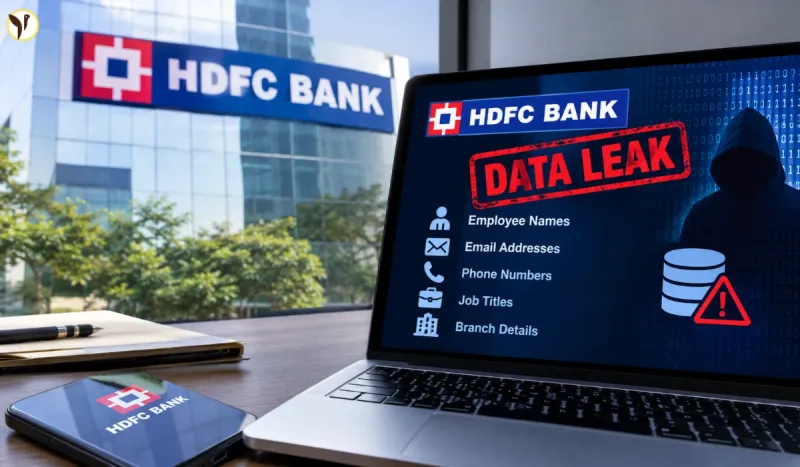
HDFC Bank's internal probe found evidence that two senior executives shared confidential information with outsiders. Here's what we know.

- Published
- Reading time
- 10 minutes
HDFC Bank, India's largest private-sector lender by market value, is facing fresh questions about internal controls after an investigation reportedly found evidence that two senior executives shared confidential business information with outsiders.
According to a Bloomberg report cited by Reuters and other media outlets, the bank's internal investigation found that the executives disclosed confidential business strategies and potentially market-sensitive information.
The investigation began after concerns emerged among some senior leaders about possible information leaks. The findings were reportedly shared with senior management and certain board members.
HDFC Bank has acknowledged that an internal review is underway. However, the bank has not publicly disclosed the identities of the executives or commented on the detailed findings.
The bank has said that it will evaluate the relevant facts and take appropriate action after completing the review.
The case raises important questions about corporate governance, information security and the responsibilities of senior executives at major financial institutions.
Here is what the investigation reportedly found, why the issue matters and what could happen next.
What Happened in the HDFC Bank Data Leak Case?
The controversy centres on the alleged sharing of confidential information by two senior HDFC Bank executives.
According to the reported findings, the information included confidential business strategies and data that could potentially affect financial markets.
The executives reportedly oversee important business areas and functions within the bank.
The issue came to light after some senior leaders raised concerns about the possibility that sensitive information was being shared with people outside the organisation.
The bank then conducted an internal investigation to examine the suspected leaks and identify the people involved.
According to media reports citing sources familiar with the matter, the investigation found evidence that two senior executives had disclosed confidential information.
However, several questions remain unanswered. These include whether the information was misused, whether any financial advantage was obtained and what disciplinary action the bank may take.
The bank has not publicly provided a complete account of the alleged disclosures.
It is therefore important to distinguish between the findings reported by media outlets and any conclusions that may emerge from the bank's ongoing review.
What Did the Internal Investigation Find?
The investigation reportedly identified two senior executives who shared confidential business information with outsiders.
The reported findings relate to two main categories of information.
1. Confidential Business Strategies
Business strategies can include information about a company's plans, priorities, operations and future decisions.
Banks handle sensitive information about lending, deposits, financial products, business expansion and risk management.
If such information is shared without proper authorisation, it may weaken internal controls or provide outsiders with information that should remain confidential.
In this case, reports said the information disclosed included confidential business strategies.
However, the bank has not publicly detailed every item of information involved.
2. Potentially Market-Sensitive Information
The second concern relates to information that could potentially influence financial markets.
Market-sensitive information is information that could affect investors' decisions or a company's share price if it became public.
For example, certain confidential business developments or financial decisions may influence how investors value a company.
The reported investigation found that potentially market-sensitive information was among the material allegedly shared with outsiders.
However, the available reports do not establish that insider trading occurred, that the executives made profits from the disclosures or that the information was definitely used to trade securities.
These questions would require further evidence and, where relevant, examination by the appropriate authorities.
How Did HDFC Bank Discover the Alleged Information Leak?
According to reports, the investigation began after concerns emerged among some senior leaders about possible leaks of confidential information.
The bank then conducted an internal review to determine what had happened and identify the people involved.
The review reportedly found evidence implicating two senior executives.
The findings were said to have been communicated to senior management and certain board members earlier in 2026. Both executives were reportedly informed of the findings.
However, the bank has not publicly provided a detailed timeline of the investigation or identified the executives involved.
An internal investigation is designed to establish the facts, review available evidence and determine whether company policies have been violated.
The bank's review is continuing, and the final outcome may depend on additional findings.
What Has HDFC Bank Said About the Investigation?
HDFC Bank has acknowledged that an internal review is underway.
A bank spokesperson said the review is being conducted in line with the bank's policies to gather and evaluate all relevant facts.
The bank also said that appropriate action would be taken after the review is completed.
It emphasised its commitment to ethical standards and corporate governance and said it takes reports of potential violations seriously.
However, the bank has not publicly confirmed the identities of the executives involved or commented in detail on the reported findings.
This means the public account remains limited.
Until the review is completed and further details are disclosed, questions about the extent of the alleged disclosures, possible misuse of information and disciplinary consequences remain unresolved.
Why Is the HDFC Bank Data Leak Important?
The issue is significant because HDFC Bank handles financial information and business decisions that matter to customers, investors and the wider banking industry.
Large financial institutions rely on strict internal controls to protect confidential information.
Employees and executives may have access to sensitive information because of their responsibilities. That access must be managed carefully.
Unauthorised disclosures can create several risks.
Risk to Corporate Governance
Corporate governance refers to the systems and processes through which a company is managed and monitored.
An alleged leak involving senior executives raises questions about whether existing policies and monitoring systems are working effectively.
A bank must ensure that employees understand their responsibilities and that potential violations are investigated fairly.
Risk to Investor Confidence
Investors expect companies to protect confidential information and follow established rules.
Reports of possible information leaks may lead investors to ask whether the bank has effective internal controls.
However, the existence of an investigation does not automatically prove that the bank's financial position or business operations have been damaged.
The actual impact will depend on the facts, the nature of the information involved and the outcome of the review.
Risk of Market Misuse
If confidential information that could affect share prices is improperly shared, there may be concerns about whether it could be used to gain an unfair advantage.
But it is important not to confuse the disclosure of market-sensitive information with proven insider trading.
The reported findings do not, by themselves, establish that illegal trading took place.
Any such conclusion would require evidence of the relevant conduct and an assessment under applicable law.
Does the HDFC Bank Case Mean Customer Data Was Leaked?
This is an important distinction.
The current reports concern confidential business strategies and potentially market-sensitive information allegedly shared with outsiders.
They do not establish that customers' personal information, account numbers, passwords or banking credentials were leaked.
The phrase "data leak" can refer to different types of information exposure.
A customer data breach may involve personal details or financial records. A corporate information leak may involve internal plans, strategies or confidential business information.
These are different issues and should not be treated as the same without evidence.
Customers should not assume that their bank accounts have been compromised solely because of the reported investigation.
For personal banking security, customers should continue to use official banking channels, protect their credentials and report suspicious transactions immediately.
Could the Investigation Affect HDFC Bank's Reputation?
The investigation may create reputational challenges because it concerns the handling of confidential information by senior executives.
Large banks depend on trust from customers, investors, employees and business partners.
When questions arise about internal controls, stakeholders may seek more information about the company's response.
However, the long-term effect will depend on how the bank handles the investigation, whether further violations are established and what corrective measures are taken.
A clear investigation process and appropriate action, where necessary, can help a company demonstrate its commitment to governance.
At this stage, it would be premature to conclude that the reported incident has caused lasting damage to HDFC Bank's reputation.
What Could Happen to the Senior Executives?
The bank has said that it will take appropriate action after the internal review is completed.
Possible outcomes in an internal investigation can include further inquiries, disciplinary measures or other steps permitted by the organisation's policies and applicable law.
The precise consequences in this case have not been publicly confirmed.
It is also not clear from the available reporting whether the executives face any separate regulatory or legal proceedings in connection with the alleged disclosures.
The bank will need to assess the evidence, the nature of any policy violations and the relevant rules before deciding what action is appropriate.
Until more information becomes available, it is important not to assume that a particular punishment has been imposed.
Is Insider Trading Confirmed in the HDFC Bank Case?
No confirmed conclusion about insider trading should be drawn from the reported findings alone.
The information allegedly shared with outsiders included potentially market-sensitive material. That creates a question about whether the information could have been misused.
However, disclosure of confidential information and illegal securities trading are not identical.
Establishing insider trading generally requires examination of the relevant information, the circumstances of its disclosure, trading activity and applicable legal requirements.
The reports available on October 21, 2026, do not establish that the executives or the recipients traded securities using the information.
The ongoing investigation may provide further clarity about whether the information was misused.
Why Is the Timing of the Investigation Significant?
The controversy comes at a sensitive time for HDFC Bank as it prepares for a leadership transition.
Anup Bagchi is scheduled to take over as managing director and chief executive officer on October 27, 2026.
The bank has also been dealing with wider questions about leadership and governance following earlier developments involving its management.
The reported information leak adds another issue that senior leadership will need to address.
However, the timing of the investigation does not establish that the reported disclosures are connected to the leadership transition.
The bank's review must be considered on the basis of its own evidence and findings.
For incoming leadership, maintaining strong internal controls and ensuring that confidential information is handled properly will remain important priorities.
What Does the Case Mean for the Indian Banking Sector?
The HDFC Bank investigation highlights the importance of information security and accountability in India's financial sector.
Banks manage large amounts of confidential information. Their employees may have access to financial plans, customer records, risk assessments and information that could affect markets.
Strong internal controls help ensure that information is shared only with authorised people for legitimate business purposes.
Financial institutions also need clear policies governing confidentiality, conflicts of interest and the handling of market-sensitive information.
When potential violations are reported, an effective investigation can help establish the facts and identify any weaknesses in existing processes.
The HDFC Bank case is a reminder that cybersecurity and information security are not only technical concerns. They also depend on employee conduct, management oversight and corporate governance.
What Happens Next?
HDFC Bank's internal review remains the key development to watch.
The bank has said that it will evaluate all relevant facts and take appropriate action after completing the investigation.
Further updates may clarify the nature of the alleged disclosures, whether the information was misused and what steps the bank intends to take.
Any regulatory or legal developments, if they occur, could also provide additional information.
For now, the reported findings point to a serious internal governance concern, but several important questions remain unanswered.
Conclusion
HDFC Bank's internal investigation has reportedly found evidence that two senior executives disclosed confidential business strategies and potentially market-sensitive information to outsiders.
The findings have raised questions about information security, internal controls and corporate governance at one of India's largest private-sector banks.
However, the investigation is still underway. The bank has not publicly identified the executives or confirmed that the information was used for illegal trading.
It is also important to note that the reported case does not establish that customer banking data was exposed.
HDFC Bank has said that it will take appropriate action after completing its review.
The next stage of the investigation will be important in determining the extent of the alleged disclosures and whether further action is required.
Questions readers ask
What happened in the HDFC Bank data leak case?
HDFC Bank's internal investigation reportedly found evidence that two senior executives shared confidential business strategies and potentially market-sensitive information with outsiders.
How many HDFC Bank executives were involved?
Media reports citing people familiar with the investigation identified two senior executives. The bank has not publicly disclosed their identities.
What information was allegedly leaked by HDFC Bank executives?
The reported information included confidential business strategies and potentially market-sensitive material. The full details have not been publicly disclosed.
Did HDFC Bank customer data get leaked?
The reports concern confidential business information and do not establish that customers' personal details, account numbers or banking credentials were exposed.
Has HDFC Bank confirmed the investigation?
Yes. HDFC Bank has acknowledged that an internal review is underway to gather and evaluate relevant facts.