Big GST relief? Council ends arrest power and raises prosecution threshold
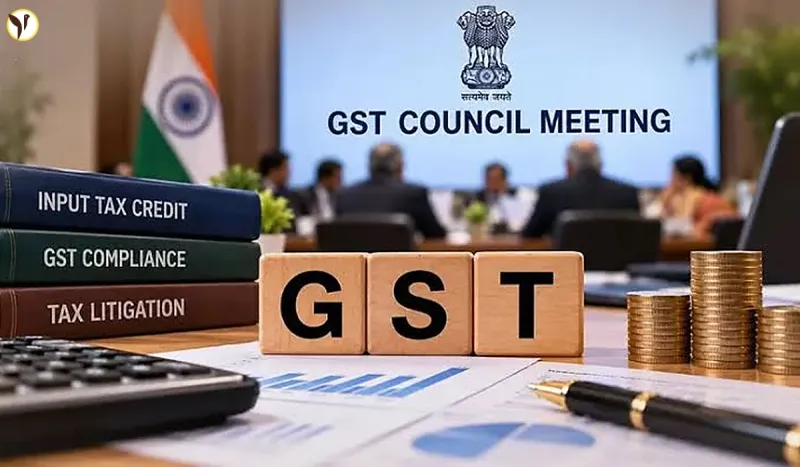
GST Council 2026 has approved major relief measures, including removal of GST officers' arrest powers and raising the prosecution threshold from ₹1 crore to ₹5 crore.

- Published
- Reading time
- 7 minutes
The GST Council has taken a major decision on tax enforcement, giving relief to businesses and taxpayers facing the possibility of criminal action under the Goods and Services Tax system.
At its 57th meeting on October 8, 2026, the Council approved the removal of the arrest powers of GST tax officers and raised the threshold for launching prosecution from ₹1 crore to ₹5 crore.
The move is part of the government's wider effort to make GST compliance simpler and move towards a more taxpayer-friendly system.
The Council also decided to keep the existing GST rates unchanged in this meeting.
What Has The GST Council Changed?
There are two major changes that taxpayers and businesses need to understand.
1. GST Officers' Arrest Power To Be Removed
Under the existing GST framework, tax officers can, in specified serious cases and after the required authorisation, arrest a person suspected of certain GST offences.
The Council has now decided to remove this arrest power from GST tax officers as part of the decriminalisation exercise.
This is an important change because the arrest provision has been a long-running concern for businesses and tax professionals.
The proposed framework is aimed at moving GST enforcement away from immediate custody and towards tax recovery, interest, penalties and prosecution in serious cases.
However, taxpayers should not assume that all GST criminal action has disappeared. Serious tax fraud and deliberate evasion can still attract prosecution under the revised framework.
2. GST Prosecution Limit Increased From ₹1 Crore To ₹5 Crore
The second major change is the increase in the prosecution threshold.
Earlier, the threshold for launching prosecution for relevant GST offences was ₹1 crore.
The GST Council has now raised this threshold to ₹5 crore.
In simple words, the change means that cases involving lower amounts will generally face a higher barrier before criminal prosecution can be initiated under the GST provisions.
The aim is to keep criminal enforcement focused on more serious cases while smaller disputes can be dealt with through tax recovery, interest and penalties.
Why Did The GST Council Make This Change?
The government's broader objective is to make GST administration more trust-based and less dependent on punitive measures.
Businesses have raised concerns over the possibility of arrest and criminal proceedings in cases where disputes may involve interpretation, classification, input tax credit or compliance issues.
The proposed reforms are designed to separate genuine tax disputes from deliberate fraud.
Under the new approach, ordinary disputes can increasingly be handled through financial consequences rather than criminal action, while serious fraud remains subject to stronger enforcement.
The reform discussions were also linked to concerns about litigation and the compliance burden faced by businesses.
What Was The GST Arrest Rule Earlier?
The GST law provides arrest powers under Section 69 of the CGST Act for specified offences covered under Section 132.
These offences include serious situations such as:
- Issuing invoices without an actual supply of goods or services
- Fraudulently claiming or using input tax credit
- Obtaining a fraudulent refund
- Collecting GST but failing to deposit it with the government
- Supplying goods or services without invoices with an intention to evade tax
The arrest power was not meant for every GST mistake or ordinary tax dispute. It was restricted to specified offences and subject to statutory conditions and authorisation.
Before the latest decision, the Commissioner could authorise an arrest when the legal requirements, including the required "reasons to believe", were met.
Does This Mean Nobody Can Be Arrested For GST Fraud?
Not necessarily.
This is one of the most important points for taxpayers.
The Council's decision removes the GST tax officers' arrest power under the GST enforcement framework, but it does not mean serious fraud has become legal.
The government is still expected to retain prosecution for serious offences.
Earlier reports on the reform proposal indicated that deliberate fraud could continue to be dealt with through criminal law and prosecution, while routine tax disputes would move towards civil consequences.
The exact legal mechanism will depend on the amendments and rules that follow the Council's recommendations.
What Does The ₹5 Crore Threshold Mean For Businesses?
The change could be particularly important for businesses that face GST disputes involving large tax amounts.
The earlier threshold was ₹1 crore. It has now been increased to ₹5 crore.
This creates a much higher monetary threshold for criminal prosecution under the relevant GST provisions.
For example, if a dispute involves an amount below ₹5 crore, it would not automatically mean that prosecution can be launched under the new threshold.
However, taxpayers should not interpret the threshold as a licence to ignore GST compliance.
Tax authorities can still recover tax dues, charge interest and impose applicable penalties.
GST Relief For Small Businesses And MSMEs
The latest decision could be significant for MSMEs, traders, startups and other businesses that regularly deal with GST compliance.
Small and medium businesses often have to deal with issues such as:
- Input tax credit disputes
- Invoice mismatches
- Classification questions
- Delayed GST payments
- Return-related issues
- Notices from tax authorities
- Tax interpretation disputes
The government's broader GST reform approach is aimed at ensuring that such matters do not unnecessarily become criminal cases.
Experts had earlier said that removing arrest provisions could reduce the fear of harassment and create a clearer distinction between tax assessment and criminal enforcement.
What Happens To Serious GST Fraud?
The latest changes do not mean that GST enforcement is ending.
The government still needs to tackle deliberate tax evasion, fake invoices and fraudulent input tax credit claims.
The major change is the way enforcement is expected to work.
Instead of relying on arrest as an early enforcement tool, the system is expected to focus more on:
Detect → Investigate → Recover tax → Impose applicable penalties → Prosecute serious cases
This approach is intended to ensure that genuine taxpayers are not treated in the same way as those involved in deliberate and organised fraud.
Why Was The Arrest Power Controversial?
The issue has been debated since the GST system was introduced in 2017.
Businesses and tax experts have argued that the arrest provision gives significant coercive power to tax authorities.
The government, on the other hand, has maintained that strong enforcement tools are required to tackle serious GST fraud.
In the years 2021-22 to 2024-25, central GST formations made 887 arrests in 72,393 GST offence cases, according to figures reported ahead of the Council meeting. State-level arrests were additional to this figure.
The latest reform represents a shift in this enforcement philosophy.
Some States Had Opposed Removing Arrest Powers
The proposal was not without debate.
Before the final decision, Maharashtra, Gujarat, Uttar Pradesh, Karnataka and Andhra Pradesh were reported to have expressed concerns about removing or significantly restricting the arrest powers of GST officials.
Their concern was that weakening enforcement could reduce the deterrent against serious GST evasion.
The debate therefore involved balancing two objectives:
Strong action against deliberate fraud versus protection of genuine businesses from excessive criminal enforcement.
No Major GST Rate Change This Time
The latest GST Council meeting was not mainly about changing GST rates.
Unlike the major rate rationalisation announced under the 56th GST Council meeting in 2025, the 57th meeting focused heavily on compliance, enforcement and administrative reforms.
The GST rates were left unchanged at this meeting.
This means the latest GST announcement is more about how the tax system works rather than another major change in the tax slabs.
What Other GST Reforms Are Being Discussed?
The arrest and prosecution changes are part of a wider GST reform package.
The Council's broader agenda has included issues related to:
- GST registration
- Input tax credit
- Refunds
- Return filing
- Penalties
- Dispute resolution
- Reducing unnecessary litigation
- Protecting genuine buyers from supplier defaults
- Simplifying compliance for businesses
The overall direction is to make GST administration more automated, predictable and easier for compliant taxpayers.
What Does This GST Decision Mean For A Common Taxpayer?
For an ordinary taxpayer or small business owner, the biggest message is that GST mistakes and serious tax fraud are being treated differently.
A routine compliance dispute should increasingly be dealt with through tax, interest and penalties rather than immediate criminal enforcement.
At the same time, businesses must continue maintaining proper invoices, filing returns on time and correctly claiming input tax credit.
The new framework should therefore not be understood as an end to GST scrutiny.
It is better understood as a move towards less coercive enforcement for ordinary disputes and stronger focus on serious fraud.
Is The GST Arrest Change Effective Immediately?
This is an important legal point.
The GST Council makes recommendations on GST policy and law. For changes that require amendments to the GST law, the necessary legislative and implementation steps will still be required.
Therefore, businesses should not assume that every procedural change becomes operational immediately after the Council meeting.
The final legal provisions, amendments, notifications and implementation instructions will determine exactly when and how the new system takes effect.
Questions readers ask
What did the GST Council decide on arrest powers?
The GST Council approved the removal of arrest powers of GST tax officers as part of its GST enforcement and decriminalisation reforms.
What is the new GST prosecution limit?
The prosecution threshold has been raised from ₹1 crore to ₹5 crore.
Does this mean GST officers can never arrest anyone?
The key change is the removal of GST officers' arrest power under the GST framework. Serious criminal cases can still be prosecuted, and the exact legal mechanism will depend on the amendments implementing the Council's decision.
Will GST rates change after this meeting?
No major GST rate change was announced as part of the latest 57th GST Council meeting. The focus was mainly on compliance and enforcement reforms.
Who can benefit from the GST prosecution threshold increase?
Businesses, MSMEs and taxpayers involved in lower-value GST disputes could benefit because the threshold for criminal prosecution has been raised significantly.