Internet Shutdown. Realme 3. One Rupee for Petrol: How Gareeb Panda Became an Influencer
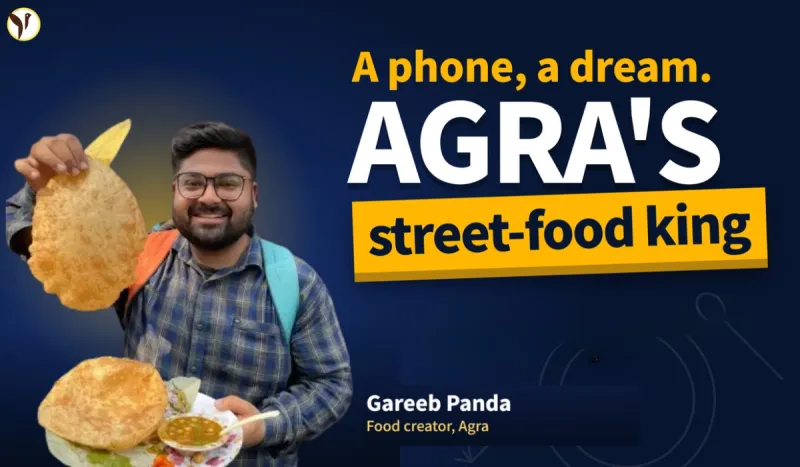
Gareeb Panda started filming Agra's street food on a Realme 3. An internet shutdown pushed him to Instagram. Today he has 70K followers, five-million-view videos and a Facebook deal.
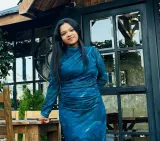
- Published
- Reading time
- 5 minutes
Every success story has a moment that doesn't look like one at the time.
For Gareeb Panda, it was a Realme 3 and a trip of fifty kilometres to find working internet.
He wasn't planning to become an influencer. He was just a young man in Agra, living inside the city of the Taj Mahal, with a family that loved to eat. The only thing he was certain of was that food, especially the city's street food, mattered.
A phone, a family, and a love of eating
The first chapter of Gareeb Panda's story is a sentence that could belong to any happy Indian household.
"Eating and drinking is a big part of our culture," he says, chuckling. "In my family, we love to eat!"
When a new Realme 3 phone landed in his hand, that love turned into a habit. He started photographing and recording the street food that defined Agra for him, the dishes everyone around him grew up on. There was no business plan behind it. There was just a boy, a phone and a city full of flavour.
The shutdown that lit the fuse
Then came the sort of event nobody chooses: the CAA/NRC protests, and an internet shutdown that unplugged his city.
For most people, that was an inconvenience. For Gareeb Panda, it became a push. He travelled 50 kilometres to Dholpur just to get back online, and in that stretch of extra effort he stumbled into something he hadn't fully understood before. Instagram. A whole world where people were sharing exactly what he was already recording.
He started posting.
A single rupee for petrol
Then COVID-19 happened, and most of the country stayed home. Gareeb Panda and a friend went looking for stories.
The budget for those early expeditions is almost comical in retrospect. His mother gave him one rupee. One rupee, for petrol. On that, he and his friend set out to document the hidden gems of Agra's street food scene, one lane at a time.
And the timing turned out to be perfect. "At that time, street food wasn't as popular on social media," he recalls. "So it gave my page a unique edge."
What he was shooting, on a mid-range Android phone, with no equipment and barely any money, was something nobody else was yet filming. The authenticity cut through. His following grew to 70,000, and the whole climb happened without a single piece of expensive gear.
Doors that didn't open the first time
If you only read the follower count, this looks easy. It wasn't.
Early on, vendors sometimes resisted. A short-video platform he worked with breached its contract. Monetising the thing he loved was a maze with no clean path through it.
Gareeb Panda didn't blow past the obstacles. He worked around them. He chatted up vendors until they trusted him. He built rapport in small, patient ways. When he had to, he even used harmless white lies to coax out the stories behind their food.
"It was a tough job in the beginning," he admits, "but now it's much easier for newcomers."
That line matters. The hardest part of being first is that you clear the path for everyone who follows.
The slow, unglamorous business of getting paid
His first attempts at making money came from short-video platforms with transactional terms. He remembers one deal word-for-word: "If you have 100 followers, we will give you Rs. 1000 monthly, you upload 30 videos on our platform."
It paid something. It wasn't a career.
Instagram changed that. His growing following opened the door to brand collaborations and sponsored content, and food and travel became a thing he could earn from, not just a passion that cost him petrol money.
Then Facebook surprised him. He had been slow to take it seriously, until a long-format street-food video hit.
"One video got 5 million views overnight," he exclaims.
That single reel was the breakthrough that led him into Facebook's partner programme and gave him a second, serious revenue line to go with Instagram.
Staying real in an industry built on fake
The influencer world runs on bought followers and paid praise. Gareeb Panda has stayed on the other side of that line.
He talks about organic growth and genuine connection the way other creators talk about engagement rates. It isn't a marketing choice for him. It's the only kind of audience he knows how to build. The 70,000 who follow him are there because he spent one rupee at a time earning them.
The willingness to change
As he grew, Gareeb Panda refused to stay in one lane. His content now stretches beyond food into lifestyle, travel and social commentary, because he figured out early that standing still in digital is the same as going backwards.
"You have to change the content, change the type of content," he explains. "If you're in food, do something that no one else is doing. It took people 10 months to catch up to my ideas."
Ten months of being the only one. That's an entire career cycle in the creator economy, and he used every month of it.
What he tells the next kid with a phone
His advice to aspiring creators has nothing to do with cameras or algorithms. It's about something older.
"Studies should always be your first priority. You need a strong foundation to build upon."
Coming from someone who built his entire following without a degree in anything content-related, that's a telling line. He knows that the content world looks like a shortcut from the outside and feels like a long road from the inside. A real base, he insists, is non-negotiable.
He also plans to widen his revenue map into merchandise and online courses, so the income holds steady even if any one platform shifts under him.
Why the story matters
Gareeb Panda's story will be told again and again in India, because it is the story of a whole generation. A kid with a phone, in a town the industry doesn't notice, with no money, no network and no permission, who turned up anyway.
He didn't wait for an opportunity. He walked 50 kilometres to one. He didn't buy his way to attention. He earned it, one street-food reel at a time, on a Realme 3.
In the end, that's the most relatable thing about India's relatable influencer. He proved that the only equipment you really need is the one most of us already own.