What Can UNO Teach Us About Life? An Indian Billionaire Explains
Vedanta chairman Anil Agarwal shared three life lessons from UNO, explaining what Skip, Reverse and Wild cards can teach us about choices, challenges and opportunities.


- Published
- Reading time
- 11 minutes
A simple game of UNO may look like nothing more than a fun card game played with friends and family.
But for Vedanta chairman Anil Agarwal, the game recently became a way to think about life, choices, setbacks and opportunities.
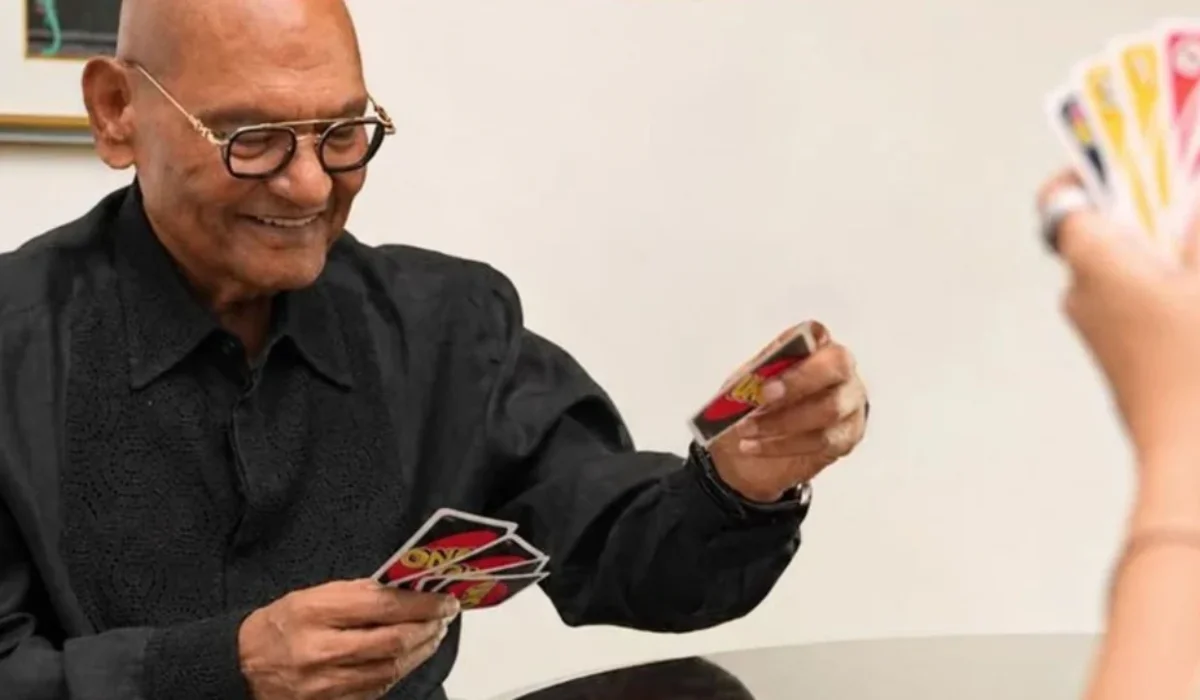
Agarwal shared his thoughts in a post on X after a young member of his team introduced him to UNO a few days earlier. What started as a simple game made him think about how different cards can represent different situations in everyday life.
His comparison focused mainly on three cards:
- Skip
- Reverse
- Wild
According to Agarwal, each card can represent a different approach to life's challenges.
The Skip card reminded him that not every argument or problem needs a person's attention. The Reverse card represented the ability to change direction when circumstances are not going well. And the Wild card, which he found most interesting, represented the special quality or strength that makes every person different.
His post has since attracted attention online, with social-media users adding their own interpretations of what UNO can teach about life.
Who Is Anil Agarwal?
Anil Agarwal is the chairman of Vedanta Limited, one of India's major natural resources companies.
Over the years, Agarwal has frequently spoken publicly about business, entrepreneurship, decision-making and personal experiences.
His latest UNO post took a different approach.
Instead of discussing metals, mining, business or investments, he used a popular card game to explain some simple ideas about dealing with life.
That is what made the post interesting to many readers.
How Did The UNO Idea Come To Him?
According to Agarwal's post, a young member of his team introduced him to UNO a few days before he wrote about it.
While playing the game, he began connecting the cards with situations people face in real life.
He described the experience as a reminder that even simple things can offer useful lessons.
The main idea was that life, like UNO, involves making decisions at the right time.
Sometimes a person needs to move past something.
Sometimes a situation needs to be turned around.
And sometimes a person needs to understand what makes them different from everyone else.
The Skip Card: Not Every Problem Needs Your Attention
The first lesson came from the Skip card.
In UNO, playing a Skip card means the next player loses their turn.
Agarwal connected this idea with situations in everyday life.
According to his interpretation, people do not need to respond to every obstacle, argument or negative situation.
Sometimes the better decision is simply to move on.
This can apply to many situations.
For example, a person may face:
- An unnecessary argument
- Negative comments
- A temporary setback
- A distraction
- A problem that does not deserve too much energy
The lesson is not that every problem should be ignored.
Instead, the idea is about knowing which problems deserve attention and which ones do not.
In a busy life, attention is limited.
Spending too much time on every small disagreement can take energy away from more important goals.
That is the connection Agarwal made with the Skip card.
What Does The Skip Card Teach About Life?
The larger lesson can be understood in a simple way:
You do not have to react to everything.
People often feel pressure to answer every criticism, solve every small problem or prove themselves in every argument.
But sometimes moving forward is more useful than reacting.
This does not mean avoiding serious problems.
It means understanding the difference between a problem that needs action and a distraction that can simply be left behind.
That distinction can save time and energy.
The Reverse Card: Sometimes You Can Change Direction
The second card Agarwal discussed was the Reverse card.
In UNO, the Reverse card changes the direction of play.
Agarwal used this as a comparison for situations where life is not going according to plan.
Sometimes a person may be moving in one direction and realise that it is not working.
At that point, continuing on the same path may not be the best option.
A strong decision can change the direction.
That could mean:
- Changing a career path
- Starting a new business
- Leaving a bad situation
- Learning a new skill
- Changing a business strategy
- Accepting that an earlier decision was wrong
- Trying a completely different approach
Agarwal's message was that one strong decision can sometimes change the direction of a situation.
Why Is The Reverse Card Important?
Life does not always follow a straight line.
People make plans, but circumstances change.
A business can face losses.
A career can take an unexpected turn.
A personal plan can fail.
A person may discover that the path they selected is not suitable for them.
The Reverse card becomes a simple way to explain that changing direction is not necessarily failure.
Sometimes changing direction is part of moving forward.
The Wild Card: The Most Important Lesson
The third card received the most attention from Agarwal.
It was the Wild card.
In UNO, a Wild card allows the player to choose the colour that continues in the game.
Agarwal connected this with an individual's unique strength.
According to him, everyone has a "wild card" in life.
That wild card could be:
- A special talent
- A unique skill
- Creativity
- Confidence
- Honesty
- Leadership
- Patience
- Communication ability
- Technical knowledge
- Business thinking
- The ability to solve difficult problems
The important part, according to Agarwal's message, is recognising what makes you different and knowing when to use it.
What Does "Everyone Has A Wild Card" Mean?
This is perhaps the biggest idea behind Agarwal's UNO analogy.
People often compare themselves with others.
Someone may have a better education.
Someone else may have more money.
Another person may have better connections.
Another may be more confident.
But comparison does not always show the full picture.
A person's strength may be something less obvious.
For one person, it could be creativity.
For another, it could be discipline.
For someone else, it could be the ability to understand people.
The challenge is to identify that strength and use it at the right time.
That is what Agarwal means by finding your "wild card."
UNO Life Lessons At A Glance
|
|
|
|
|
|
|
|
|
|
|
|
|
|
|
|
|
|
|
|
|
|
|
|
Why Did This Simple Post Get Attention?
Agarwal's message was different from the usual business advice associated with a billionaire entrepreneur.
Instead of using complicated business terms, he used a game that many people already understand.
That made the message easy to follow.
People also started sharing their own ideas about the UNO comparison.
One social-media user said honesty was their own "wild card".
Another user offered a different interpretation, pointing out that UNO also teaches an uncomfortable lesson: even if someone makes good decisions, luck and another player's random move can still affect the outcome.
Other users praised the analogy and said that life can also be about knowing when to act and when to hold back.
The Other Side Of The UNO Lesson: Luck Also Matters
There is another interesting part of the online reaction.
UNO is not a game based only on skill.
Cards are drawn randomly.
A player can make smart decisions and still receive a difficult card.
This means the game can also represent something else about life:
Good decisions do not guarantee a perfect result every time.
Circumstances and luck can influence outcomes.
This is an important addition to Agarwal's analogy because real life also contains uncertainty.
A person can prepare well and still face an unexpected problem.
A business can have a good strategy and still face a sudden market change.
A student can study hard and still face an unexpected question in an examination.
That does not necessarily mean the strategy was wrong.
Sometimes circumstances simply change.
What Can Young People Learn From The UNO Analogy?
The message can be particularly relevant to young people making decisions about education, careers and business.
Do Not React To Everything
Social media creates constant pressure to respond.
Not every criticism requires an answer.
Not every negative comment deserves attention.
The Skip lesson is about protecting your time and focus.
Do Not Be Afraid To Change Direction
A person may choose a career and later realise it is not right.
Changing direction can be difficult.
But the Reverse card provides a simple reminder that changing direction is possible.
Find Your Unique Strength
Instead of trying to become exactly like someone else, identify your strongest quality.
That could become your "Wild card."
Timing Matters
Having a good skill is not always enough.
Knowing when to use that skill can also matter.
A strong opportunity can be missed if the decision comes too late.
Accept Uncertainty
UNO also contains an element of chance.
Life does too.
Not everything can be controlled.
The focus therefore has to remain on making sensible decisions with the information available.
How Does This Apply To Business?
Agarwal's background makes the analogy particularly interesting from a business perspective.
Businesses regularly face situations where they need to decide whether to:
- Continue with an existing strategy
- Stop an unsuccessful project
- Enter a new market
- Change a product
- Invest more money
- Reduce costs
- Take a calculated risk
In such situations, the three UNO ideas can be viewed as simple decision-making concepts.
Skip: Don't waste resources on every opportunity.
Reverse: Change strategy when circumstances change.
Wild: Use the company's unique strength.
These are broad interpretations of the UNO analogy rather than specific business instructions from Agarwal.
What Does The UNO Post Say About Decision-Making?
The biggest common theme across the three cards is choice.
The game gives players different cards.
But players still have to decide when and how to use them.
Life works in a similar way.
People cannot control every situation.
But they can often control their response.
A difficult situation may arrive unexpectedly.
The important question then becomes:
What should I do with the situation I have been given?
That is where decision-making comes in.
Why Simple Examples Often Work Better
A business leader can explain decision-making through complicated management theories.
But a familiar game can sometimes make the same idea easier to understand.
Most people already know what it feels like to:
- Wait for the right card
- Get an unexpected card
- Change strategy
- Take a risk
- Lose a round
- Start again
That makes UNO a useful metaphor for uncertainty.
The game also shows that winning is not always about having the perfect hand.
Players have to make decisions based on what is available at that moment.
Is Anil Agarwal's UNO Message About Winning?
Not exactly.
His post focuses more on choices, obstacles, opportunities and personal strengths than simply winning the game.
The important idea is not to treat life as a competition where every round must be won.
Instead, it is about understanding the situation and making the best decision possible at that moment.
Sometimes that means moving forward.
Sometimes it means changing direction.
And sometimes it means using a personal strength that others may not have.
What Is The "Wild Card" In Your Life?
This was the question Agarwal left for his followers.
Everyone may have a different answer.
For some people, it could be:
Communication — the ability to explain difficult ideas.
Discipline — the ability to continue even when motivation is low.
Creativity — the ability to find new solutions.
Patience — the ability to wait for the right opportunity.
Confidence — the willingness to take action.
Technical skills — specialised knowledge that others may not have.
People skills — the ability to build relationships and understand others.
The important point is not which quality is considered the "best."
It is about identifying the quality that is genuinely useful to you.
What Social Media Users Said
Agarwal's post generated different reactions online.
Some users agreed with the comparison and shared their own "wild cards."
One user identified honesty as their personal strength.
Another user added a different perspective, saying UNO also reminds people that even careful decisions cannot completely remove the element of chance.
Other reactions described the comparison as a simple but meaningful way to think about life.
This mix of responses shows why the post attracted attention: people could interpret the same game through their own experiences.
UNO And Life: Three Simple Lessons
If the entire message is reduced to three simple points, it becomes:
Skip what does not deserve your energy.
Not every problem needs a reaction.
Reverse when the current direction is not working.
Changing your approach can sometimes be the right decision.
Use your Wild card.
Find your unique strength and use it when the right opportunity comes.
These are the central ideas behind Agarwal's post.
Questions readers ask
Who shared the UNO life lessons?
Vedanta chairman Anil Agarwal shared the life lessons in a recent post on X.
What did Anil Agarwal say about UNO?
Agarwal compared different UNO cards with situations people face in life. He focused particularly on the Skip, Reverse and Wild cards.
What does the Skip card represent?
According to Agarwal's interpretation, the Skip card represents knowing when to ignore an unnecessary obstacle or argument instead of spending energy on it.
What does the Reverse card mean in Agarwal's analogy?
The Reverse card represents changing direction when a situation is not going as planned. Agarwal connected it with the idea that one strong decision can sometimes turn a situation around.
What is the Wild card according to Anil Agarwal?
Agarwal described the Wild card as a person's unique quality, strength or gift that makes them different from others. He encouraged people to recognise that strength and use it at the right time.