Trump And Xi Talk AI: What Is This New US-China Channel Really For?
Trump and Xi are discussing a new US-China AI dialogue. Here is what the new AI channel means, why it was proposed and what it could change.

- Published
- Reading time
- 7 minutes
Artificial intelligence has become a new area of discussion between the United States and China.
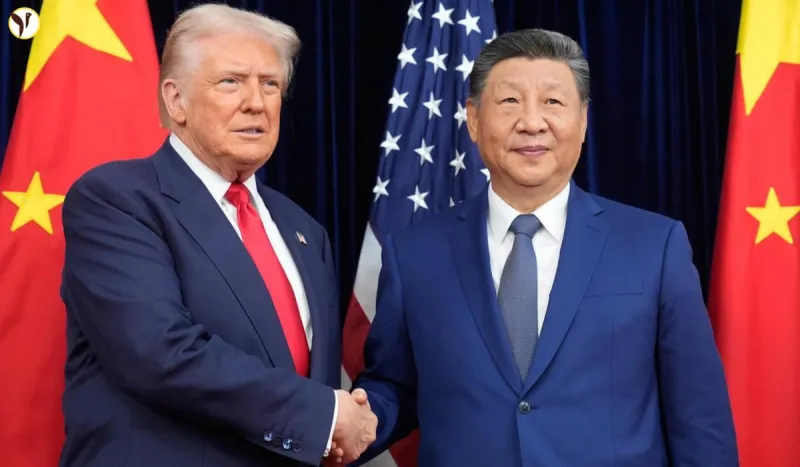
Ahead of the September 2026 meeting between US President Donald Trump and Chinese President Xi Jinping, senior officials from both countries discussed creating a new US-China AI dialogue.
The proposed channel is not simply about AI development or business cooperation. Its main focus is communication around serious AI-related incidents that could create national security concerns.
US Treasury Secretary Scott Bessent said after talks with Chinese Vice Premier He Lifeng in New York that Washington had proposed a notification mechanism between the two countries. The idea is to allow the US and China to communicate when an AI-related incident reaches a national-security level.
So, what exactly is this new AI channel for?
What Is The New US-China AI Channel?
The proposed US-China AI dialogue is a communication mechanism between the two countries.
The basic idea is simple: if a major AI-related incident creates a serious security concern, the two governments would have a way to notify and communicate with each other.
Bessent described the need as moving from a more opaque relationship toward greater transparency between the world's two leading AI powers.
This does not mean that Washington and Beijing have agreed to develop AI together.
Instead, the proposal is focused on communication, risk management and national-security concerns.
In simple words
The channel can be understood as a possible government-to-government communication line for major AI risks.
|
|
|
|
|
|
|
|
|
|
|
|
|
|
|
|
|
|
|
|
|
|
|
|
|
|
|
Why Did Trump And Xi Bring AI Into Their Talks?
AI has become an important part of the wider US-China technology competition.
Both countries are investing heavily in artificial intelligence, advanced computing and AI infrastructure.
At the same time, governments are increasingly concerned about what happens if highly capable AI systems are used in areas such as cyber operations, military applications or other national-security activities.
That creates a problem.
The US and China may compete in AI, but a major AI-related incident could affect both countries.
The new dialogue is therefore aimed at creating a channel through which officials can communicate about such incidents instead of relying only on public statements or existing diplomatic contacts.
What Exactly Will The Channel Discuss?
The full structure of the dialogue has not yet been publicly detailed.
However, the US proposal specifically mentions incidents that could reach a national-security level.
Future discussions could potentially cover areas such as:
- Major AI safety incidents
- AI-related cyber threats
- Misuse of powerful AI systems
- Security risks involving AI agents
- AI and critical infrastructure
- Risks connected with advanced AI systems
- Communication during a serious AI incident
Reuters reported that future sessions could address topics such as AI weaponisation, AI safety principles, critical infrastructure protection and cyber-attack prevention, although the exact agenda remains under development.
Is This An AI Hotline Between Trump And Xi?
Not exactly.
The phrase “AI channel” or “AI dialogue” can make it sound like a direct hotline between Trump and Xi.
But the current proposal is better understood as an official dialogue between US and Chinese officials.
The initial discussions were held between US Treasury Secretary Scott Bessent and Chinese Vice Premier He Lifeng, along with trade officials.
The two sides agreed to continue discussions on AI.
The Washington Post reported that further formal US-China AI dialogues were expected, with another meeting discussed for Shenzhen, China, in about two months.
So, this is developing into a continuing diplomatic process rather than a single Trump-Xi meeting.
Did Trump And Xi Agree To Work Together On AI?
There is no announcement of a broad US-China partnership to jointly develop AI.
The proposed dialogue is narrower.
The two countries are still strategic competitors in technology, and the United States continues to seek to maintain an advantage in advanced AI.
At the same time, both governments have an interest in avoiding situations where a serious AI incident creates a larger security crisis.
This is why communication can exist alongside competition.
Reuters reported that US officials said AI cooperation would not remove the broader challenges in the relationship, including disagreements over technology and China's perception of US efforts to limit its technological development.
What About AI Chips And US-China Technology Restrictions?
This is another important part of the story.
The new AI notification mechanism should not be confused with negotiations over advanced semiconductor restrictions.
US Trade Representative Jamieson Greer said that US export controls on advanced AI chips and semiconductor manufacturing equipment were not part of the AI mechanism talks reported in New York.
That means the new channel does not automatically change existing US technology restrictions on China.
AI safety communication and semiconductor trade policy are separate issues.
Why Is Communication Important?
AI systems can operate across borders.
For example, an AI-enabled cyber operation could affect companies, infrastructure or governments in another country.
A serious AI incident could therefore become an international problem very quickly.
The United States and China are also among the world's most important AI powers. Because of this, officials from both sides see some value in having a way to communicate about major risks.
Bessent said the objective was to move toward greater transparency between the two leading AI powers.
Does This Mean The US And China Are Becoming AI Partners?
Not necessarily.
The current development shows limited cooperation on a specific risk-management issue, while wider technological competition continues.
The two countries still have disagreements over:
- Advanced semiconductor technology
- AI chips
- Technology exports
- National security
- AI leadership
- Critical minerals
- Trade
The AI dialogue therefore represents one area where communication is being explored without removing the broader competition.
What Did Xi Say About AI?
During his Washington visit, Xi also spoke about the need for responsible AI development.
Fortune reported that Xi said the US and China have both the capability and responsibility to develop and manage AI for good and keep its development under human control.
That language comes as governments around the world debate how much control and oversight should be applied to advanced AI.
However, the US and China do not necessarily have the same approach to AI regulation or technology policy.
Why Is This Important For The Rest Of The World?
The US-China AI relationship matters beyond the two countries.
Both countries have major AI companies, research institutions, chip industries and technology ecosystems.
If they create a working system for communicating about serious AI incidents, other countries could eventually look at similar arrangements.
On the other hand, if competition becomes stronger and communication fails, AI-related incidents could become more difficult to manage internationally.
For now, the proposed channel is only an early step.
There is no evidence that it has created a complete global AI safety system.
Trump-Xi AI Talks: What Has Actually Been Agreed?
It is important to separate confirmed developments from expectations.
Confirmed
- US and Chinese officials discussed a new AI dialogue.
- Washington proposed a notification mechanism for serious AI-related incidents.
- The proposed notifications would focus on incidents that could raise national-security concerns.
- Both sides agreed to continue AI discussions.
Not confirmed
- A joint US-China AI development programme
- A complete AI safety treaty
- A new agreement on AI chips
- Removal of US semiconductor restrictions
- A global AI regulator created by Trump and Xi
This distinction is important because the new channel is still at an early stage.
Timeline Of The New US-China AI Channel
|
|
|
|
|
|
|
|
|
|
|
|
|
|
|
|
|
|
What Could Happen Next?
The next major question is how the proposed notification system will actually work.
The two governments would need to decide:
- What qualifies as a serious AI incident?
- Which government agency should issue a notification?
- How quickly should information be shared?
- What information can be shared without revealing sensitive technology?
- How will national-security information be protected?
- What happens if one side believes the other has misused AI?
These details could determine whether the new channel becomes a regular diplomatic mechanism or remains a limited discussion forum.
Why This Matters For AI Users
For ordinary AI users, the new channel does not immediately change how ChatGPT, Gemini or other AI tools work.
There is no announced consumer rule that suddenly changes AI access because of the Trump-Xi discussions.
The importance is mainly at the government and national-security level.
Over time, however, international discussions about AI safety could influence regulations, cybersecurity standards and rules for powerful AI systems.
Questions readers ask
What is the new US-China AI channel?
It is a proposed formal dialogue between the United States and China to communicate about major AI-related concerns, particularly incidents that could create national-security risks.
Did Trump and Xi create an AI treaty?
No. The current development is a proposed communication and notification mechanism, not a broad AI treaty.
Who discussed the new AI channel?
US Treasury Secretary Scott Bessent and Chinese Vice Premier He Lifeng discussed the proposal during talks in New York.
What is the AI notification mechanism?
It is a proposed system through which the US and China could notify each other about AI incidents considered serious enough to raise national-security concerns.
Does the channel mean the US and China will jointly develop AI?
No such broad joint-development agreement has been announced.
Will the new channel remove US AI chip restrictions on China?
No. US officials said semiconductor export controls were separate from the AI mechanism discussions