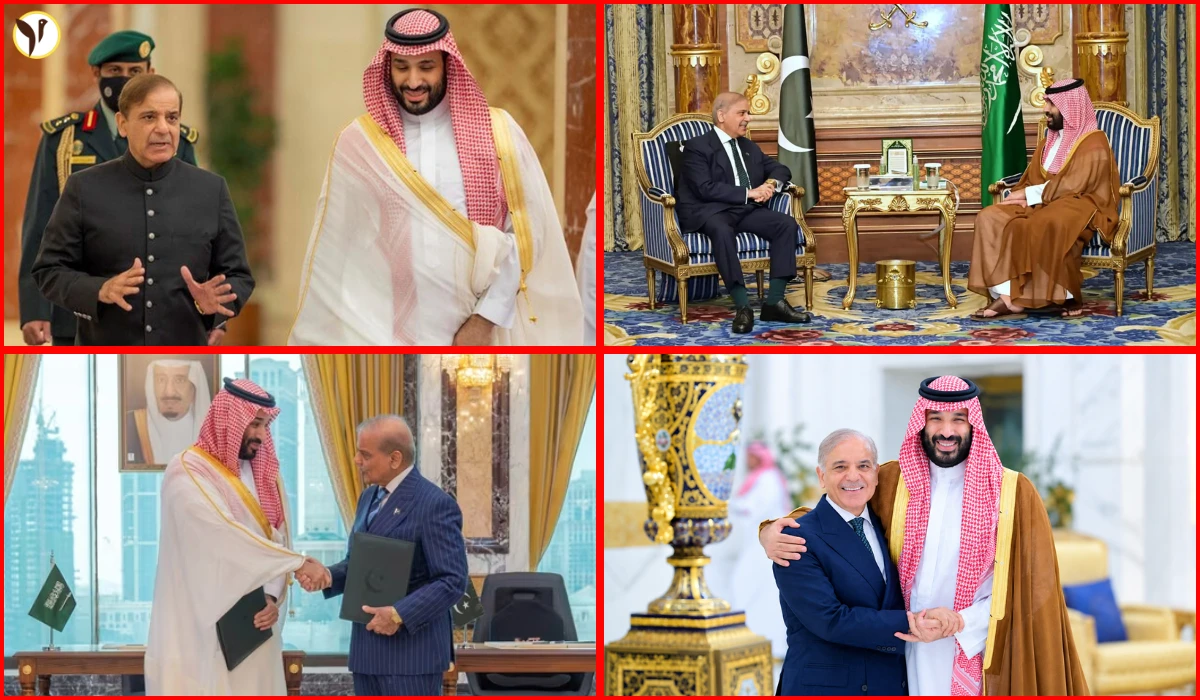


Pakistan has once again stood beside its old friend Saudi Arabia. On Sunday, Prime Minister Shehbaz Sharif picked up the phone and called Saudi Crown Prince Mohammed bin Salman (MBS). The reason was simple but serious recent Houthi attacks that have hit Saudi Arabia's civilian areas and energy sites hard.
During the call, PM Sharif made one thing very clear: Pakistan stands in "complete solidarity" with Saudi Arabia. This news is already spreading fast, and here is everything you need to know about it, explained in the simplest way possible.
Why Did PM Shehbaz Sharif Call Saudi Crown Prince MBS?
The timing of this call is important. Just days before, Saudi Arabia faced a wave of attacks. Drones hit the country's East-West oil pipeline, a huge 1,200-kilometre pipeline that carries millions of barrels of oil every day. On top of that, Houthi strikes from Yemen hit Saudi towns, injuring more than 70 people and damaging homes, a mosque, and energy facilities.
Because of the danger, Saudi Arabia had to shut down the pipeline for safety. This single move cut off close to 4% of the world's oil supply, which shows just how serious the situation has become.
Seeing all this, PM Sharif decided it was time to speak directly to the Crown Prince and offer Pakistan's support.
What Did PM Sharif Say About the Houthi Attacks?
According to Pakistan's Prime Minister's Office, the conversation between the two leaders was warm and friendly. PM Sharif strongly condemned the Houthi attacks on Saudi Arabia's civilian and economic infrastructure. He said these attacks were not just a threat to Saudi Arabia they put the peace of the whole region in danger and could even disturb the global economy and energy supply chains that many countries, including Pakistan, depend on.
He also praised Crown Prince Mohammed bin Salman, calling his leadership during this difficult time "wise and sagacious." It was PM Sharif's way of saying that Saudi Arabia is handling a tough crisis with a calm and steady hand.
Pakistan Pledges to Help Bring Peace to the Region
This was not just a call to say sorry for what happened. PM Sharif went a step further and promised action. He said that he, along with Field Marshal Syed Asim Munir (Pakistan's Chief of Defence Forces) and Deputy Prime Minister Ishaq Dar, would continue working to defuse tensions and bring peace to the region.
This shows that Pakistan is not just watching from the sidelines. The country wants to play an active role in calming down the situation in the Middle East, which has been tense since a wider war involving Iran began earlier this year.
PM Sharif also took a moment to send warm wishes to King Salman bin Abdulaziz Al Saud, the Custodian of the Two Holy Mosques, showing the personal respect between the two nations' leadership.
How Did Crown Prince Mohammed bin Salman Respond?
The Crown Prince did not stay silent either. He thanked PM Sharif for his support and appreciated Pakistan's steady and continued backing of Saudi Arabia. MBS also spoke about the Kingdom's ongoing efforts to bring peace and stability back to the region.
Both leaders agreed on one more important point they want to stay in close touch and hope to meet each other in person soon. This hints that the Pakistan-Saudi relationship may see more high-level meetings in the coming weeks.
The Bigger Picture: Why Saudi Arabia Is Under Pressure
To understand why this call matters so much, it helps to look at the wider picture. Saudi Arabia has been facing growing pressure since a broader war between the United States, Israel, and Iran started earlier this year. That conflict has largely shut down the Strait of Hormuz, a narrow sea route through which around 20% of the world's oil used to pass.
With that route blocked, Saudi Arabia leaned more on the Red Sea and the Bab el-Mandeb Strait to move its oil. But the Houthis, who are backed by Iran, have been pushing hard to take control of that coastline too. In recent days, they captured the port city of Mocha and moved close to the strategic island of Perim, tightening their grip on this vital shipping lane.
This double pressure attacks on land pipelines and rising Houthi control of the sea route explains why Saudi Arabia is leaning on friends like Pakistan for support right now.
Why Pakistan-Saudi Ties Matter
Pakistan and Saudi Arabia share a bond that goes back decades. Saudi Arabia has often supported Pakistan during tough economic times, while Pakistan has stood by Saudi Arabia on matters of regional security. This is not the first time Pakistan has openly backed the Kingdom during a crisis, and experts say the relationship is likely to grow even stronger as tensions in the Middle East continue.
For Pakistan, keeping strong ties with Saudi Arabia also means protecting its own interests millions of Pakistani workers live and earn their living in the Gulf region, and stability there directly affects their safety and jobs.
What Happens Next?
Both sides have promised to stay in close contact, and a possible in-person meeting between PM Sharif and Crown Prince MBS could be on the cards soon. Meanwhile, the world will be watching closely to see whether the East-West pipeline is repaired quickly and whether the Houthi advances along the Red Sea coast slow down.