Nuclear Threat to Oil Supply: What Did US, China and Russia Agree On?
US, China and Russia discuss nuclear risk reduction and fuel supplies as global tensions raise concerns about energy security and oil markets.

- Published
- Reading time
- 5 minutes
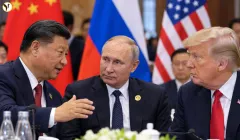
The United States, China and Russia have reached an important understanding on global security, fuel supplies and nuclear risks following a historic meeting between their leaders in Shenzhen, China.
US President Donald Trump, Chinese President Xi Jinping and Russian President Vladimir Putin attended the first-ever three-way meeting of the three leaders on November 19, 2026, on the sidelines of the Asia-Pacific Economic Cooperation (APEC) summit.
According to reports from China and Russia, the three countries agreed to support United Nations reforms, increase supplies of refined petroleum products and continue dialogue to reduce nuclear risks.
The meeting comes at a time when global energy markets are facing uncertainty because of geopolitical tensions, particularly the conflict involving Iran and disruptions to oil shipments through the Strait of Hormuz.
The announcement has attracted international attention because the three countries hold significant influence over global security, energy markets and international diplomacy.
What Did the US, China and Russia Agree On?
The three leaders discussed several important issues during their meeting. According to the declaration released by Chinese state media and the Kremlin, their main areas of understanding included:
- Nuclear risk reduction: The countries reaffirmed that a nuclear war should never be fought and supported dialogue to reduce nuclear dangers.
- Fuel supply security: They pledged to increase supplies of refined petroleum products for countries around the world.
- United Nations reforms: The three powers agreed to advance discussions on reforms to the United Nations.
- Peace and diplomacy: They supported resolving international conflicts through political and diplomatic discussions.
However, the announcement does not mean that the three countries have signed a new nuclear disarmament treaty or agreed to eliminate their nuclear weapons.
Why Is the Global Oil Supply Under Threat?
One of the major concerns behind the discussions is the security of international oil transportation.
The Strait of Hormuz is one of the world's most important energy shipping routes. It connects the Persian Gulf with international markets and carries a major share of global oil shipments.
The ongoing Iran-related conflict has disrupted shipping through this important waterway, creating uncertainty for oil-importing countries.
Any prolonged disruption could affect:
-
International crude oil prices.
-
Fuel availability in importing countries.
-
Transportation and shipping costs.
-
Inflation and the cost of everyday goods.
-
Energy security across Asia and Europe.
During his separate meeting with Xi Jinping, Trump highlighted the importance of keeping oil flowing through the Strait of Hormuz.
The two countries share an interest in maintaining the movement of oil through this route because disruptions could affect their economies and global trade.
Why Did Nuclear Weapons Become a Major Topic?
Nuclear weapons were another major issue discussed during the historic summit.
The United States and Russia possess the world's largest nuclear arsenals, while China has been rapidly expanding its nuclear capabilities.
Trump has repeatedly called for a new nuclear arms agreement involving all three countries.
The previous major nuclear arms control agreement between Washington and Moscow, known as New START, expired in February 2026.
Trump wants a modern agreement that also includes China.
However, Beijing has been reluctant to join nuclear arms reduction negotiations because its nuclear stockpile is considerably smaller than those of the United States and Russia.
China believes that Washington and Moscow should take greater responsibility for reducing their much larger nuclear arsenals before asking Beijing to accept similar restrictions.
What Role Did Donald Trump, Xi Jinping and Vladimir Putin Play?
The meeting brought together three leaders whose countries have major influence over international politics and security.
Donald Trump: The US President wanted nuclear arms reduction to become a central part of the discussion. He also highlighted the importance of maintaining oil shipments through the Strait of Hormuz.
Xi Jinping: The Chinese President called for international cooperation and peaceful relations between major powers. He also supported the idea of a world without nuclear weapons.
Vladimir Putin: The Russian President highlighted the shared responsibility of major powers in maintaining international peace and stability. Russia also supported discussions on fuel supplies and nuclear risks.
Despite their shared interests, the three leaders continue to have differences over Ukraine, Iran, trade and nuclear weapons.
Will This Agreement Reduce Oil Prices?
The announcement could provide some confidence to global energy markets, but it does not guarantee an immediate fall in oil prices.
The commitment to increase refined petroleum supplies may help support fuel availability. However, actual market conditions will depend on several factors.
These include:
- Security of oil transportation routes.
- Developments in the Iran-related conflict.
- Global crude oil production and demand.
- International trade restrictions and sanctions.
- The implementation of commitments made by the three countries.
For countries that depend heavily on imported energy, including India, stable international fuel supplies are especially important.
India imports a large share of its crude oil requirements. Therefore, any major disruption to international shipping routes could affect its energy costs and economic outlook.
However, there is currently no confirmation that this declaration will directly reduce petrol or diesel prices in India.
What Happens Next After the Historic Meeting?
The meeting represents an important diplomatic development, but several major challenges remain.
The three countries still have different positions on nuclear weapons, international conflicts and global trade.
Experts have also cautioned that one meeting cannot resolve decades of disagreements between the world's major powers.
The next important step will be to see whether the countries turn their commitments into practical action.
The international community will closely watch developments related to nuclear discussions, fuel supply commitments and the security of the Strait of Hormuz.
For now, the biggest takeaway is that the US, China and Russia have signalled their willingness to cooperate on nuclear risk reduction and energy security, but a lasting solution will depend on what happens next.
Questions readers ask
What did the US, China and Russia agree on?
The three countries agreed to advance UN reforms, increase refined petroleum supplies and continue dialogue to reduce nuclear risks.
Who attended the US-China-Russia meeting in November 2026?
US President Donald Trump, Chinese President Xi Jinping and Russian President Vladimir Putin attended the historic trilateral meeting in Shenzhen, China.
Why is the Strait of Hormuz important for global oil supplies?
The Strait of Hormuz is a major international oil shipping route. Disruptions can affect oil transportation, fuel availability and global energy prices.
Did the three countries sign a nuclear disarmament treaty?
No. They agreed to dialogue and reaffirmed that nuclear war should never be fought. No new nuclear disarmament treaty was announced.
Will this agreement reduce petrol and diesel prices in India?
Not immediately. The impact will depend on actual fuel supplies, international oil prices and developments in global shipping routes.