Drumcree Parade Sunday: Approved After 28 Years, What Happens Now.
The Parades Commission has permitted 35 Orange Order members to walk the Garvaghy Road on Sunday, the first such parade since 1998. Residents are challenging it.

- Published
- Reading time
- 6 minutes
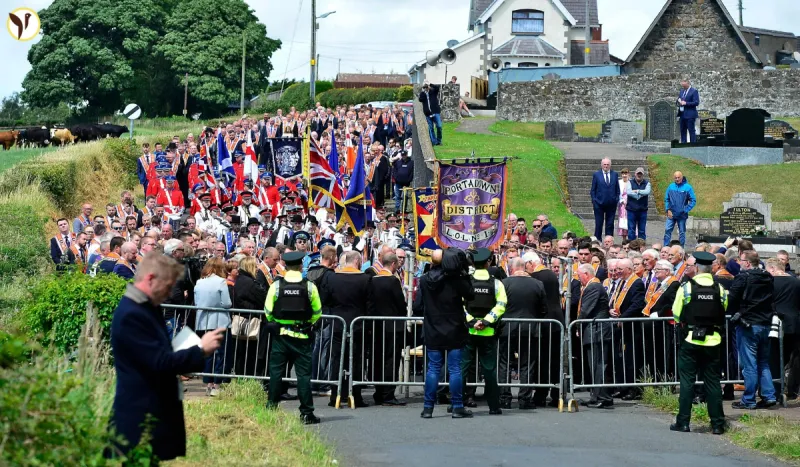
The Parades Commission has ruled that 35 members of the Orange Order may walk along the Garvaghy Road in Portadown at 8am on Sunday 28 September, the first such parade permitted in almost 30 years. The determination places significant conditions on the procession, including dispersal by 9.30am, no bands, no accompanying supporters and only the Portadown District banner on the Garvaghy Road section. The Garvaghy Road Residents' Coalition has launched judicial review proceedings at Belfast High Court and will seek to establish whether PSNI Chief Constable Jon Boutcher misled the Commission. Police have activated mutual aid arrangements, with around 100 officers from Scotland assisting.
The determination, in full
The Parades Commission is the government-appointed body that adjudicates on contentious parades in Northern Ireland. Its ruling was issued on Friday afternoon.
Portadown District of the Orange Order had applied for 60 members to take part. The Commission permitted 35.
The conditions attached are extensive:
- The parade begins at 8am on Sunday
- It must disperse from Carleton Street Orange Hall no later than 9.30am
- Only the Portadown District banner may be carried or displayed during the Garvaghy Road section
- No bands may participate
- No supporters are to accompany the parade, or congregate along the route or in the vicinity of homes on the Dungannon Road and Drumcree Road
The Garvaghy Road section of this parade has been prohibited since 1998.
The Parades Commission has ruled that an Orange Order parade at Drumcree can go ahead this weekend - but with some restrictions.
— BBC News NI (@BBCNewsNI) September 25, 2026
Read more here: https://t.co/nrI7J7XlVn pic.twitter.com/y0ulXJgKAI
What each side has said
Portadown District issued a statement on Saturday morning welcoming the fact that the group will "complete its 1998 parade home from Drumcree along its traditional route".
On the restrictions, the district said: "While we are not happy with the further restrictions that have been placed upon us, we will comply fully with the law and the determination."
The Orange Order and the Democratic Unionist Party have framed the decision as an opportunity to right a historic wrong, and the Order's long-standing position has been that the prohibition infringed its right to freedom of assembly.
The Garvaghy Road Residents' Coalition has responded with legal action and public opposition.
Breandán Mac Cionnaith of the Coalition said of the community's reaction: "There's a lot of shock, there's a lot of anger, there's a lot of hurt with people." He added: "There's a clear determination among the community to resist this."
Addressing a crowd outside Belfast High Court on Saturday, he said residents were there to "seek justice for our community in Portadown", and spoke of support drawn from across the island.
Sinn Féin leader Mary Lou McDonald described the Commission's decision as "utterly reckless".
The Prime Minister has appealed to leaders to "work calmly" through the weekend.
The question about the police submissions
At the centre of the residents' legal challenge is what the PSNI told the Commission.
In its determination, the Parades Commission confirmed that the PSNI made both written and oral submissions indicating that, at the time those submissions were made, police "had no information indicating that the parade would result in disorder or violence". The determination also recorded that police were planning for all reasonably likely scenarios, both known and unknown.
The residents' coalition intends to seek to establish whether Chief Constable Jon Boutcher misled the Commission. Mac Cionnaith has said that if this is to be characterised as a small, ordinary demonstration, the Chief Constable will have to explain the position he took.
Judicial review proceedings were launched at the High Court on Friday evening, and hundreds of people gathered outside the court on Saturday in support of the residents. A loyalist activist, Moore Holmes, was also present at the court.
This is not the first legal intervention in the dispute this year. A determination linked to this year's main Drumcree march, which had been banned for almost 30 years, was quashed at Belfast High Court last month.
The policing operation
The PSNI is expected to mount a significant security operation.
Mutual aid arrangements have been activated, under which police services elsewhere in the United Kingdom provide officers to assist. Around 100 officers from Scotland are expected to travel to Northern Ireland to support the operation. The Police Federation has backed the decision to draw in officers from Britain.
A PSNI spokesperson confirmed mutual aid had been activated to assist with planning for the policing operation in Portadown.
What the dispute is about
The Drumcree parade dispute is among the most significant and painful of Northern Ireland's parading conflicts, and understanding Sunday requires understanding what came before it.
Each July, Portadown District of the Orange Order holds a parade from the town centre to Drumcree Church and back. Its traditional return route ran along the Garvaghy Road, an area that is largely nationalist and Catholic.
The stand-off began in 1995. For several summers it required major security operations, produced sustained confrontation, and became the single most visible flashpoint in the parading disputes of that decade.
Twenty-one people, mostly Catholics, were killed by loyalists and the British Army at the height of parading tensions across Northern Ireland between 1996 and 1999.
Among them were three brothers — Richard Quinn, aged 10, Mark Quinn, aged 9, and Jason Quinn, aged 8 murdered by the UVF in 1998. Their deaths are widely regarded as the point at which the Drumcree stand-off broke.
The Parades Commission has prohibited the Garvaghy Road section of the parade since 1998. Portadown Orangemen have campaigned continuously against that prohibition, holding a weekly protest, and in past years have accused the Commission of pandering to a hardline agenda.
Tensions have eased considerably over the intervening decades. Sunday is the first time in almost thirty years that the route has been permitted.
Why it matters beyond Portadown
Parading in Northern Ireland has never been only about routes.
For the Orange Order, the right to walk a traditional route is understood as a matter of civil and religious liberty, and being prevented from doing so is experienced as an erosion of identity and of rights held by a community.
For residents of the Garvaghy Road, a parade passing through their streets against their wishes is understood in the context of what happened during those years, including the deaths of neighbours and the three Quinn children.
Both of those positions are sincerely held by large numbers of people, and the Parades Commission exists precisely because they cannot easily be reconciled. Its function is not to decide who is right but to make determinations that balance competing rights under the law.
That is the framework within which Sunday's decision sits, and it is why the decision is being challenged in court rather than simply accepted or defied.
What happens next
The judicial review. The residents' challenge is before Belfast High Court. Its outcome, and its timing relative to Sunday morning, is the most immediately consequential variable.
The parade itself. Scheduled for 8am Sunday, with dispersal required by 9.30am. Ninety minutes.
The policing operation. Significant, with mutual aid officers in place.
The question to the Chief Constable. Whether the residents' coalition pursues the issue of the PSNI's submissions beyond the immediate proceedings.
What follows. A determination permitting one parade does not settle a dispute that has run for three decades. Whatever happens on Sunday morning, the underlying question of the route returns next July.
Questions readers ask
What has the Parades Commission decided?
That 35 members of Portadown District of the Orange Order may take part in a parade along the Garvaghy Road in Portadown at 8am on Sunday. The application had been for 60 participants. It is the first time the route has been permitted in almost 30 years, the Garvaghy Road section having been prohibited since 1998.
What conditions have been placed on the parade?
The parade must begin at 8am and disperse from Carleton Street Orange Hall no later than 9.30am. Only the Portadown District banner may be carried or displayed during the Garvaghy Road section. No bands may participate. No supporters are to accompany the parade or congregate along the route or in the vicinity of homes on the Dungannon Road and Drumcree Road.
What have the Orange Order said?
Portadown District welcomed the fact that it will complete its 1998 parade home from Drumcree along its traditional route, and said that while it is not happy with the further restrictions placed upon it, it will comply fully with the law and the determination. The Orange Order and the DUP have framed the decision as an opportunity to right a historic wrong.
What have Garvaghy Road residents said?
Breandán Mac Cionnaith of the Garvaghy Road Residents' Coalition described shock, anger and hurt in the community and a clear determination to resist the decision. Addressing supporters outside Belfast High Court, he said residents were seeking justice for their community in Portadown. Sinn Féin leader Mary Lou McDonald called the decision utterly reckless.
Why are residents taking legal action?
The Garvaghy Road Residents' Coalition launched judicial review proceedings at Belfast High Court on Friday evening and intends to seek to establish whether PSNI Chief Constable Jon Boutcher misled the Parades Commission. The Commission's determination recorded that police made written and oral submissions indicating they had no information suggesting the parade would result in disorder or violence.
How is the parade being policed?
The PSNI is expected to mount a significant security operation, and mutual aid arrangements have been activated, under which officers from police services elsewhere in the UK assist. Around 100 officers from Scotland are expected to travel to Northern Ireland. The Police Federation has supported the decision.
What is the Drumcree dispute?
A long-running conflict over the route of an Orange Order parade in Portadown, County Armagh. Each July the Portadown District parades from the town centre to Drumcree Church and back, with its traditional return route running along the largely nationalist Garvaghy Road. The stand-off began in 1995 and required major security operations for several summers.
Who were the Quinn brothers?
Richard Quinn, aged 10, Mark Quinn, aged 9, and Jason Quinn, aged 8, were murdered by the UVF in 1998. They are among 21 people, mostly Catholics, killed by loyalists and the British Army at the height of parading tensions in Northern Ireland between 1996 and 1999. Their deaths are widely regarded as the point at which the Drumcree stand-off broke.