Chlorthalidone Recall: Check One Number on Your Bottle Before You Do Anything Else
A blood pressure medication has been recalled after failing dissolution testing. The exact batch number to check, what the risk actually is, and what to do next.

- Published
- Reading time
- 8 minutes
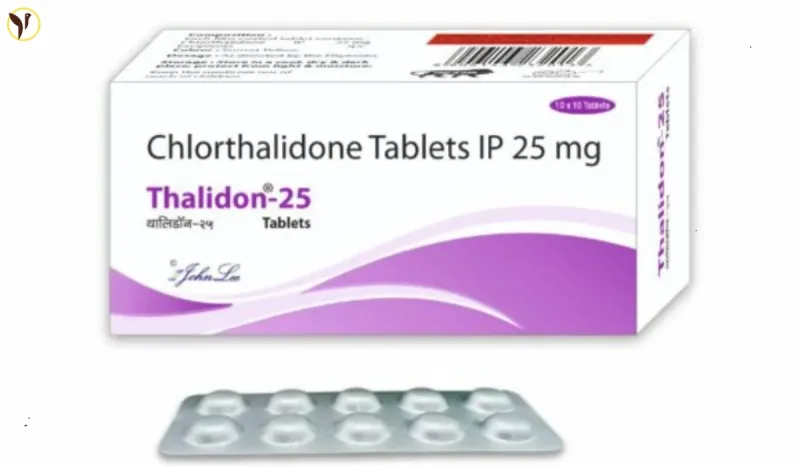
The FDA has classified a nationwide recall of 13,567 bottles of chlorthalidone blood pressure tablets as Class II, after a batch made by Inventia Healthcare failed dissolution testing. The affected product is Chlorthalidone Tablets USP 25 mg, 100-tablet bottles, NDC 64980-599-01, batch RISA24002, expiring 04/2027. The concern is that the tablets may not release their active ingredient properly, making them less effective rather than harmful. If you take chlorthalidone, check the batch number on your bottle and contact your pharmacist but do not stop taking your medication without speaking to a healthcare professional, because stopping blood pressure treatment abruptly carries its own risks.
Go and get the bottle. The number you want is printed on the label, and it takes ten seconds.
RISA24002.
If that is what your bottle says, it is part of the recall. If it says anything else, it is not. That is the entire practical question this story asks of you, and everything below explains why it matters and what to do next.
The thing most people get wrong about a drug recall
The instinct, on reading that a medication has been recalled, is to stop taking it. On this particular drug, that instinct is the only genuinely dangerous thing in the story.
Nothing has been found in these tablets. There is no contaminant, no wrong ingredient, no impurity. The failure is that the tablets may not dissolve at the rate the specification requires, which means a patient may absorb less of the drug than the prescription intends.
The medicine may be weaker than it should be. It is not poison.
Chlorthalidone is a thiazide-like diuretic that lowers blood pressure by helping the body shed excess salt and water, reducing the volume of fluid pressing through the blood vessels. Stop it abruptly and blood pressure can rebound. That is a recognised clinical risk, and it is a considerably larger one than taking a slightly under-strength tablet for the few days it takes a pharmacy to swap your bottle.
So: check the number, keep taking the tablets, ring the pharmacy. In that order.
Your pharmacist holds the dispensing record. They can tell you in under a minute which lot you were given, whether it is affected, and arrange a replacement if it is. If you have thrown the bottle away, or the label has rubbed off, they still have the record.
What was recalled, precisely
Product: Chlorthalidone Tablets, USP, 25 mg Bottle: 100 tablets, prescription only NDC: 64980-599-01 Batch: RISA24002 Expiry: 04/2027 Manufacturer: Inventia Healthcare Limited Volume: 13,567 bottles Distribution: Nationwide, United States
Inventia initiated the recall on 3 September. The FDA classified it Class II on 17 September.
The NDC code identifies the product which drug, which strength, which package size. The batch number identifies the individual production run that failed. Two bottles can carry the same NDC and only one be affected, which is why the batch is the number that decides it.
If you are wondering why you are only hearing about this now, several weeks after the company acted, that gap is normal and worth understanding. A manufacturer files a recall with the FDA, the agency assesses the hazard, and the classification is then published in the agency's enforcement report, which comes out weekly in batches. News coverage follows the enforcement report rather than the original filing. So a recall initiated at the start of September surfaces publicly in the last week of the month, and everybody reports it on the same morning.
It also means the tablets in question have been in circulation, and in people's medicine cabinets, throughout that period.
And there was another one in June
This is where it gets more interesting, and where most coverage stops short.
This is the second chlorthalidone recall Inventia Healthcare has issued this year, for exactly the same failure.
In June the company recalled 11,460 bottles of the same 25 mg medication, in both 100-tablet and 1,000-tablet presentations, after those also failed dissolution specifications. The FDA classified that one Class II as well. Lots reported in connection with it include RISA24001 (NDC 64980-599-01, 100-count) and RISB24002 (NDC 64980-599-10, 1,000-count).
Add them together and roughly 25,000 bottles of one blood pressure medication from one manufacturer have been pulled from the American market this year for the same quality failure.
If you have had a chlorthalidone prescription filled at any point in 2026, check your bottle against all three lot numbers, not just the newest one. Coverage of the September action has largely treated it as an isolated event. It isn't.
Neither Inventia nor the FDA has publicly explained what caused either failure.
🍁 The FDA has classified a nationwide recall of 13,567 bottles of chlorthalidone 25 mg tablets as Class II after the product failed dissolution specifications.
— CTC News (@ctcnewsca) September 29, 2026
🍁 Get full details here 👇 https://t.co/kcsM8w8V8T
What "failed dissolution testing" actually means
Three words that appear in every headline about this and are explained in almost none of them.
A tablet is a delivery system. The active ingredient has to break free of the compressed powder, binders and coating, and go into solution at a particular rate, so the body absorbs the intended amount over the intended period. Dissolution testing measures this directly: tablets are placed in a liquid medium under controlled conditions of temperature and agitation, and the amount of drug released is measured at intervals.
The specification sets a threshold a defined percentage released by a defined time. A batch that falls short has failed.
What that means in practice is that the release profile is less predictable than it should be. A patient might absorb less of the drug, or absorb it more slowly than the dosing schedule assumes.
What it does not mean is that anyone has been harmed. A dissolution result is a laboratory measurement of a production batch. It says nothing about how much medicine reached any individual bloodstream, and nothing about whether anybody's blood pressure actually moved.
That distinction is why this is a Class II recall rather than a Class I.
What the FDA's classes mean
Class I — a reasonable probability of serious adverse health consequences or death. This is the serious one.
Class II — may cause temporary or medically reversible health problems, or the probability of serious harm is remote.
Class III — unlikely to cause any adverse health consequence.
Class II on a blood pressure medication is a real concern rather than a formality. A patient taking an underperforming antihypertensive may have less well-controlled blood pressure than their prescription implies, and sustained high blood pressure does damage over time. But the classification also says plainly that the tablets are not expected to cause harm in themselves.
Why you wouldn't have noticed
Here is the uncomfortable part, and the reason this class of recall matters more than it sounds.
High blood pressure is almost entirely asymptomatic. People do not feel it. That is precisely why it is treated with daily medication and monitored with a cuff rather than by how a patient feels.
Which means a person taking tablets from an underperforming batch would have no sensation of anything being wrong. No headache, no dizziness, nothing. Their readings would simply be higher than their treatment should be delivering, and unless they were measuring, nobody would know.
If you monitor at home and your numbers have drifted upward over recent months without obvious explanation, this recall is worth raising with your doctor. Do not adjust anything yourself just mention it.
And if you experience severe headache, chest pain, shortness of breath, vision changes or confusion, seek medical attention promptly. That advice holds regardless of any recall.
Where this leaves you
Your batch does not match. Nothing to do. This recall covers one production run from one manufacturer.
Your batch matches. Ring your pharmacy for a replacement, and keep taking your current tablets until the new ones are in your hand unless a clinician tells you otherwise. A slightly weak dose beats no dose.
You are not sure. Ring the pharmacy anyway. They have the record and the call is short.
You already threw them out. Get a replacement prescription rather than going without. Missed days are the risk, not the tablets.
You take chlorthalidone from a different manufacturer. Unaffected.
What happens next
Two recalls from the same manufacturer for the same failure in four months is a pattern rather than an accident, and it is the thing worth following.
The FDA updates its enforcement report database weekly, and any expansion of either action would appear there first. A statement from Inventia Healthcare explaining the root cause has not been issued and would be the most informative thing to emerge.
For anyone taking this medication, the useful follow-up is simpler and closer to home: the next reading on your own blood pressure monitor.
This article is general health information and not medical advice. Do not stop, change or adjust any prescribed medication without speaking to a qualified healthcare professional. If you have concerns about your treatment, contact your pharmacist or doctor.
Questions readers ask
Which chlorthalidone batch has been recalled?
Chlorthalidone Tablets, USP, 25 mg, in 100-tablet bottles, with NDC 64980-599-01, batch number RISA24002 and an expiration date of 04/2027, manufactured by Inventia Healthcare Limited. The recall covers 13,567 bottles distributed nationwide across the United States.
Should I stop taking my chlorthalidone?
Not without speaking to a healthcare professional. The identified problem is that the tablets may not release their active ingredient properly, which could make them less effective rather than harmful. Stopping blood pressure medication abruptly carries its own risks. Check the batch number on your bottle, contact your pharmacist, and continue your medication unless advised otherwise.
How do I know if my medication is affected?
Check the batch number printed on your bottle against RISA24002. The NDC code identifies the product, but the batch number identifies the specific production run that failed testing. If you no longer have the original bottle or the label is unclear, your pharmacy holds the dispensing record and can check for you.
What does a Class II recall mean?
The FDA uses Class II for situations where use of or exposure to a product may cause temporary or medically reversible adverse health consequences, or where the probability of serious adverse health consequences is remote. Class I is the most serious classification and Class III the least.
What is dissolution testing?
A laboratory test measuring how a tablet breaks down and releases its active ingredient over time under controlled conditions. A failure means the batch does not meet the required specification, so the drug's release may be less predictable than intended and the body may absorb less of it. It does not indicate how much medicine any individual patient absorbed or whether their condition was affected.
Was there an earlier chlorthalidone recall this year?
Yes. In June 2026, Inventia Healthcare recalled 11,460 bottles of the same 25 mg medication in both 100-tablet and 1,000-tablet sizes, also for failing dissolution specifications, and the FDA also classified that recall as Class II. Lots reported in connection with that action include RISA24001 (NDC 64980-599-01) and RISB24002 (NDC 64980-599-10).