America Is Leaving The Region: What Went Wrong With Its Big Plans?
America is reducing and reshaping its military presence in the Middle East. From Iraq withdrawal to Gulf base concerns, here is what went wrong with its big regional plans.

- Published
- Reading time
- 12 minutes
For more than two decades, the United States has maintained a major military and political presence across the Middle East.
Iraq became one of the biggest examples of America's long-term involvement. U.S. forces entered the country in 2003 and later returned in a different role to fight ISIS. Washington also built a large military network across Gulf countries, including bases and other facilities that supported operations in the wider region.
But in 2026, that strategy is changing.
The United States is preparing to complete its military withdrawal from Iraq by the end of September. At the same time, the Pentagon has been examining whether the American military footprint in the Persian Gulf should become smaller or more dispersed after the damage suffered during the Iran war.
This does not mean that America is completely leaving the Middle East.
Instead, the current developments suggest a possible shift from a large, visible military presence toward a different model based on smaller deployments, air and missile defence, intelligence, naval power, technology and partnerships with regional countries.
The bigger question is: Why did America's earlier plans fail to produce the stable regional order Washington had hoped for?
What Is Happening To America's Middle East Presence?
The clearest development is happening in Iraq.
The United States is on track to withdraw its remaining military forces from Iraq by the end of September 2026. The withdrawal marks the end of a U.S. military presence that began with the 2003 invasion, although the nature and size of that presence changed significantly over the years.
The U.S.-led coalition's military mission in Iraq is also scheduled to conclude by September 30, according to Iraqi military officials reported in September.
But Iraq is only one part of the story.
The Pentagon has also been examining its wider military footprint in the Gulf following months of fighting with Iran and attacks that damaged American facilities.
A Washington Post report said the Defense Department was considering whether to rebuild some damaged bases and whether a smaller U.S. military presence could provide sufficient security in the future.
Is America Really Leaving The Middle East?
Not completely.
This is an important distinction.
America still has major strategic interests in the region:
- Protection of international shipping
- Security of Gulf energy routes
- Counterterrorism
- Support for regional partners
- Deterrence against Iran
- Protection of U.S. military personnel
- Intelligence and surveillance
- Defence of Israel and other regional partners
- Maintaining access to important military facilities
The United States has also continued military operations connected to Iran and the Strait of Hormuz.
The White House has said American forces have been keeping shipping routes open in the Strait of Hormuz and maintaining control over important maritime routes.
So, the phrase "America is leaving the region" is better understood as a description of a possible change in America's military footprint, rather than a complete American exit.
Why Was The Middle East So Important To America?
The Middle East became central to U.S. foreign policy for several reasons.
Energy Security
For decades, the Gulf has been one of the world's most important energy-producing regions.
Even though the United States has become a major energy producer itself, instability around Gulf shipping routes can still affect global oil prices and the world economy.
The Strait of Hormuz is particularly important because large quantities of oil and gas pass through the waterway.
Counterterrorism
After the September 11 attacks, fighting terrorist organisations became one of Washington's major foreign-policy priorities.
The U.S. military became deeply involved in Afghanistan and Iraq and later launched operations against ISIS.
The campaign against ISIS created another long-term American military role in Iraq and Syria.
Iran
Iran has been one of America's biggest strategic concerns in the Middle East.
Washington has long opposed Iran's nuclear ambitions and has also criticised Tehran's support for armed groups across the region.
The U.S. government has repeatedly argued that Iran's missile capabilities, nuclear programme and regional networks create security risks for American forces and partners.
Regional Alliances
America has built long-term security relationships with countries such as Saudi Arabia, the United Arab Emirates, Qatar, Bahrain and Jordan.
These relationships have included arms sales, military cooperation, intelligence sharing and access to military facilities.
For years, the American security presence was therefore treated as an important part of the regional balance.
What Went Wrong With America's Big Plans?
There is no single reason.
The problems developed over many years and across different administrations.
Several major issues stand out.
The Iraq War Did Not Produce The Stable Iraq Washington Expected
The 2003 invasion removed Saddam Hussein's government.
But the following years brought insurgency, sectarian conflict, political instability and the rise of extremist groups.
The emergence of ISIS became one of the clearest examples of how the post-2003 security situation developed in unexpected ways.
America eventually returned troops to Iraq as part of the campaign against ISIS.
Now, more than two decades after the invasion, the U.S. military is preparing to leave.
The current withdrawal therefore represents a major change from the original American strategy in Iraq.
Military Power Could Not Solve Every Political Problem
One of the major lessons from America's Middle East involvement is that military strength alone cannot easily solve political disputes.
Military operations can destroy weapons, remove governments or weaken armed groups.
But rebuilding political institutions is much harder.
Iraq, Syria, Yemen and Lebanon all have complex political and sectarian structures.
External military power can influence those countries, but it cannot easily create lasting political settlements.
This has made long-term U.S. involvement more complicated and expensive.
Iran Remained A Major Regional Power
Another problem was Iran's ability to continue influencing the region despite years of U.S. pressure.
Iran developed relationships with armed groups and political organisations across the Middle East.
These networks gave Tehran ways to project influence without relying only on conventional military forces.
That became particularly important during the 2026 conflict.
The war showed that even a country facing overwhelming American military power could still threaten U.S. facilities and regional infrastructure through missiles, drones and other asymmetric capabilities.
Reports in September said Iranian attacks had damaged American facilities across several Gulf countries.
America's Huge Military Bases Became Vulnerable
For years, large American bases were a major part of Washington's strategy.
But the 2026 Iran war exposed a major weakness in this model.
Several U.S. military facilities came under attack.
The damage has led Pentagon officials to consider whether the old model of large, concentrated bases remains the best approach.
The Washington Post reported in August that the Pentagon was evaluating whether to maintain the same level of military presence in the Persian Gulf after the war.
This is an important reason behind the current debate about America's future military footprint.
Regional Countries Want More Control Over Their Own Security
Gulf countries have traditionally relied heavily on American security guarantees.
But recent conflicts have encouraged some regional governments to think about their own diplomatic and defence options.
Reuters reported in September that Gulf states were increasingly considering independent diplomacy with Iran as the conflict and attacks on energy infrastructure continued.
This does not mean Gulf countries are abandoning America.
Instead, many appear to be looking for additional options.
The region's governments want security relationships with Washington while also keeping room to negotiate with other major powers.
America's Priorities Have Changed
The United States is also looking at other parts of the world.
China has become a major strategic competitor.
The Indo-Pacific has become increasingly important to American defence planning.
Europe, NATO, Russia and global economic competition also require U.S. attention.
This creates a basic strategic question for Washington:
How much military power should remain permanently stationed in the Middle East when America has other major global challenges?
The current debate over force posture is partly connected to this wider question.
What Happened To The "Big American Plan"?
For years, Washington's approach was built around a strong military presence.
The basic idea was that American military power could:
- Deter Iran.
- Protect shipping.
- Support allies.
- Fight terrorist groups.
- Protect energy supplies.
- Prevent major regional wars.
- Maintain America's influence.
Some of these objectives were achieved at different times.
But the region never became permanently stable.
Conflicts continued in different forms.
Iran remained influential.
Armed groups remained active.
The Israeli-Palestinian conflict continued.
Yemen became another major security problem.
And Iraq required years of American military involvement.
The result is that Washington is now reconsidering how much permanent military infrastructure is actually necessary.
The 2026 Iran War Changed The Calculation
The 2026 conflict with Iran is particularly important for understanding the current shift.
The war demonstrated both the power and the limits of American military strength.
The United States was able to use enormous military capabilities against Iran.
But the conflict also created risks for American bases, regional allies, energy infrastructure and international shipping.
The Strait of Hormuz became a central battlefield in the wider confrontation.
The conflict also disrupted oil exports and increased pressure on global energy markets. Reuters reported that the fighting and attacks around the region had created serious uncertainty for energy and shipping routes.
This created a difficult calculation for Washington.
America could maintain a large military presence to protect its interests.
But a larger presence also creates more targets and can increase the risk of escalation.
Why The Pentagon Is Considering A Smaller Presence
The Pentagon's reported review is not simply about saving money or abandoning the Middle East.
It is also about changing the way American forces operate.
One possible direction is:
Smaller bases
Instead of relying heavily on a few very large installations, the U.S. could use a more distributed network.
More air and missile defence
Advanced defence systems could become more important as drones and missiles become more capable.
More naval power
Ships can move between areas and are not tied to one permanent land base.
More intelligence
Satellite systems, drones and intelligence networks can provide information without requiring tens of thousands of troops on the ground.
More regional responsibility
Washington could encourage Gulf partners to take a larger role in their own defence.
A September analysis by Chatham House said the war could lead Washington toward fewer and less visible bases, more dispersed deployments, precision capabilities and greater use of missile defence and technology.
What Happens To Iraq After America Leaves?
Iraq will face a new security environment.
The Iraqi military and security forces will have to carry more responsibility for internal security.
The end of the coalition mission also raises questions about ISIS and other extremist threats.
The U.S. has spent years helping Iraqi forces build military and security capabilities.
However, reports have continued to identify challenges involving the professionalism, coordination and readiness of some Iraqi and Kurdish forces. A U.S. government oversight report, for example, highlighted unresolved problems involving Peshmerga command structures, training and sustainment.
The U.S. withdrawal therefore does not mean that all security problems have disappeared.
It means Washington is changing the form of its involvement.
What About The Gulf Countries?
The Gulf is likely to remain strategically important to Washington.
Countries such as Saudi Arabia, Qatar, the UAE, Bahrain and Kuwait have strong economic and security relationships with the United States.
But the regional security picture is changing.
Gulf governments have seen their infrastructure targeted during the Iran conflict.
They have also seen that military escalation can quickly affect oil exports, shipping and investment.
As a result, Gulf states may increasingly combine:
- American defence cooperation
- Their own military capabilities
- Regional diplomacy
- Relations with China
- Relations with other major powers
- Direct engagement with Iran
This could produce a more complicated regional balance than the old model of heavy dependence on Washington.
Does This Mean China And Russia Will Replace America?
Not automatically.
China and Russia already have relationships in the Middle East, but replacing the entire American security system would be extremely difficult.
America still has:
- Major military capabilities
- Long-standing Gulf partnerships
- Advanced intelligence systems
- Naval power
- Air power
- Defence technology
- Extensive diplomatic relationships
- Economic links
China has increased its economic and diplomatic influence, while Russia has maintained relationships with countries such as Iran and Syria.
But a complete transfer of regional security responsibility from America to China or Russia has not happened.
The more likely development is a more diversified regional system, where Middle Eastern countries work with several major powers rather than relying on only one.
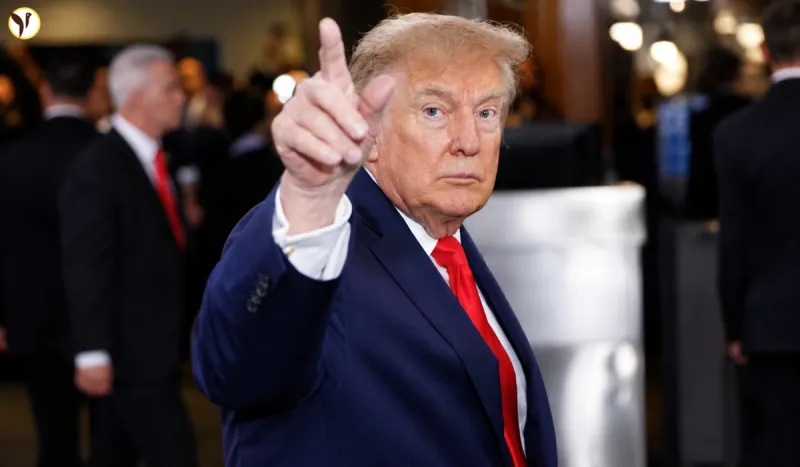
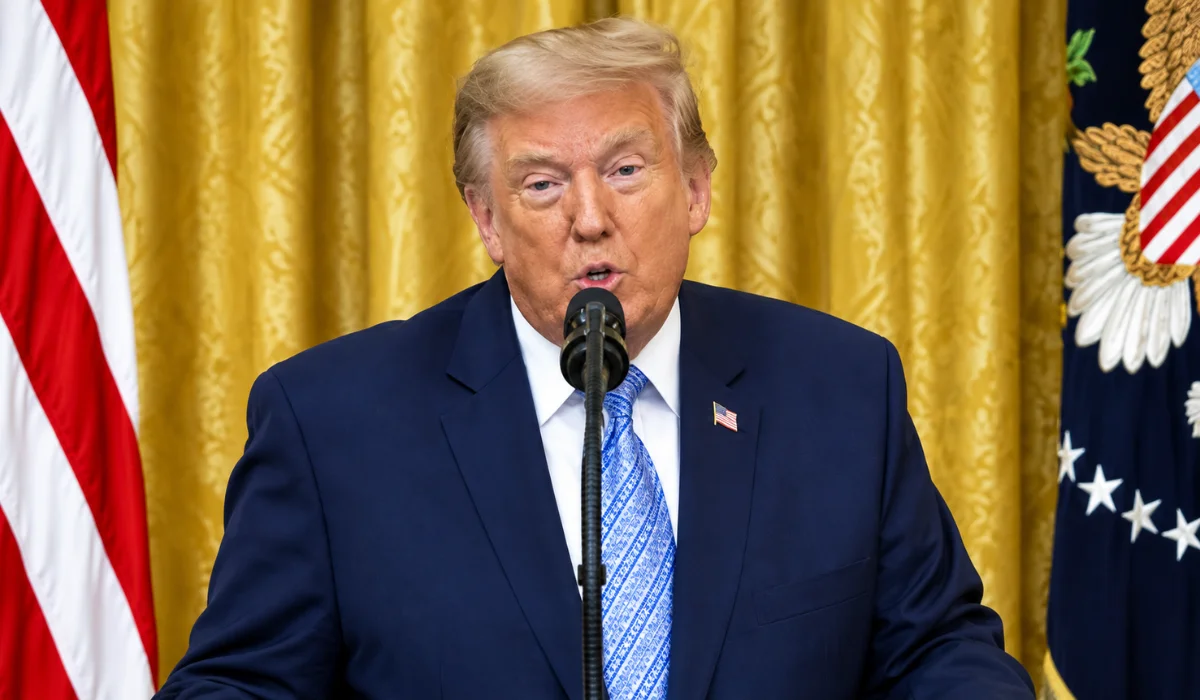
Is Trump's "America First" Policy Behind The Shift?
Trump's foreign policy places greater emphasis on American interests and on avoiding what his administration sees as unnecessary long-term commitments.
At the same time, the current administration has not adopted a policy of simply withdrawing from global affairs.
The White House continues to describe American military power as an important tool of foreign policy.
In his September 22 United Nations speech, Trump said the United States would continue using American strength to confront threats and protect U.S. interests.
This creates an important distinction:
America may be reducing certain long-term deployments while still using military power aggressively when Washington considers a direct strategic interest to be involved.
What Could America's New Strategy Look Like?
The United States may not disappear from the Middle East.
Instead, its role could become more selective.
Washington could focus on a few core interests:
Protecting shipping
The U.S. Navy could continue to play a major role in protecting international waterways.
Preventing a nuclear-armed Iran
Iran's nuclear programme remains one of Washington's central concerns.
Supporting regional partners
America can continue providing weapons, intelligence and defence technology without maintaining the same number of troops.
Fighting terrorist threats
The U.S. could retain the ability to conduct targeted operations when necessary.
Reducing vulnerability
Smaller and more dispersed military deployments could reduce the risk of one major attack damaging a large U.S. installation.
What Does This Mean For The Middle East?
The biggest consequence could be greater regional responsibility.
For decades, America was often viewed as the ultimate security guarantor in the Gulf.
If Washington reduces its permanent footprint, regional governments may have to make more independent security calculations.
That could mean more:
- Regional defence cooperation
- Arms purchases
- Diplomacy with Iran
- Cooperation among Gulf countries
- Relations with China
- Relations with European powers
The region may therefore become less dependent on a single outside power.
But it could also become more complicated because several countries would have to balance their relationships with different major powers.
What Does It Mean For The World Economy?
The Middle East remains extremely important to global energy markets.
Any major disruption in the Strait of Hormuz or the Red Sea can affect:
- Oil prices
- Shipping costs
- Insurance costs
- Inflation
- Global trade
- Airline and transport expenses
The 2026 conflict has already demonstrated how quickly military tensions can spread into global economic problems.
That means even if America reduces its military presence, Washington will continue to have strong economic reasons to monitor developments in the region.
Questions readers ask
Is America leaving the Middle East?
No, not completely. The United States is withdrawing its military forces from Iraq, while the Pentagon is also considering changes to the wider Gulf military presence. America still has major strategic, economic and security interests in the region.
Why is the U.S. leaving Iraq?
The U.S. and Iraq had already agreed on a phased transition of the international coalition's military mission. The current plan is for the U.S. military to complete its withdrawal from Iraq by the end of September 2026.
What went wrong with America's Middle East strategy?
There was no single failure. Long wars, political instability, the rise of extremist groups, Iran's continuing regional influence and the vulnerability of large military bases all contributed to the reassessment of U.S. policy.
Did America lose influence in the Middle East?
American influence remains substantial, particularly because of its military capabilities, alliances, defence technology and economic relationships. However, regional countries are also developing stronger relationships with other powers and pursuing more independent diplomacy.
Why are U.S. bases being reconsidered?
The 2026 conflict with Iran exposed the vulnerability of some American military facilities to missile and other attacks. This has encouraged Pentagon officials and analysts to examine whether large, concentrated bases remain the best model.