RBI Hiked Repo Rate to 5.50%: What It Means for Your EMI
The RBI has raised the repo rate by 25bps to 5.50%, its first hike since February 2023, and shifted to calibrated tightening. What it means for EMIs, FDs and borrowers.

- Published
- Reading time
- 8 minutes
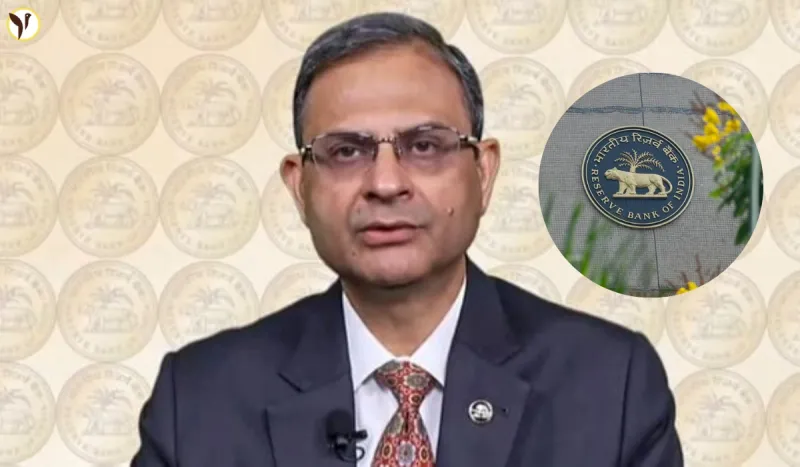
The Reserve Bank of India has raised the repo rate by 25 basis points to 5.50%, its first increase since February 2023, and shifted its policy stance from neutral to calibrated tightening. All six Monetary Policy Committee members backed the hike and four supported the change in stance. Governor Sanjay Malhotra said rate cuts are off the table in the near term and that future policy action can only be a hike or a pause, depending on how growth and inflation evolve. The decision reverses part of the 125 basis points of cuts delivered through 2025, which had taken the repo rate from 6.50% to 5.25%, where it had stayed for four consecutive meetings. Borrowers on floating-rate loans will see EMIs rise at their next reset.
The sentence that matters more than the number
Twenty-five basis points is modest. The guidance attached to it is not.
Malhotra said that future policy action can only be a rate hike or a pause. Not a cut. The MPC stated that rate cuts are off the table in the near term.
Central banks almost never speak this plainly. Forward guidance is usually hedged into meaninglessness — data-dependent, evolving outlook, we will assess. An explicit statement that one of the three available options has been removed is a deliberate signal, and it is aimed squarely at anyone who has been waiting for borrowing to get cheaper.
If you have been deferring a loan, a purchase or a refinancing on the assumption that rates would come down, that assumption is now contradicted by the Governor of the Reserve Bank. Plan on the basis of 5.50% or higher, not lower.
What was decided
| Repo rate | Raised 25bps to 5.50% |
| Stance | Changed from neutral to calibrated tightening |
| Vote on the hike | Unanimous, 6 of 6 |
| Vote on the stance | 4 of 6 |
| Last hike before this | February 2023 |
| Announced | 10am IST, Wednesday 7 October 2026 |
The MPC met from 5 to 7 October as part of its bi-monthly review.
Why "calibrated tightening" is not jargon worth skipping
The stance is the RBI's statement of intent, and the three positions mean genuinely different things.
Accommodative means the next move is more likely to be a cut than a hike. Policy is leaning toward supporting growth.
Neutral means either direction is open. This is where the RBI has been for four meetings.
Calibrated tightening means the next move is a hike or nothing. Cuts are excluded by the stance itself.
So the stance change is doing the same work as Malhotra's sentence, formally. The RBI has not simply raised rates once; it has told the market which direction the next move comes from.
For borrowers, the practical translation is that this may not be a one-off.
How the hike reaches your EMI, and when
This is the part most coverage gets wrong by implying it happens immediately.
Since October 2019, most floating-rate retail loans in India — home, auto and personal — have been linked to an external benchmark, usually the repo rate itself. That arrangement is called the External Benchmark Lending Rate, or EBLR.
When the repo rate moves, EBLR-linked loans move with it, fully and automatically. But not on the day. Loans reset on a fixed cycle, typically every three months, as specified in your loan agreement.
What that means in practice:
If your reset date falls next week, you will feel the full 25 basis points almost immediately.
If you reset in January, you pay your current EMI until then.
Check your loan agreement for your reset frequency and date. This is the single most useful thing you can do today, and almost nobody does it.
If your loan is on MCLR — an older internal benchmark still used for some loans — transmission is slower and partial, because MCLR reflects a bank's own cost of funds rather than the repo directly. Loans sanctioned before October 2019 and some business loans fall into this category.
If your loan is fixed-rate, nothing changes until your fixed period ends.
The choice your bank will offer you, and what it costs
When your EMI rises, most lenders present two options. They are not equivalent, and the difference is substantial.
Option one: keep the EMI, extend the tenure. Your monthly outgo stays the same and the loan runs longer. This is what most banks apply by default, because it requires no action and no customer distress.
Option two: keep the tenure, raise the EMI. You pay more each month and the loan ends when it was always going to.
The second is almost always cheaper in total interest, often dramatically so, because interest accrues over the life of the loan. Extending tenure on a long-dated home loan can add years and a very large amount of total interest for the sake of a few hundred rupees a month.
Banks are required to offer you the choice. Under RBI rules on floating-rate loan resets, lenders must give borrowers the option to switch between increasing the EMI, extending the tenure, or both, and must communicate this. If your bank simply extends your tenure without asking, you are entitled to ask for the alternative.
A third option exists and is underused. Making a part-prepayment at the point of reset reduces the principal before the higher rate is applied to it. Most floating-rate home loans carry no prepayment penalty for individual borrowers, so even a modest lump sum at reset is more valuable than the same amount paid later.
#WATCH | RBI hikes policy repo rate by 25 basis point to 5.5% https://t.co/92jeQuC3wz
— ANI (@ANI) October 7, 2026
If you have deposits, this is good news
Rate coverage is written almost entirely for borrowers, and savers are treated as an afterthought. They should not be.
Higher policy rates generally push deposit rates up. Fixed deposit rates, savings account rates and small savings instruments all tend to improve in a tightening cycle, and senior citizens — who typically receive an additional 0.25% to 0.50% on FDs — benefit most.
Two things worth knowing:
Banks raise lending rates faster than deposit rates. That is consistent across cycles. Do not assume your FD rate has moved just because the repo has.
Laddering beats locking. In a cycle where the next move is a hike or a pause, putting everything into one long FD today means missing higher rates later. Splitting deposits across different maturities lets you reinvest at higher rates as they arrive.
If you hold meaningful deposits, comparing rates across banks after a policy change is one of the few genuinely easy financial wins available, and small finance banks frequently offer materially more than large public sector banks.
Why the RBI did this
Three forces, all pulling the same way.
Inflation has been rising. Price stability is the MPC's primary mandate, and a central bank that has cut 125 basis points is unusually sensitive to inflation re-accelerating.
Crude oil prices are elevated. India imports the large majority of its oil, so energy costs feed into transport, manufacturing and food prices with a lag, and they also widen the current account deficit.
Major global central banks are tightening. The Reserve Bank of Australia raised its cash rate to 4.60% last week in its fourth hike of the year. UK mortgage rates have climbed to three-year highs on expectations of a Bank of England increase. When global rates rise and India's do not, the interest rate differential narrows, capital tends to flow out, and the rupee comes under pressure.
Analysts had also pointed to banking system liquidity, credit growth and the effectiveness of policy transmission as factors the MPC would weigh — essentially, whether previous rate changes had actually reached lending and deposit rates.
The RBI has indicated credit growth may moderate as this hike transmits through the system, which is part of the intention rather than a side effect.
Where this sits in the cycle
The arc over two years is worth seeing whole.
The repo rate stood at 6.50% entering 2025. Through that year the RBI cut by a cumulative 125 basis points, taking it to 5.25%. It then held at 5.25% for four consecutive meetings, through the August review, maintaining a neutral stance.
Today it moved to 5.50%.
So one of those five cuts has now been given back, and the stance says more may follow. Borrowers who took loans during the easing cycle, assuming rates had peaked and would drift lower, are now on the other side of that assumption.
What to do this week
Find your loan agreement and check your reset date and frequency. Everything else depends on knowing when this reaches you.
Decide between EMI and tenure before your bank decides for you. Ask your lender explicitly. Extending tenure is the expensive default.
If you have surplus funds, consider a part-prepayment at reset rather than after it.
Check what rate you are actually paying. Existing borrowers are frequently on worse terms than new customers at the same bank. Ask about a rate conversion, and compare the fee against the saving.
If you have deposits, compare FD rates across banks, and consider laddering rather than locking everything at today's rates.
If you were waiting for cuts before borrowing, the Governor has answered that question directly. Plan accordingly.
What to watch
Bank announcements over the coming days. Lenders typically revise EBLR within days of a policy change. Your own bank's notification is the number that matters, not the headline.
Deposit rate movements, which will lag.
The December MPC meeting, where the stance means the choice is between another hike and a pause.
Inflation prints between now and then. They determine which of those two the MPC chooses.
This article is information only and is not financial advice. The impact of a repo rate change depends on your loan type, benchmark, reset cycle and lender. Consider speaking to your bank or a qualified financial adviser before making decisions about borrowing, prepayment or deposits.
Questions readers ask
What is the repo rate now?
5.50%. The Reserve Bank of India's Monetary Policy Committee raised it by 25 basis points on 7 October 2026, the first increase since February 2023. All six members voted for the hike.
What is the repo rate?
The rate at which the Reserve Bank of India lends short-term funds to commercial banks. It is the central bank's primary tool for influencing borrowing costs across the economy, because it affects what banks pay for funds and therefore what they charge borrowers and pay depositors.
What does calibrated tightening mean?
It is the RBI's policy stance, indicating that the next move will be either a rate hike or no change, with cuts excluded. The previous stance was neutral, under which either direction was open. Four of the six MPC members backed the change in stance.
Will the RBI cut rates again?
Not in the near term, according to the MPC. Governor Sanjay Malhotra said rate cuts are off the table and that future policy action can only be a rate hike or a pause, depending on how growth and inflation evolve.
How much will my EMI increase?
That depends on your loan amount, remaining tenure, current rate and loan type. A 25 basis point increase is relatively small in itself, but it applies to the full outstanding principal. Your bank will communicate your revised EMI at your next reset date, and that figure is the one to budget against rather than any general estimate.