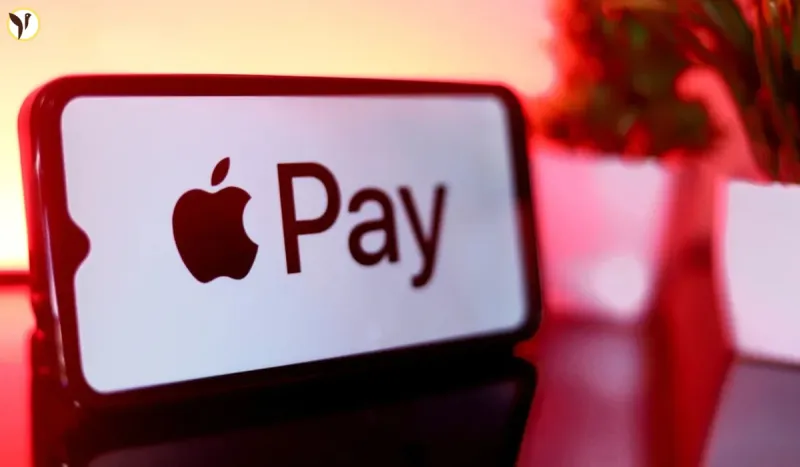
Apple Pay Is Live in India: It Works With One Bank's Credit Cards, and Not With UPI at All.
Apple Pay has launched in India with eligible Axis Bank Visa and Mastercard credit cards. No debit cards, no RuPay, no UPI. How to set it up and what actually works.

- Published
- Reading time
- 6 minutes
Apple Pay has launched in India, but only with eligible Axis Bank Visa and Mastercard credit cards. Debit cards are not supported, RuPay is not supported, and UPI is not supported, which means Apple Pay does not replace Google Pay, PhonePe or Paytm for everyday scan-and-pay transactions. HDFC Bank, ICICI Bank and SBI Card are absent at launch while negotiations over Apple's commercial terms continue, according to TechCrunch, which first reported the rollout. There are no user fees and no transaction limits, and the service works for contactless payments in store, online, on Apple Watch and on iPad.
Check this before you open the Wallet app
A great deal of the coverage today refers to supported credit and debit cards. That is wrong, and it will waste a lot of people's time.
| What you have | Works with Apple Pay? |
|---|---|
| Axis Bank Visa credit card | Yes, if eligible |
| Axis Bank Mastercard credit card | Yes, if eligible |
| Credit card from any other bank | No |
| Any debit card | No |
| Any RuPay card | No |
| UPI | No |
That is the entire list. If you do not hold an eligible Axis Bank credit card on Visa or Mastercard, there is nothing for you to set up today.
The scale of what is excluded is worth stating. Reserve Bank of India figures have put credit cards in circulation at around 88 million against roughly 974 million debit cards. Apple Pay has launched into the smaller of those two numbers, and then into one bank's share of it.
It does not replace PhonePe or Google Pay
This is the second misunderstanding worth heading off, and it is structural rather than temporary.
UPI is a bank-to-bank instant payment system. You scan a QR code, the money moves from your account to theirs, and no card is involved. It is how most digital payments in India actually happen, at every scale from a chaiwala to a hospital bill.
Apple Pay is card-based. It stores a card in the Wallet app and presents it contactlessly at a terminal, or uses it for online checkout. It requires the card issuer to have integrated with Apple, and it requires the merchant's terminal to accept contactless card payments.
Those are different systems doing different jobs. Apple Pay is not competing with PhonePe at a vegetable stall, because the vegetable stall has a QR code and not a card terminal.
If you have an eligible Axis card, Apple Pay is an additional option for places that take cards. It is not a substitute for the app you already use.
Where it will and will not work
Merchants and payment terminals need to support Apple Pay, which means acceptance is likely to be uneven during the initial rollout even for customers holding supported cards.
In practice, that points to large retail, restaurants, fuel stations, hotels and organised retail chains with modern contactless terminals the places already taking tap-to-pay cards. Smaller merchants running on QR codes alone will not be part of this.
Online, Apple Pay works at checkout on websites and in apps that offer it as a payment method.
What it costs
Nothing. There are no Apple Pay user fees and no transaction limits imposed by Apple.
Your existing card terms still apply, which includes your rewards. Card rewards continue to accrue on Apple Pay transactions, so using it does not cost you points or cashback you would otherwise have earned.
How to set it up
Two routes, both short.
Through Apple Wallet. Open the Wallet app on your iPhone, tap the plus symbol, select Debit or Credit Card, and either scan your Axis Bank card with the camera or enter the details manually. You will be asked to verify with Axis Bank, usually by OTP. Once verified, the card appears in Wallet and is ready.
Through the Axis Bank app. The latest version of the Axis Bank app allows you to add an eligible card to Apple Wallet directly from within the app, which avoids re-entering card details.
To pay in store, double-click the side button on an iPhone with Face ID, authenticate, and hold the phone near the contactless reader. On an Apple Watch, double-click the side button and hold the watch face near the reader.
For online payments, select Apple Pay at checkout and confirm with Face ID, Touch ID or your passcode.
If your card is not eligible, the Wallet app will tell you at the verification step rather than after setup.
Which devices
iPhone in-store contactless and online payments. Apple Watch in-store contactless and online payments. iPad apps and online payments. Mac not yet, described as coming.
Why HDFC, ICICI and SBI are missing
This is the more interesting part of the story, and it is not a technical limitation.
TechCrunch reported that Apple's commercial terms have emerged as a sticking point with some of India's largest banks, and that HDFC Bank, ICICI Bank and SBI Card are not supporting Apple Pay at launch while negotiations continue. Apple, Axis Bank, HDFC Bank, ICICI Bank and SBI Card did not respond to requests for comment.
Apple typically takes a share of interchange on Apple Pay transactions from issuing banks. In markets with high interchange fees that is absorbable. Indian interchange is considerably thinner, and UPI itself is largely free to merchants and consumers, which makes any per-transaction cost harder for an Indian bank to justify.
That is the commercial tension underneath the small launch, and it is the reason to watch what happens next rather than treat this as finished.
Why it took this long
Apple Pay launched in the United States in 2014 and has been in most major markets for years. Tim Cook said publicly as far back as 2016 that Apple intended to bring it to India.
Several things made India difficult. UPI arrived and became dominant, removing much of the consumer problem Apple Pay solves elsewhere. Card penetration remained low relative to population. Regulatory requirements, including data localisation rules requiring payment data to be stored in India, added complexity. And Apple's share of the Indian smartphone market has historically been small, though it has grown substantially alongside its manufacturing expansion in the country.
Samsung Pay, by contrast, launched in India in 2017 with Axis, HDFC, ICICI, SBI and Standard Chartered on board from the start.
What to watch
Additional banks. Apple has indicated more banks and cards will be supported over time. HDFC, ICICI and SBI Card are the three that would meaningfully change the picture.
Debit card support. With roughly 974 million debit cards in circulation against 88 million credit cards, debit is where the volume is. Its absence is the single biggest limitation on the launch.
RuPay. India's domestic network is heavily promoted by the government and is not supported. Whether that changes is partly a commercial question and partly a policy one.
Merchant acceptance. How quickly terminals are enabled will determine whether eligible cardholders actually find places to use it.
Mac support, described as coming.
Questions readers ask
Which cards work with Apple Pay in India?
Only eligible Axis Bank credit cards on the Visa and Mastercard networks. Credit cards from other banks are not supported at launch, and neither are debit cards or RuPay cards.
Can I use Apple Pay with a debit card in India?
No. The initial rollout covers credit cards only. This is a significant limitation given that Reserve Bank of India figures have put debit cards in circulation at roughly 974 million compared with around 88 million credit cards.
Does Apple Pay support RuPay?
No. India's homegrown RuPay network is not supported at launch.
Does Apple Pay work with UPI?
No. Apple Pay is card-based and does not support UPI transactions, so it does not replace Google Pay, PhonePe or Paytm for scan-and-pay payments. UPI moves money directly between bank accounts without a card, while Apple Pay presents a stored card at a contactless terminal or at online checkout.
Why are HDFC, ICICI and SBI not supported?
According to TechCrunch, which first reported the launch, Apple's commercial terms have been a sticking point with some of India's largest banks, and HDFC Bank, ICICI Bank and SBI Card are not participating at launch while negotiations continue. None of the companies responded to requests for comment.
Does Apple Pay charge any fees in India?
No. There are no Apple Pay user fees and no transaction limits imposed by Apple. Your existing card terms continue to apply, and card rewards still accrue on Apple Pay transactions.