Can Kids Under 18 Use Social Media? Supreme Court Asks Centre To Act
Supreme Court asks Centre to examine statutory rules for minors on social media, including an 18-year minimum threshold. Know what may change for children and parents.


- Published
- Reading time
- 10 minutes
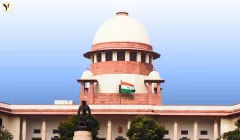
The Supreme Court has asked the Centre to examine statutory rules for social media platforms and other digital intermediaries dealing with minors.
The issue came before a three-judge bench headed by Chief Justice of India Surya Kant, along with Justices Joymalya Bagchi and V Mohana.
The court was hearing a petition filed by the Just Rights for Children Alliance (JRCA), which has sought stronger safeguards for children using social media and other digital platforms.
During the hearing, Justice Bagchi said the safeguards should not remain only as guidelines and asked the government to consider giving them a statutory format under the intermediary rules.
The discussion included an important question: Can children below 18 independently create and maintain social-media accounts when Indian law treats minors differently when it comes to contracts?
What Did The Supreme Court Say About The 18-Year Age Limit?
One of the biggest points from the hearing was the court's suggestion that social-media platforms should follow an 18-year minimum threshold for membership in conformity with Indian law.
Justice Bagchi told the government to consider directions requiring platforms to change their systems so that they follow Indian legal requirements.
The court was not announcing that every child in India had immediately been banned from social media.
Instead, it asked the Centre to examine how such a requirement could be implemented through the existing legal framework.
This distinction is important.
What The Situation Is Now
At present, many social-media platforms allow users below 18 to create accounts, generally subject to their own age policies.
The petition before the Supreme Court argued that children can independently create accounts by declaring their age or date of birth.
The petitioner has questioned whether this approach is consistent with Indian laws governing minors and contracts.
Why Does The Supreme Court Want New Social Media Rules For Children?
The case is not only about age.
It is also about the safety of children online.
The petition raised concerns about several risks that children can face on digital platforms, including:
- Online grooming
- Sexual exploitation
- Cyberbullying
- Sextortion
- Trafficking
- Misuse of personal information
- Behavioural profiling
- Exposure to age-inappropriate content
The petitioner told the court that stronger safeguards are needed because children can be targeted through social-media platforms and online services.
The Supreme Court's questions show that the issue is now being examined not only as a technology problem but also as a question of law, child protection and platform responsibility.
What Is The Legal Problem With Children Having Social Media Accounts?
The petition has raised an argument based on India's laws relating to majority and contractual capacity.
Under the Majority Act, a person generally becomes an adult at 18 years.
The petition also referred to Section 11 of the Indian Contract Act, which deals with a person's capacity to enter into contracts.
Social-media accounts are normally governed by terms of service, privacy policies and other contractual arrangements.
The petition therefore asks a basic legal question:
If a minor does not have the same contractual capacity as an adult, how should the law treat agreements made between minors and digital platforms?
The Supreme Court is examining this issue in the context of modern digital platforms.

What Did The Government Tell The Supreme Court?
Solicitor General Tushar Mehta, appearing for the Centre, said the government would examine the issue.
According to reports of the hearing, the government indicated that something could be done to address the concerns raised before the court.
The Centre also referred to provisions dealing with intermediaries under the Information Technology Act.
The court suggested that existing intermediary rules could potentially be used to direct platforms to bring their systems into conformity with Indian law.
Will Children Under 18 Be Banned From Social Media?
Not immediately.
This is one of the most important points for parents and children.
The Supreme Court has asked the Centre to examine and put in place statutory safeguards. It has not announced that all social-media accounts belonging to people under 18 will immediately stop working.
The court's discussion included an 18-year minimum threshold for membership, but the government still has to examine the legal and technical framework for implementing such directions.
So, parents should not assume that all children's Instagram, Snapchat, YouTube or other accounts will automatically disappear because of this hearing.
The exact rules, if introduced, would determine how the system works.
What Could New Rules Mean For Social Media Platforms?
If statutory rules are introduced, platforms could potentially be required to make changes to the way they verify and manage users.
Possible areas could include:
Age Verification
Platforms may need stronger systems to establish whether a user is under or above the required age.
Age Assurance
Instead of relying only on a user entering a date of birth, platforms could be asked to introduce more reliable age-assurance mechanisms.
Parental Controls
The legal framework could potentially provide for greater parental or guardian involvement in children's access to digital services.
Account Restrictions
Platforms may have to restrict independent accounts for users who do not meet the required age threshold.
Child Safety Measures
Platforms could face stronger obligations relating to harmful content, grooming, exploitation and misuse of children's data.
However, these are areas raised in the petition and discussion; the final form of any government rules has not yet been announced.
Why Is Age Verification A Big Challenge?
Simply asking a user to enter their date of birth is not always enough to establish their real age.
A child could enter an incorrect birth year while creating an account.
That is why the petition has asked for effective age-assurance mechanisms.
But stronger age verification also creates another question:
How can platforms verify a person's age without collecting excessive personal information?
This creates a balance between child safety and privacy.
Any future rules will therefore have to deal with both issues.
What About Educational Content?
The petition does not simply ask for children to be removed from the internet.
It has also proposed that minors should be able to access educational content through accounts maintained or controlled by parents or guardians.
This is important because digital platforms are also used by children for:
- School learning
- Educational videos
- Skill development
- Language learning
- Research
- Communication
The debate is therefore about how to create safer access rather than simply looking at social media as entertainment.
Why Did The Supreme Court Take Up This Issue?
The case was filed by the Just Rights for Children Alliance, which sought safeguards for children using social media and other digital platforms.The case was filed by the Just Rights for Children Alliance, which sought safeguards for children using social media and other digital platforms.
The organisation told the court that online interaction can expose children to risks such as grooming, trafficking, exploitation and cyberbullying.
The petition also pointed to a possible gap between Indian laws concerning minors and the way digital platforms currently allow account creation.
Earlier this month, the Supreme Court had already sought responses from the Centre on the plea.
The latest hearing moved the discussion further, with the court asking the government to consider a statutory approach.
What Is The Digital Personal Data Protection Act's Role?
The government also referred to the Digital Personal Data Protection Act, 2023 during the hearing.
According to the New Indian Express report, the Solicitor General said the issue raised in the petition was, at least prima facie, covered by provisions of the DPDP Act.
However, the petitioner's counsel argued that the relevant provisions would come into force only later and therefore could not address the immediate issue.
This means the debate is not limited to social-media age limits.
It also involves how children's personal data is collected, processed and protected online.
What Risks Do Children Face On Social Media?
The petition listed several concerns.
Online Grooming
Adults can sometimes build relationships with children online with the intention of exploiting them.
Cyberbullying
Children can face harassment, threats or humiliation through messages, posts and online communities.
Sextortion
Criminals can use private images or information to threaten or blackmail young users.
Personal Data Misuse
Children may not fully understand how their personal information can be collected and used.
Behavioural Profiling
Online activity can be used to build profiles based on a person's interests and behaviour.
Exposure To Harmful Content
Children may encounter content that is unsuitable for their age.
These concerns were specifically raised in the petition before the Supreme Court.
What Could Parents Need To Do If New Rules Come?
For now, parents do not need to make any immediate changes solely because of the Supreme Court hearing.
However, parents can already take basic safety steps:
- Check the age settings on every platform.
- Keep children's accounts private where possible.
- Use parental controls.
- Talk to children about strangers online.
- Avoid sharing unnecessary personal information.
- Teach children not to send private photographs to unknown people.
- Check app permissions.
- Encourage children to report suspicious messages or accounts.
These steps are useful regardless of what the final government rules may look like.
What Does This Mean For Instagram, Snapchat, YouTube And Other Platforms?
The Supreme Court's discussion applies broadly to social-media platforms and digital intermediaries.
The court has asked the government to examine directions that would make platforms comply with Indian law regarding minors.
Therefore, the issue is not limited to one particular social-media company.
If statutory rules are eventually introduced, they could potentially apply across platforms covered by the relevant legal framework.
The exact list of platforms and requirements would depend on the final rules.
Will Parents Have More Control Over Children's Accounts?
That is one possible area of future regulation.
The petition has specifically suggested allowing children to access educational content through accounts maintained and controlled by parents or guardians.
However, the Supreme Court has not yet issued a final detailed framework explaining how parental control should work.
The Centre would need to determine the practical mechanism if such safeguards are introduced.
What Happens Next?
The next step is for the Central government to examine the legal and regulatory options.
The Supreme Court has asked the Centre to consider giving the safeguards a statutory form instead of leaving them only as guidelines.
The government could examine the existing intermediary rules and other applicable laws before deciding how to proceed.
The final framework could determine:
- What age threshold applies
- How age will be verified
- Whether parental consent will be required
- How educational access will work
- What platforms must do
- How children's data will be protected
- What happens to existing accounts
Until those details are officially notified, the exact impact on individual children remains unclear.
Supreme Court Social Media Rules For Children: Key Details
|
|
|
|
|
|
|
|
|
|
|
|
|
|
|
|
|
|
|
|
|
|
|
|
|
|
|
|
|
|
|
|
|
Why This Matters For Every Parent
For parents, the important point is not simply the possible 18-year age limit.
The larger issue is how children will be protected when they use digital platforms.
Children increasingly use phones and online platforms for education, entertainment and communication.
At the same time, they may not always understand the risks linked to strangers, personal information, private photographs or harmful content.
The Supreme Court's latest intervention puts these concerns into a legal and regulatory framework.
It also puts greater attention on what responsibility social-media companies should have when children use their services.
What We Still Do Not Know
Several important questions remain unanswered.
Will every platform require an 18+ account limit?
The final government rules will determine this.
How will age be verified?
No final mechanism has been announced.
Will parents be able to create controlled accounts for children?
The petition has proposed parent or guardian-controlled access, particularly for educational content, but no final framework has been notified.
Will existing accounts be deleted?
There is no such final direction at present.
When will the new rules start?
No final implementation date has been announced.
This is why the current development should be understood as a regulatory process under examination, rather than an immediate social-media ban for everyone under 18.
Questions readers ask
What did the Supreme Court say about children using social media?
The Supreme Court asked the Centre to examine statutory safeguards that would require social-media platforms and other digital intermediaries to comply with Indian laws concerning minors.
Is the Supreme Court banning social media for people under 18?
Not immediately. The court has asked the government to examine statutory rules, including an 18-year minimum threshold for membership. The final framework has not yet been notified.
Why is the Supreme Court discussing an 18-year age limit?
The petition argues that Indian law treats people below 18 as minors and raises questions about their ability to independently enter into contracts with digital platforms.
What risks for children were mentioned in the case?
The petition raised concerns including online grooming, sexual exploitation, trafficking, sextortion, cyberbullying, behavioural profiling and misuse of personal data.
Who filed the petition?
The petition was filed by the Just Rights for Children Alliance (JRCA) seeking safeguards for minors using social media and other digital platforms.