Martha Stewart Halloween Costume Backlash, The Explanation Is What Kept the Story Going
Martha Stewart deleted a Halloween post showing her dressed as a homeless person. Her first explanation called it awareness-raising. Her third statement called it insensitive.

- Published
- Reading time
- 6 minutes
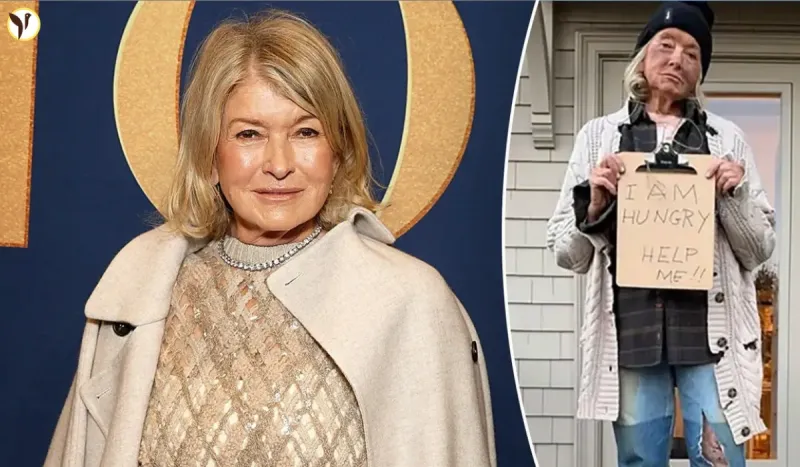
Martha Stewart has apologised after posting a Halloween photograph of herself dressed as a homeless person, holding a sign reading "I AM HUNGRY. HELP ME!!". She deleted it after criticism. Her first response said the costume was meant to raise awareness of homelessness. Her third said it was "insensitive and not funny."
The costume is the reason this started. The three statements are the reason it kept going.
What was posted
On Saturday 31 October, Stewart, who is 85, posted an image of herself in ripped jeans and a distressed button-down shirt, with dirt on her face, holding a sign that read "I AM HUNGRY. HELP ME!!".
One detail does a great deal of work in this story, and it is the detail most coverage is leaving out. The photograph appeared in an Instagram carousel promoting her QVC candles.
Stewart has built a substantial part of her public identity on Halloween — elaborate annual costumes, recipes, decorating guides, hosting advice. The post sat in that tradition and in a commercial one at the same time.
Criticism filled the comments and she deleted it.
The first explanation
Responding in the comments on Just Jared's Instagram, Stewart said the costume had a purpose: "My costume was designed to bring the homeless and the hungry to everyone's mind and boy it certainly did!!!"
She went on: "But not in the correct way, because I did not explain it and I am so sorry I care and I support causes who care."
Then she added three words that shaped everything that followed: "Do all of you???"
The second
In a statement to Page Six, Stewart took a more formal line. She noted that she has "spent decades teaching others how to celebrate Halloween", sharing recipes, crafts and hosting tips. She said she was "distressed" about the reaction to the costume, that it had been meant to raise awareness of homelessness, and that she had never intended to offend anyone.
She also said: "Homelessness continues to remain one of America's greatest challenges and ongoing crises." She cited her support for anti-homelessness charities and said she was "committed to continuing to make a difference."
That statement kept the awareness framing. It was the framing that was under attack.
Martha Stewart addresses her homeless person Halloween costume in statement to Page Six: “I am distressed that my Halloween costume yesterday, which was intended to bring more awareness to the very serious subject of homelessness, has offended people, which was never my intention. […] Homelessness continues to remain one of America’s greatest challenges and ongoing crises, something that I care deeply about and I have spent a significant amount of time and effort supporting charities that combat this ongoing social epidemic.” (https://t.co/cuZF2B1tv0)
— Pop Base (@PopBase) November 1, 2026
The criticism, at its most specific
Most of the reaction was anonymous and split, as these things are. The most substantive public criticism came from the actor Indya Moore, who posted at length in response.
Moore began by granting the obvious: "We all make mistakes. I certainly do." Then she set out why the explanation did not land.
"People do not dress up as groups who are in crisis," she wrote. "This is why your excuse is not believable for so many people."
On the awareness argument: "It actually seems like you're using the anger of people who have actually been hungry as proof your costume worked." And: "A rich woman dressing up as a hungry, homeless person brings more awareness to how out of touch" — a point she extended into a challenge about substance over sentiment. "If you were serious about poverty, you'd use your platform to back policies that tax the rich," she wrote. "'I support causes' is not a great response to people asking you to show your work."
On the three words at the end of Stewart's first comment, Moore was blunt: "Flipping it back on them is passive-aggressive and insulting." And: "An apology that ends in an interrogation of people you offended isn't an apology, its a manipulative counterattack."
The third statement, which undid the first two
Then Stewart posted again, on her own Instagram, as a screenshot of a note.
"It's hard to admit when you've really screwed up," it began. "My earlier statement didn't go far enough."
"I know many people are suffering economically," she wrote. "Wearing a costume like I did was insensitive and not funny."
"I am very sorry." She signed it "– Marth."
That is a complete retraction of her own defence, issued within about a day of making it. It abandons the awareness framing, drops the question aimed at her critics, and says the thing the earlier statements avoided — that the costume itself was the problem, not the failure to explain it.
Public figures rarely do this. The more common pattern is to issue a defence, wait, and let it stand. Stewart issued a defence, read the response, and withdrew it in her own words.
Why the commercial detail matters
Return to the carousel.
The strongest version of Stewart's first argument is that a widely followed figure drew attention to hunger and homelessness, and that the attention, however hostile, was itself the point. Something close to that argument has been made in good faith before.
What makes it hard to sustain here is where the image sat. A costume posted inside a product promotion is, structurally, part of a sales post. That does not establish intent, and Stewart has not been accused of calculating it — but it is the fact that explains why "it was designed to bring the homeless and the hungry to everyone's mind" was received the way it was. An awareness campaign and a candle advert are not the same object, and the audience could see which one it was looking at.
Her final statement implicitly concedes the point. It does not argue about framing at all.
What is actually underneath this
The thing worth not losing in a celebrity news cycle is that the subject is real, and Stewart said so herself in her second statement: homelessness is one of America's greatest ongoing crises.
That is why this particular costume category lands differently from a ghost or a politician or a film character. Dressing as something fictional, or as someone powerful, carries no cost to anybody. Dressing as a condition that people are currently living in, with a sign that reproduces the most visible form of asking for help, converts a circumstance into a look — and the people it depicts do not get to take it off on 1 November.
Moore's sharpest point was not about Stewart at all. It was about the gap between saying you support causes and being able to show what that support consists of. That question outlives this news cycle, and it applies considerably more widely than to one costume.
Stewart has apologised without qualification, which is where the matter reasonably rests.
Questions readers ask
What was Martha Stewart's Halloween costume?
She dressed as a homeless person, in ripped jeans and a distressed button-down shirt with dirt on her face, holding a sign reading "I AM HUNGRY. HELP ME!!". She posted the photograph on Saturday 31 October 2026, in an Instagram carousel promoting her QVC candles, and deleted it after criticism.
Did Martha Stewart apologise?
Yes, and more than once. Her final statement, posted on her own Instagram as a screenshot of a note, said: "It's hard to admit when you've really screwed up. My earlier statement didn't go far enough. I know many people are suffering economically. Wearing a costume like I did was insensitive and not funny. I am very sorry." She signed it "– Marth."
What did she say in her earlier statements?
In comments on Just Jared's Instagram she said the costume "was designed to bring the homeless and the hungry to everyone's mind and boy it certainly did!!!", that she was sorry because she had not explained it, and ended by asking her critics "Do all of you???". In a separate statement to Page Six she said she was "distressed", described homelessness as "one of America's greatest challenges and ongoing crises", and cited her support for anti-homelessness charities. Her later apology said those earlier statements did not go far enough.
What did Indya Moore say about it?
The actor Indya Moore posted a detailed criticism, writing that "people do not dress up as groups who are in crisis" and that Stewart appeared to be "using the anger of people who have actually been hungry as proof your costume worked". She argued that "'I support causes' is not a great response to people asking you to show your work", and that "an apology that ends in an interrogation of people you offended isn't an apology, its a manipulative counterattack." She prefaced it by saying "we all make mistakes. I certainly do."
Why was the costume considered offensive?
Critics argued that dressing as a group currently living through a crisis is different from dressing as something fictional or as a powerful figure, because it turns a real condition into a costume that the wearer can remove and the people depicted cannot. The commercial context sharpened the objection — the image appeared in a post promoting Stewart's QVC candles, which made the stated aim of raising awareness harder to sustain. Reaction was divided, with some defenders calling the criticism oversensitive.