Zetwerk CEO Gave Up The US Dream: Why Did His Father Doubt His Decision?
Zetwerk CEO Amrit Acharya returned from the US to build a business in India. Discover why his father doubted the decision and how Zetwerk grew.

- Published
- Reading time
- 8 minutes
Building a career in the United States is often seen as a major achievement for young Indian professionals. But Zetwerk co-founder and CEO Amrit Acharya chose a different path. At the age of 29, he returned to India with his wife to build a business of his own.
His decision was not easy for his family to understand. Acharya recently recalled that his father, a professor, was sceptical when he gave up the conventional path of working abroad and chose entrepreneurship in India.
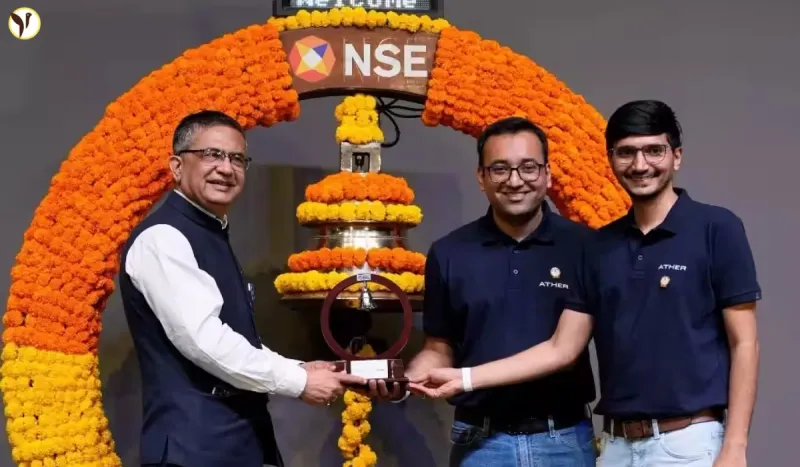
Nearly a decade later, the story has reached an important milestone. Zetwerk has made its stock market debut, and Acharya's father stood beside him at the National Stock Exchange during the listing ceremony.
In a post on X, Acharya reflected on the journey and said his father was no longer sceptical about his decision.
Who Is Amrit Acharya, Zetwerk's CEO?
Amrit Acharya is the co-founder and CEO of Zetwerk, an Indian manufacturing technology company that connects businesses with manufacturers and suppliers.
He studied electrical engineering at IIT Madras and later completed an MBA at the University of California, Berkeley. Before starting Zetwerk, he worked at ITC and McKinsey & Company.
His early professional experience helped him understand how manufacturing works in India and how businesses manage large orders, suppliers and production.
Instead of continuing on a conventional corporate career path in the US, Acharya decided to return to India and explore a business opportunity in manufacturing.
Why Did Amrit Acharya Leave The US?
Acharya's decision was influenced by both personal and professional reasons.
After completing his studies, he worked at McKinsey in San Francisco. Although he liked the job, he realised that continuing to work in the US depended on obtaining the right work visa.
In a 2022 interview with Prime Venture Partners, Acharya explained that he would have needed to remain in the corporate job for several years to pursue a more permanent immigration option. That would have delayed his plans to start a business.
At the same time, he could see friends in India launching startups and building companies.
He began to believe that he could take a similar risk instead of waiting for a more secure career path in the United States.
Acharya eventually quit his job and returned to India in 2018. He also recalled that three major changes happened around the same time: he left his job, returned to India and got married.
Why Did His Father Doubt His Decision?
For many Indian families, a well-paying job abroad represents stability, career growth and financial security.
Acharya's decision meant walking away from that familiar path without having another job waiting for him in India.
His father did not initially understand why he would leave a promising career in the US to start a business in a sector that was not as popular among startup founders at the time.
The decision involved uncertainty. A corporate job offered a more predictable income, while building a new company meant taking financial and professional risks.
Acharya's story does not suggest that his father was against success. Rather, the choice was difficult to understand before the business had proved itself.
The later success of Zetwerk gave the family a very different view of that early decision.
How Did Amrit Acharya Start Zetwerk?
Acharya co-founded Zetwerk in 2018 with other entrepreneurs, including Srinath Ramakkrushnan, Rahul Sharma and Vishal Chaudhary.
At the time, much of India's startup attention was focused on consumer-facing businesses such as online shopping, food delivery and digital services.
The founders saw an opportunity in manufacturing, an industry where businesses often had to coordinate with many suppliers and manage complicated production requirements.
Zetwerk set out to use technology to make that process easier. Its platform connects customers with manufacturing partners for products and industrial components across different sectors.
The company works with manufacturers and suppliers to help businesses manage orders, production and delivery.
What Does Zetwerk Do?
Zetwerk is a business-to-business manufacturing platform. In simple terms, it helps companies get products and components made by connecting them with suitable manufacturing facilities and suppliers.
Its work spans areas such as:
- Energy and renewable power equipment
- Electronics and consumer products
- Aerospace and defence
- Industrial machinery and capital goods
- Infrastructure-related manufacturing
- Products used in technology and AI infrastructure
The company combines technology, engineering support and a network of suppliers to manage manufacturing orders.
According to Zetwerk's website, as of March 31, 2026, its platform supported nearly 7,000 third-party suppliers across 26 countries and included 26 owned manufacturing facilities across four countries.
This network gives the company access to manufacturing capacity without depending only on factories it owns.
How Did Zetwerk Grow From A Startup Into A Listed Company?
Zetwerk's growth reflects a broader change in the Indian startup sector.
Technology companies in India have increasingly looked beyond consumer apps to solve problems in traditional industries such as manufacturing, logistics and industrial supply chains.
Zetwerk built its business around a part of the economy that can be difficult to manage: producing physical goods at scale while meeting customer requirements for quality, cost and delivery.
The company expanded its supplier network and entered several manufacturing categories. It also developed its own manufacturing facilities to support customer demand.
The goal is to help businesses source products and components through a more organised system.
However, growth in revenue and production capacity does not automatically mean a company is profitable. Investors still need to examine Zetwerk's financial performance, debt, cash flow and future business risks.
Zetwerk IPO: Why Is The Listing Important?
Zetwerk's stock market debut added a new chapter to Acharya's story.
The company's IPO opened for subscription on October 15 and closed on October 19, 2026. The price band was ₹143 to ₹151 per share, and the total issue size was around ₹5,012 crore.
Zetwerk shares began trading on the stock exchanges on October 23, 2026.
Reuters reported that the shares initially listed at a premium of around 5.5% to the issue price but later fell below the IPO price during the debut session amid broader market weakness.
The listing brought the company into the public market, where its performance, financial results and business plans will face greater scrutiny from investors.
For Acharya, it was also a personal milestone: his father was present as the company rang the listing bell at the National Stock Exchange.
What Did Amrit Acharya Say After The IPO?
In his post on X, Acharya reflected on returning from the US with his wife, Sharanya, and building Zetwerk with his co-founders.
He also shared personal news, saying the couple had welcomed their daughter the previous month.
Acharya described the IPO as a moment that was still sinking in. He connected the milestone to his father's earlier doubts about his decision to leave the traditional career path of securing a job abroad.
His message was about more than a stock market listing. It also highlighted how India's startup environment has created opportunities for founders to build businesses at home and expand internationally.
What Does His Story Say About India's Startup Ecosystem?
Acharya's journey reflects the changing choices available to Indian professionals.
In the past, a job in the US was often considered the safest route to career advancement. Today, some professionals are choosing to return to India to build startups, join growing businesses or work in emerging industries.
India's startup ecosystem offers access to investors, skilled workers, customers and a growing domestic market. But starting a company remains risky, and success is never guaranteed.
Acharya's experience also shows that opportunities do not exist only in consumer technology. Manufacturing, industrial supply chains, energy and electronics can also create room for technology-led businesses.
Zetwerk's journey is one example of this shift, not proof that every startup will achieve the same result.
What Challenges Does Zetwerk Face Now?
A stock market listing is a milestone, but it also brings greater responsibility.
As a public company, Zetwerk will need to show that it can grow its business while managing costs, working capital and profitability.
Investors will watch several factors:
- Revenue growth: Whether the company can continue to win manufacturing orders.
- Profitability: Whether growth translates into sustainable profits and cash flow.
- Customer demand: Whether existing customers continue placing orders.
- Manufacturing execution: Whether the company can deliver products on time and meet quality requirements.
- Global business risks: Whether changes in trade, supply chains and demand affect its operations.
The company's long-term performance will depend on how well it manages these challenges.
Amrit Acharya's Journey: Key Details
|
|
|
|
|
|
|
|
|
|
|
|
|
|
|
|
|
|
|
|
|
|
|
|
|
|
|
|
|
|
What Can Young Entrepreneurs Learn From His Story?
Acharya's journey offers a few practical lessons.
First, a stable career is not the only route to success. A person may choose entrepreneurship when they see an opportunity that matches their interests and skills.
Second, timing matters. Acharya saw an opportunity to improve manufacturing processes in India while the country's startup ecosystem was growing.
Third, taking a risk does not guarantee success. Starting a company requires customers, strong execution, funding and the ability to deal with setbacks.
Finally, people may not always understand a decision at the beginning. The results can take years to become visible, and even successful companies continue to face business challenges.
Questions readers ask
Who is Amrit Acharya?
Amrit Acharya is the co-founder and CEO of Zetwerk, an Indian company that uses technology to connect businesses with manufacturing suppliers and facilities.
Why did Amrit Acharya return from the US to India?
He returned in 2018 after working at McKinsey in San Francisco. He has said that uncertainty around obtaining a long-term US work status and his desire to start a business influenced his decision.
Why was his father sceptical about the decision?
Acharya was leaving a promising job abroad without another job waiting for him in India. His father initially found it difficult to understand why he would give up a conventional career path to build a startup.
What is Zetwerk?
Zetwerk is a business-to-business manufacturing platform that connects customers with suppliers and manufacturing facilities for products and industrial components.
When was Zetwerk founded?
Zetwerk was founded in 2018 by Amrit Acharya and his co-founders.
When did Zetwerk go public?
Zetwerk Manufacturing Businesses began trading on the stock exchanges on October 23, 2026, after its IPO.