‘Real boss of India?’ Why Elon Musk Brought Billionaire Ambani Into the Spotlight
Elon Musk questioned whether Mukesh Ambani is the “real boss of India” amid delays in Starlink's launch. Know the controversy, government response and what happens next.

- Published
- Reading time
- 6 minutes
A fresh controversy has started between billionaire Elon Musk and India's satellite internet market. Musk has questioned why his company, Starlink, is still waiting to begin commercial services in India despite what he says has been years of work to meet government requirements.
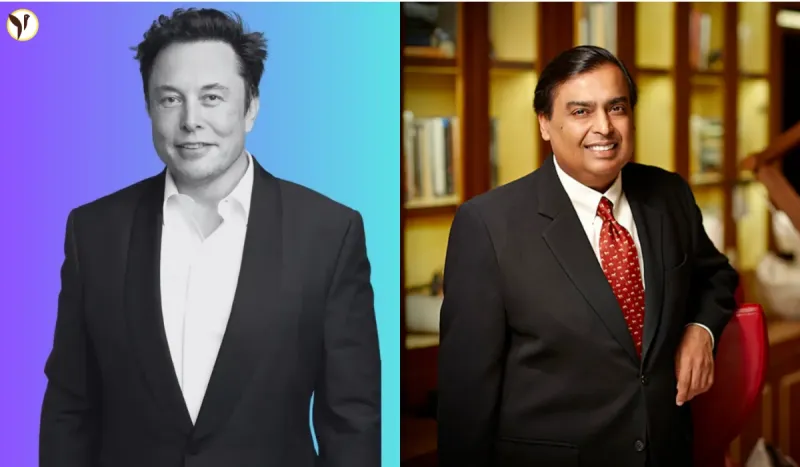
In a post on social media platform X on October 8, Musk asked, “Is Ambani the real boss of India?” The remark appeared to refer to Mukesh Ambani, chairman of Reliance Industries, whose group operates Reliance Jio, a major telecom company in India.
The comment came after Musk accused unnamed powerful business interests of blocking Starlink's entry into India to protect their market position. The government rejected the suggestion that its approval process was discriminatory and said security assessments were still underway for satellite service providers.
The controversy has now drawn attention to competition in India's internet market, the rules governing satellite communications and the long wait for Starlink's commercial launch.
What Exactly Did Elon Musk Say?
Musk first criticised the delay in Starlink's India launch and alleged that unnamed “oligarchs” were preventing the service from entering the market.
He argued that Starlink could help people in areas where internet connectivity is poor or mobile coverage is unavailable. He described the alleged blocking of the service as harmful to Indian consumers.
On October 8, Musk went a step further and directly mentioned Ambani in his question about who holds influence over India's regulatory decisions.
Musk also claimed that Starlink was licensed in more than 165 countries and said the company had spent five years complying with India's laws and requirements. These statements reflect Musk's position in the dispute; they do not establish that any individual or company influenced the government's decision.
Why Did Mukesh Ambani Come Into The Picture?
Mukesh Ambani entered the discussion because Reliance Jio is a major player in India's telecom market and has its own satellite communications business.
Starlink, operated by Musk's SpaceX, wants to provide internet access through satellites. Reliance's satellite venture is also seeking permission to offer satellite communication services in India.
This has placed both companies in the wider discussion about the future of satellite internet in the country.
However, Musk has not publicly provided evidence proving that Ambani or Reliance caused the delay in Starlink's approval. The government has said that multiple satellite service providers are going through security assessments. Reliance Jio did not immediately respond to a request for comment in reporting on Musk's remarks.
What Is The Starlink India Approval Issue?
Starlink is a satellite internet service that uses a network of satellites to provide internet connectivity. Unlike traditional broadband, which often depends on fibre cables or nearby mobile towers, satellite internet can potentially reach remote areas where building ground infrastructure is difficult.
Starlink has obtained an Indian satellite communications licence, but it is still waiting for the remaining approvals needed to begin commercial operations.
According to the Ministry of Communications, service providers must meet security requirements before they can move to the next stage of the process, including seeking spectrum assignment.
The government has said that the security assessment process is underway for three satellite service providers:
- Starlink, operated by SpaceX.
- Jio Satellite Communications, part of the Reliance group.
- Eutelsat OneWeb, backed by Bharti.
The ministry said all three were at broadly the same regulatory stage and rejected the allegation that the framework was being applied unfairly.
What Did The Indian Government Say?
The Ministry of Communications defended India's satellite communication approval framework after Musk's allegations.
The ministry said the government follows a fair and non-discriminatory authorisation process. It explained that licence holders must demonstrate compliance with security conditions designed to protect users and their data.
It also said the security assessment was underway for all three licensees. Once the process is completed for a company, that company can move forward to seek spectrum assignment.
The government's response is important because it presents a different explanation for the delay from Musk's allegation of business interference.
At this stage, there is no publicly established finding that Ambani or another business leader blocked Starlink's launch.
Rahul Gandhi Also Reacts To The Musk-Ambani Row
The controversy also drew a response from Congress leader and Leader of the Opposition in the Lok Sabha, Rahul Gandhi.
After Musk questioned whether Ambani was the “real boss of India”, Gandhi replied on X: “Welcome to India, Elon. Wait till you discover the other guy.”
Gandhi did not name the person in that post. His response was widely interpreted as a reference to industrialist Gautam Adani, although that interpretation should be distinguished from the words he actually wrote.
Musk responded to Gandhi by thanking him and saying the situation was “troubling”. The exchange brought the Starlink approval dispute into a wider political conversation about the influence of large businesses in India.
Why Is Starlink Important For India's Internet Market?
India has a large internet user base, but reliable connectivity remains difficult in some remote, rural and geographically challenging areas.
Satellite internet could offer another way to connect homes, businesses, schools and other institutions in locations where fibre broadband or mobile networks are limited.
Starlink says its service could help areas with poor or no internet access. However, its actual availability, price and commercial terms in India will depend on the approvals it receives and the service it eventually launches.
The wider satellite internet market also includes Indian and international companies developing their own services. The entry of more providers could expand consumer choice, but the effect on prices and competition will depend on coverage, costs, service quality and regulatory conditions.
Will Starlink Launch In India Soon?
There is no confirmed commercial launch date in the government statements cited in this report.
Starlink must complete the remaining regulatory and security requirements before it can move to the spectrum assignment stage. The government has said the assessment process is underway for all three relevant licensees.
Therefore, Musk's criticism does not itself mean that Starlink has received final approval or that a launch date has been announced.
Consumers interested in the service should wait for an official launch announcement and confirmed information about pricing, coverage, equipment and availability.
What Does This Controversy Mean For Consumers?
For Indian consumers, the key question is whether satellite internet will become another practical option for getting online.
If Starlink and other satellite providers begin commercial services, people in underserved areas may have more choices. But consumers will need clear information about installation costs, monthly plans, internet speeds, data policies and service availability before making a decision.
The controversy also highlights a broader issue: governments must balance competition and market access with security requirements and rules for telecommunications services.
At present, the public information shows that approval assessments are ongoing. Musk's allegations and the government's response represent different positions in a dispute that has not been resolved publicly.
Questions readers ask
Why did Elon Musk mention Mukesh Ambani?
Musk mentioned Ambani while questioning the delay in Starlink's commercial launch in India. The comment appeared to refer to Ambani's Reliance Jio business, which is also pursuing satellite communication services.
What does “real boss of India” mean in this controversy?
It was Musk's pointed question about whether Ambani had influence over the delay. It was an allegation or rhetorical question, not an established fact about who controls India's government or regulatory decisions.
Has Starlink launched commercially in India?
Starlink is still waiting for the remaining approvals needed to begin commercial operations. The government has said security assessments are underway.
Did the Indian government reject Elon Musk's allegation?
Yes. The Ministry of Communications said India's approval framework was fair and non-discriminatory and that the relevant satellite service providers were at broadly the same regulatory stage.
Which companies are waiting for satellite service approvals?
The government identified Starlink, Jio Satellite Communications and Bharti-backed Eutelsat OneWeb as the three licensees undergoing security assessments.